
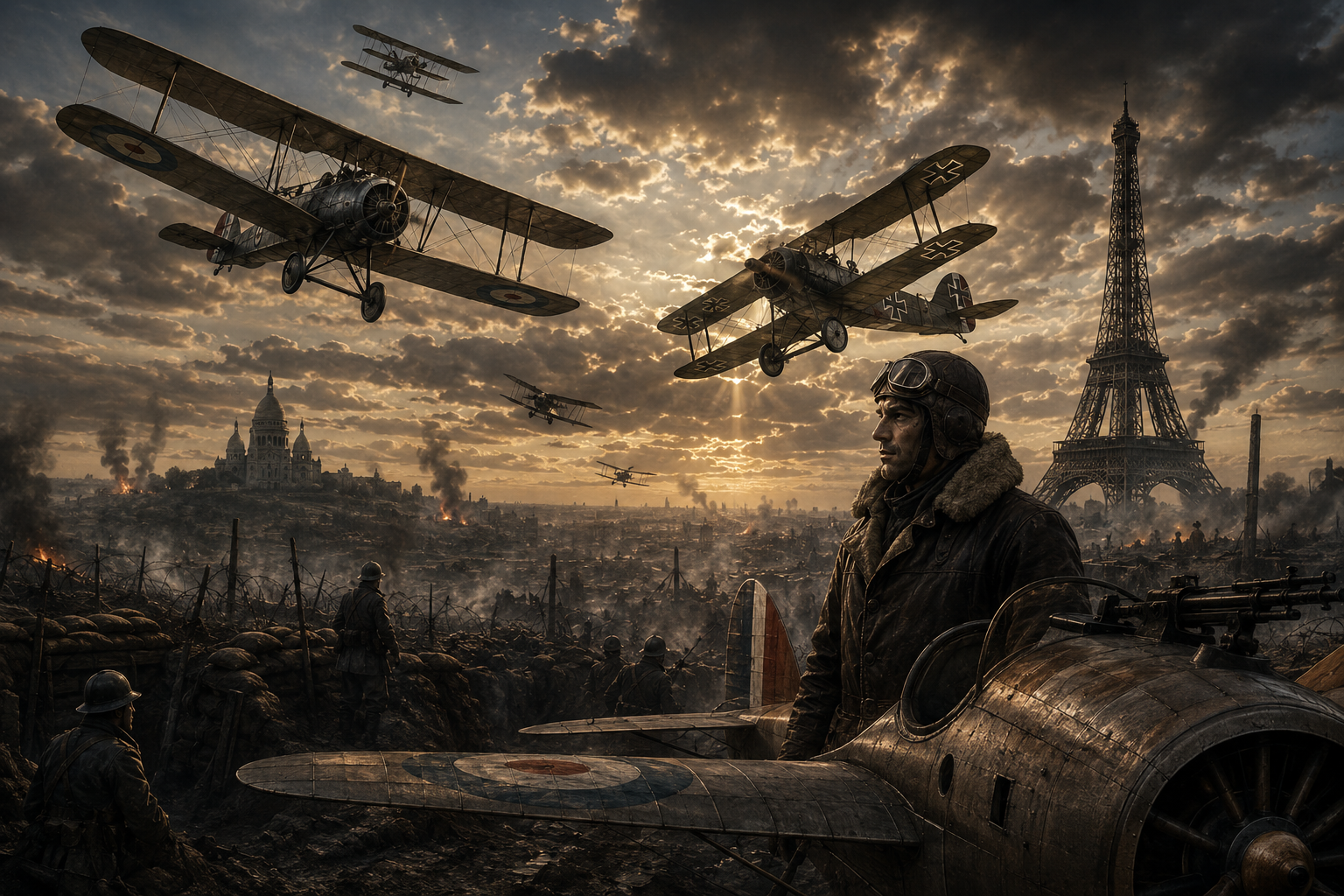
How reconnaissance aircraft became fighting machines above the trenches.
When the First World War began in 1914, aircraft were little more than flying observers. Within a few years they had become armed fighters, transforming the sky into a new battlefield and creating an entirely new form of warfare.
At the outbreak of war, aircraft were primarily used for reconnaissance. Pilots and observers flew over enemy positions, mapping troop movements, locating artillery batteries and providing intelligence that commanders on the ground could not obtain by any other means.
These early aircraft carried no dedicated weapons. Crews sometimes exchanged pistol fire or threw improvised explosives at one another, but combat was not yet their primary purpose.
As reconnaissance became increasingly valuable, armies realized they needed a way to stop enemy aircraft from gathering information. Pilots began carrying rifles and machine guns, leading to the first aerial engagements.
The introduction of synchronized machine guns, capable of firing through a spinning propeller without striking the blades, revolutionized aerial warfare. Aircraft could now engage one another directly with unprecedented effectiveness.
Dedicated fighter aircraft soon emerged. Machines such as the Fokker Eindecker, Albatros fighters, Sopwith Camel and SPAD XIII were designed specifically to gain control of the skies.
Speed, maneuverability and firepower became the defining characteristics of military aviation. The sky evolved into a contested battlefield where survival depended on skill, awareness and courage.
As aerial combat intensified, successful fighter pilots became public heroes. Newspapers celebrated aces whose victories captured the imagination of civilians far from the front lines.
Behind the headlines, however, pilots understood the reality of the air war. Every victory represented another aircraft destroyed, another crew lost and another reminder of how fragile survival could be.
The First World War established many of the principles that would define military aviation for generations. Air superiority, reconnaissance, fighter escorts and strategic aerial operations all emerged during this formative period.
What began as observation from above became a new dimension of warfare, forever changing military history and the relationship between war and technology.
The events and technologies explored in Wings of Iron draw inspiration from this remarkable period of aviation history, when pilots entered an unknown frontier and transformed the sky into a battlefield.