
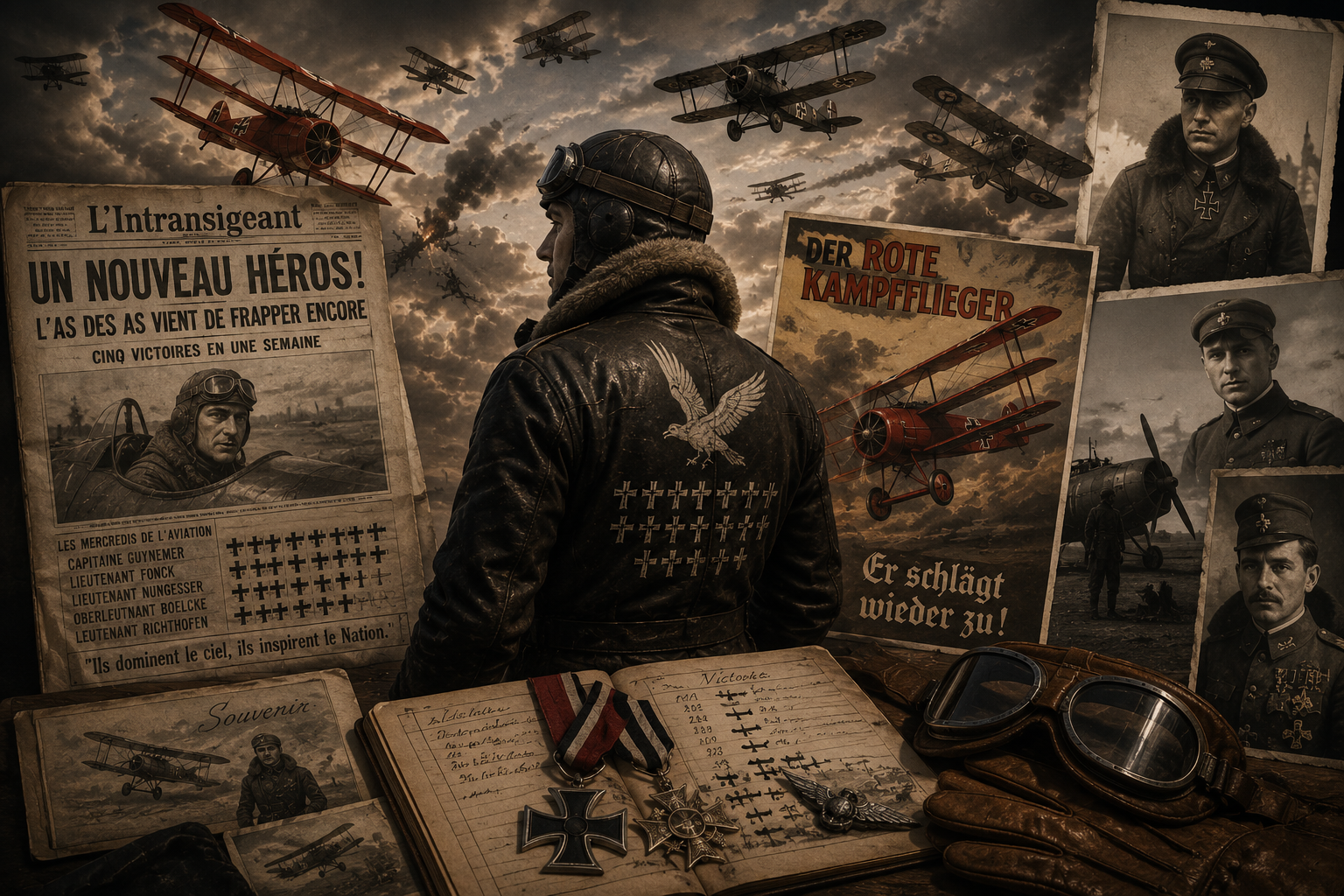
The making of aerial heroes and the propaganda built around their victories.
The ace was more than a pilot with victories. He became a symbol, a headline, a national myth and, sometimes, a mask placed over the fear and loss that defined the air war.
As aerial combat developed during the First World War, pilots who achieved multiple victories became known as aces. Their success in the air quickly captured public attention, offering civilians a more personal and heroic image of war than the anonymous destruction of the trenches.
Newspapers transformed fighter pilots into modern knights of the sky. Their victories were counted, printed and celebrated. Posters, interviews and official reports turned them into figures of courage and national pride.
This image was useful. At a time when trench warfare produced endless casualty lists and little visible progress, the ace gave the public a story with names, faces and victories.
For the pilots themselves, the myth was harder to accept. Every victory meant another aircraft destroyed, another crew killed or captured and another reminder that survival in the air depended on weather, machinery, judgment and luck.
The ace system rewarded results, but it could not measure fear, exhaustion or the cost of returning when others did not.
Famous aces also affected enemy morale. A recognizable aircraft or name could spread fear across an entire squadron. In the sky, reputation became a weapon. Pilots did not merely fight machines, they fought stories already told about the men inside them.
In Wings of Iron, the ace myth becomes central to the emotional landscape of the series. Episodes such as The Red Mark, The Ace Myth and Falling Stars explore how heroes are created, how legends are feared and how the men behind those legends carry the burden of survival.