
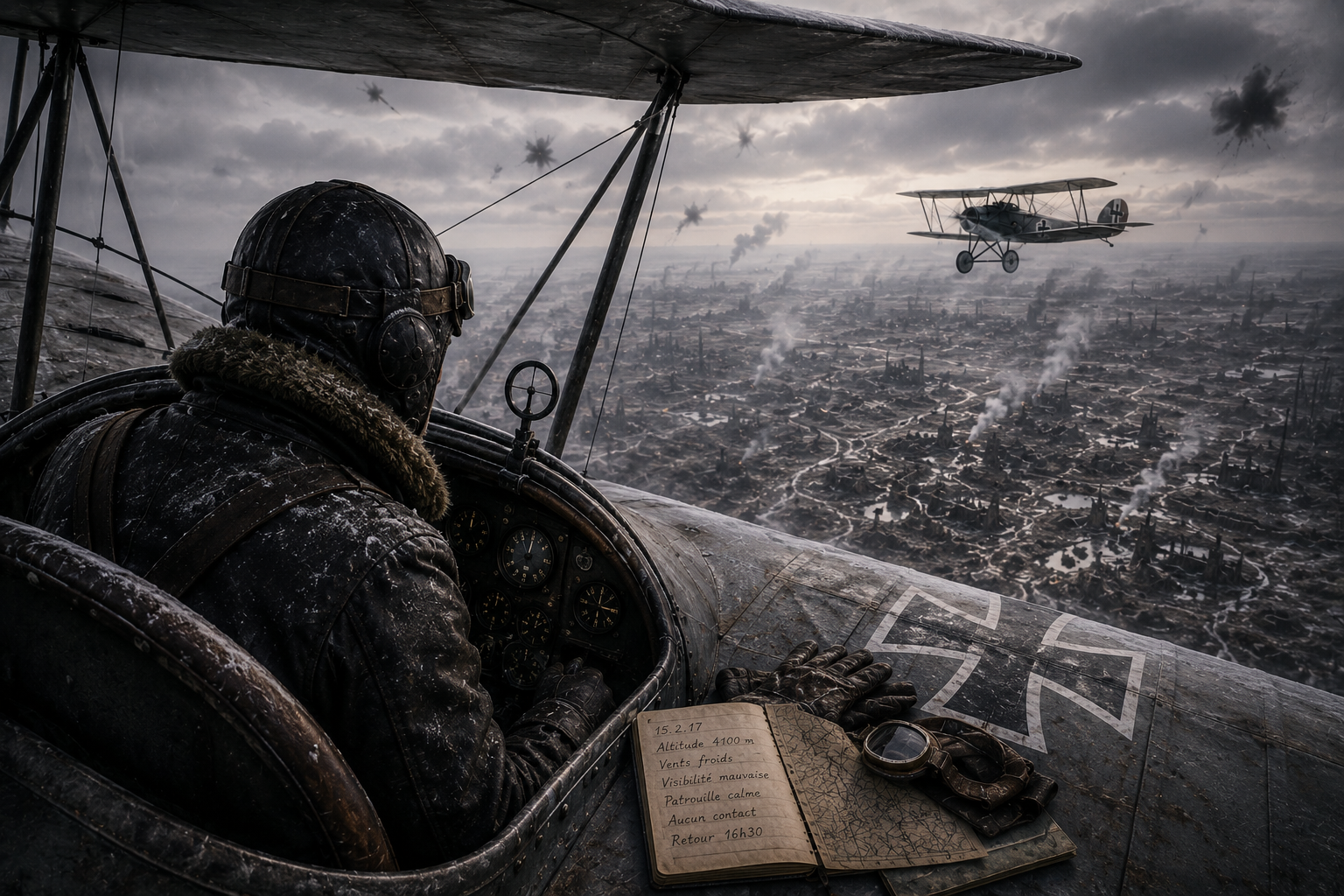
The loneliness, altitude, cold and fear that defined early military aviation.
To fly above the Western Front was to enter a world of silence, wind and danger. Early military aviation offered no comfort, little protection and no certainty of return.
Above the trenches, pilots were separated from the war below but never free from it. The battlefield became distant, almost unreal, yet every mission carried the knowledge that one mechanical failure, one wrong turn or one enemy aircraft could end everything.
Unlike soldiers in the trenches, airmen often faced danger in isolation. Once airborne, there was no shelter, no trench wall and no immediate help.
Early aircraft offered almost no protection from the elements. Pilots flew in open cockpits, exposed to freezing wind, rain, engine oil and smoke. At altitude, cold could numb hands, slow reactions and turn even simple movements into effort.
Leather coats, scarves, gloves and goggles became essential tools of survival, not symbols of romance. The image of the heroic aviator hid the brutal physical reality of flight.
The aircraft themselves were fragile machines of wood, canvas, wire and fuel. Engines failed. Wings tore. Controls jammed. Many pilots feared their own aircraft almost as much as they feared the enemy.
Every flight required trust in mechanics, weather, luck and a machine that had no right to survive the violence of war.
Dogfights were brief, chaotic and terrifying. But for many pilots, the silence afterward was worse. Returning alone, watching smoke rise from the ground, counting missing aircraft and waiting for names to be read became part of life above the front.
In Wings of Iron, life above the front is not treated as romantic escape. It is a form of endurance. Episodes such as Burning Wings, Falling Stars and The Last Flight show how altitude, fear and memory shape the pilots as deeply as combat itself.