
Image: Jaime Ocon 歐海美 X @JaimeOcon1
Elliot Hayes | Senior Editor with Agencies
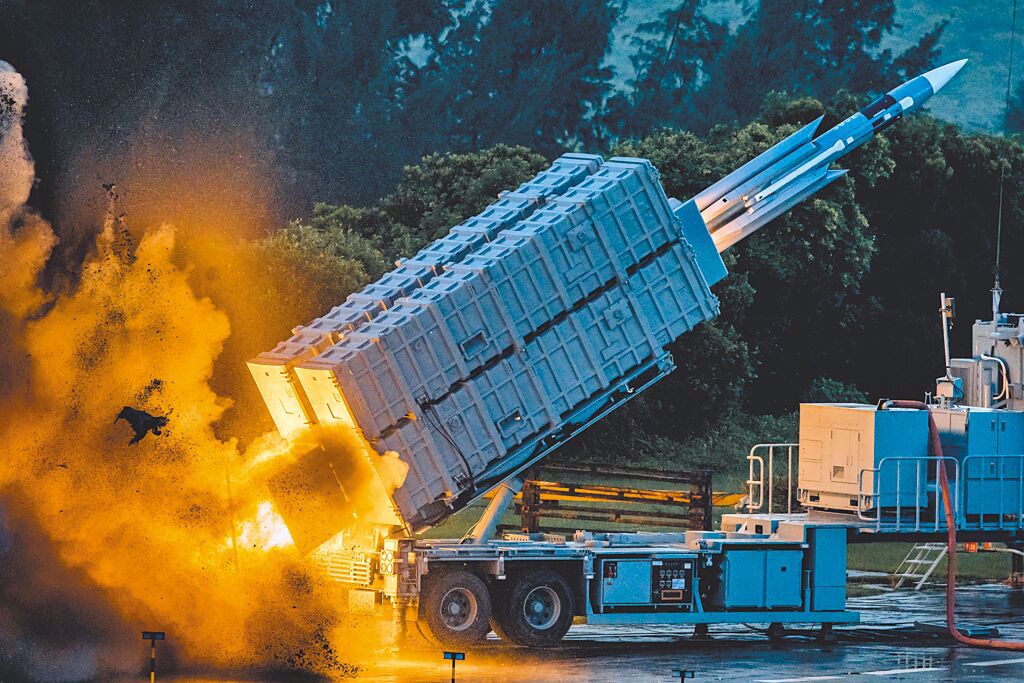
Taiwan will receive its first shipment of U.S.-supplied Harpoon Coastal Defense Systems around the turn of the year, providing the initial combat capability for a new Littoral Combatant Command that stands up on January 1, 2026, Taipei officials said. Lawmakers were told that five mobile launcher trucks and a radar vehicle are already in Taiwan for integration and training, a sign that initial deliveries and unit formation are imminent.
The hardware traces to a 2020 U.S. foreign military sale, approved for up to 100 mobile coastal launchers and as many as 400 RGM-84L-4 Harpoon Block II missiles, a package widely viewed as a material boost to Taiwan’s ability to hold amphibious forces and surface task groups at risk across the Taiwan Strait.
What the Harpoon brings, in plain terms
The land-based Harpoon converts a classic anti-ship munition into a mobile, road-mounted coastal battery, pairing tractor-trailer canister launchers with a radar truck and off-board sensors. The Block II variant integrates inertial navigation with GPS updates and a terminal active-radar seeker, enabling sea-skimming profiles and improved route control in cluttered littoral waters. Open sources place the surface-launch Block II’s practical engagement envelope roughly in the 100–140 km class, enough to cover many of the amphibious and logistic approaches that any cross-strait invasion force would use.
Operationally, mobile Harpoon batteries offer Taiwan several advantages, including dispersed positioning, shoot-and-scoot tactics, and over-the-horizon strike options when cued by maritime patrol assets or UAVs. That mobility makes it harder for an adversary to suppress or find all launchers before they fire, forcing heavier PLA escort and suppression efforts early in any amphibious operation.
How Harpoon fits Taiwan’s Littoral Combatant Command
Taipei is building the Littoral Combatant Command to fight within the 24-nautical-mile belt of its territorial waters, and the Harpoon is being integrated as a key shore-based layer alongside indigenous Hsiung Feng II/III missiles, fast attack craft, and coastal surveillance networks. The combined effect is a layered sea-denial posture, meant to fix amphibious shipping in choke points, force PLAN escorts to screen wide, and attrit transport and landing capacity before it reaches the beaches. Even a modest number of successful Harpoon salvos can complicate an amphibious timetable and impose heavy operational friction on an attacker.
The Littoral Combatant Command concept also emphasizes dispersal and survivability, using Taiwan’s road network and coastal folds to move launchers between hide positions, creating overlapping kill zones without massing large formations that are vulnerable to long-range strikes. For Taiwan’s commanders, this provides the ability to concentrate fire where needed, while preserving launcher survivability under PLA missile and air pressure.
Strategic and operational implications
Analysts say Harpoon deliveries change the calculus for any cross-Strait invasion in two ways. First, they increase the immediate risk to amphibious lift, roll-on/roll-off vessels, and landing ships, reducing the margin for error in timing and protection. Second, mobile coastal batteries compel an adversary to allocate reconnaissance and strike sorties to search and destroy relocatable targets ashore, tie up PLA resources, and raise the operational cost of an assault on day one. Those effects are force-multiplying when Harpoon is integrated with maritime patrol aircraft, shore radars, and indigenous anti-ship fires.
For Taipei, the Harpoon plan also sends a political signal: the United States remains a source of modern, export-grade anti-ship capability for the island, and Taiwan is prioritizing concrete, defensive systems designed to make invasion both harder and riskier. The first delivery timeline, if sustained into 2026, will give the Littoral Combatant Command an immediate, demonstrable capability at its stand-up.
Capabilities and limits to keep in mind
The Harpoon is not a magic bullet; it is one element in a broader deterrent mix. Block II’s subsonic, sea-skimming flight profile is survivable and effective in littorals, but advanced shipboard defenses, integrated air defenses, and concerted suppression efforts can reduce missile effectiveness. Also, achieving persistent and accurate targeting requires robust sensor networks and secure data links, which Taiwan has been building but must continue to harden against jamming and counter-reconnaissance.
Finally, deliveries and unit formation will matter. Taipei’s announced arrival of launchers and a radar vehicle, plus ongoing training, are meaningful, but the strategic payoff grows with scale, stockpile depth, and operational integration across air, sea, and shore sensors. The 2020 approval set an upper bound; the coming months will show how quickly Taipei translates paperwork into layered lethality on the ground.
The Harpoon coastal batteries arriving as Taiwan stands up its Littoral Combatant Command will materially strengthen Taipei’s sea-denial toolbox, complicating any PLAN attempt to mass amphibious lift close to the island. Even initial operating capability in early 2026 changes operational dilemmas for Beijing, by making an assault costlier and riskier from the outset. How much that raises the bar will depend on Taiwan’s ability to scale, integrate, and protect those systems under real combat conditions.