
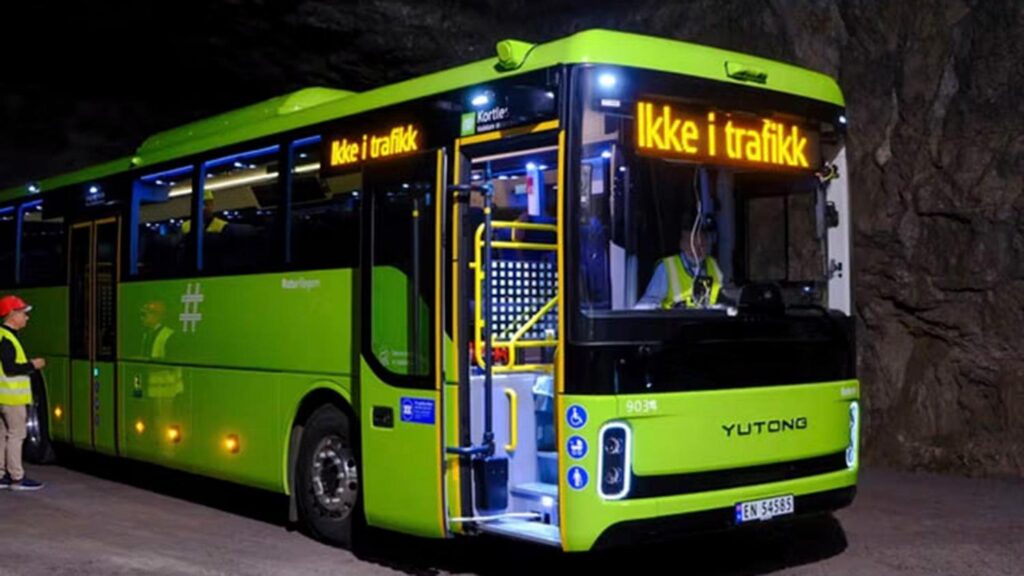
Image: from Carscoops X@Carscoop
By Isabella Harper | Staff Writer with Agencies
Norwegian authorities have uncovered that Chinese-made electric buses operating in the country contained hidden systems allowing remote access from China, sparking major cybersecurity and sovereignty concerns.
The discovery occurred during routine cybersecurity testing of electric buses owned by Ruter, Norway’s largest public transportation operator. The tests compared a Chinese-built Yutong bus with a Dutch-made model. During the inspection, engineers discovered a concealed SIM card embedded in the Chinese system, reportedly of Romanian origin, that enabled the manufacturer to remotely connect to the vehicle’s systems.
According to Yutong, the SIM card is used to enable software updates, diagnostics, and maintenance checks, a common feature in modern connected vehicles. However, the Chinese manufacturer also admitted that the system allows remote shutdown or disabling of the buses, a capability that Norwegian authorities say they were never informed about.
Ruter’s CEO, Bernt Reitan Jenssen, said the tests were intended to identify potential vulnerabilities in electric vehicles, as required by European Union regulations for cybersecurity compliance. “We found no evidence of malicious activity,” Jenssen explained, “but our understanding of the risk evolved from concern to concrete awareness.”
Following the discovery, Norwegian authorities and Ruter implemented new cybersecurity directives, including firewalls and isolation mechanisms, to ensure that the country retains full operational control over its public transport systems. The Norwegian Minister of Transport emphasized that safeguarding public infrastructure from foreign control is now a top priority.
Norway currently operates over 1,300 electric buses, with around 850 manufactured by Yutong, including more than 300 serving the Oslo and Akershus regions. All affected vehicles have now been disconnected from external networks and stripped of their SIM cards to prevent any remote access.
The incident highlights growing European concerns about cybersecurity risks in Chinese technology, particularly in critical infrastructure sectors such as energy, telecommunications, and transportation.
As Europe’s adoption of electric mobility accelerates, with electric bus sales up 41% in early 2025 compared to the previous year, the Norwegian case may serve as a warning for other nations to scrutinize the hidden digital vulnerabilities in imported smart vehicles.
Norway’s swift response demonstrates a broader effort to ensure that the green transition does not come at the cost of national security.