Menu Close

World One War Portal

Before World War II, the events of 1914–1918 were generally known as the Great War or simply World War I. In August 1914, the magazine The Independent wrote, “This is the Great War. It names itself.” In October 1914, the Canadian magazine Maclean’s similarly wrote, “Some wars name themselves. This is the Great War.” Contemporary Europeans also referred to it as “the war to end war” and “the war to end all wars” due to their perception of its unparalleled scale, devastation, and loss of life. The first recorded use of the term First World War was in September 1914 by German biologist and philosopher Ernst Haeckel, who stated, “There is no doubt that the course and character of the feared ‘European War’ … will become the first world war in the full sense of the word.”

🌿 Tribute

In the silence of history, their voices still call.
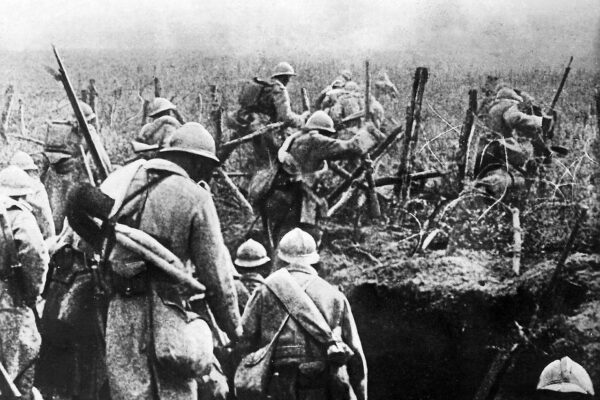
This tribute is for my grandfather, who fought side by side with the Allies in the trenches of France,
and for all who endured the Great War. May their memory remain eternal.

(José Carlos Palma)

Topics

  • Background
    • Political and military alliances
    • Arms race
    • Conflicts in the Balkans
  • Prelude
    • Sarajevo assassination
    • Expansion of violence in Bosnia and Herzegovina
    • July Crisis
  • Progress of the war
    • Opening hostilities
      • Confusion among the Central Powers
      • Serbian campaign
      • German offensive in Belgium and France
      • Asia and the Pacific
      • African campaigns
      • Indian support for the Allies
    • Western Front
      • Trench warfare begins
      • Continuation of trench warfare
    • Naval war
    • Southern theatres
      • War in the Balkans
      • Ottoman Empire
      • Italian Front
    • Eastern Front
      • Initial actions
      • Romanian participation
    • Central Powers peace overtures
    • Final years of the war
      • Russian Revolution and withdrawal
      • United States enters the war
      • Nivelle Offensive (April–May 1917)
      • Sinai and Palestine campaign (1917–1918)
      • German offensive and Allied counter-offensive (March–November 1918)
      • Allied advance to the Hindenburg Line
      • Breakthrough of the Macedonian Front (September 1918)
    • Armistices and capitulations
      • German government surrenders
  • Aftermath
    • Formal end of the war
    • Peace treaties and national boundaries
    • National identities
  • Casualties
    • War crimes
      • Chemical weapons in warfare
      • Genocides by the Ottoman Empire
    • Prisoners of war
  • Soldiers’ experiences
    • Conscription
    • Military attachés and war correspondents
  • Economic effects
  • Support and opposition for the war
    • Support
      • Patriotic funds
    • Opposition
  • Technology
  • Diplomacy
  • Legacy and memory
    • Memorials
    • Historiography
    • Unexploded ordnance
    • Bibliography