

Image Credentials: Image Title: Chemical Warfare and Agent Orange in the Vietnam War Source: (Grok, xAI) Date: May 2025 Attribution: Created by AI-generated imagery (Grok, xAI), and it does not depict a real-world scene.
Overview
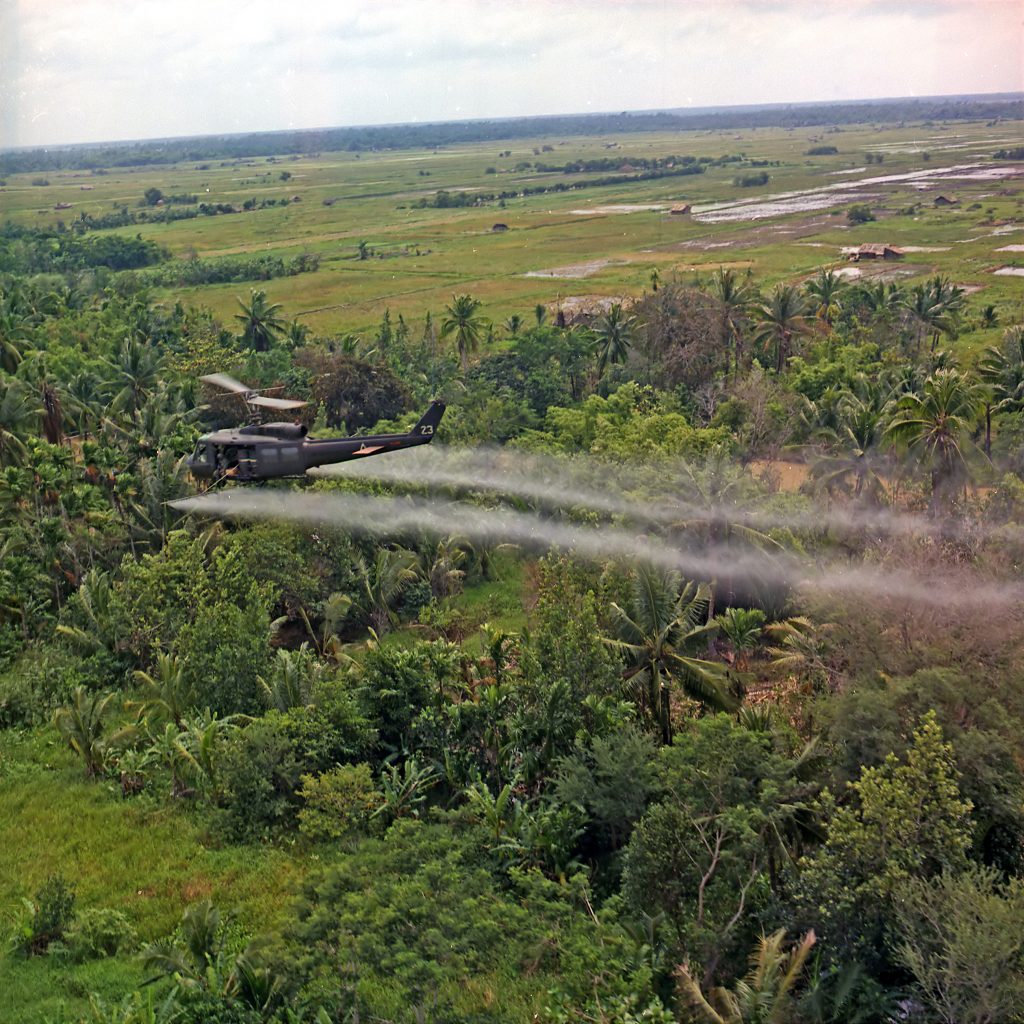
During the Vietnam War, the United States military implemented a large-scale herbicidal warfare program known as Operation Ranch Hand. Between 1961 and 1971, approximately 20 million gallons of herbicides, including Agent Orange, were sprayed over 6 million acres of forests and agricultural land in South Vietnam. The primary objectives were to defoliate forested areas that could conceal Viet Cong forces and to destroy crops that could supply enemy troops.
Environmental Impact
The defoliation campaign had devastating environmental consequences. Approximately 17.8% of Vietnam’s forested area, equivalent to 3.1 million hectares, was sprayed, leading to significant ecological disruption. The loss of tree cover caused erosion, hindered reforestation efforts, and allowed invasive species like bamboo and cogon grass to dominate. Biodiversity suffered greatly; studies showed a marked decrease in bird and mammal species in sprayed areas compared to unsprayed regions.
Health Effects
Exposure to Agent Orange has been linked to numerous health issues among both Vietnamese civilians and U.S. military personnel. The herbicide contained dioxin, a highly toxic compound associated with various cancers, including prostate cancer, respiratory cancers, and non-Hodgkin lymphoma, as well as other conditions like type 2 diabetes and peripheral neuropathy.
In Vietnam, the government estimates that up to 4 million people were exposed to Agent Orange, with as many as 3 million suffering illnesses due to exposure. The Red Cross of Vietnam reports that up to 1 million people are disabled or have health problems related to Agent Orange contamination.
Birth Defects and Generational Impact
Agent Orange exposure has been associated with birth defects in the children of those exposed. Studies have found increased incidences of conditions such as spina bifida, cleft palate, and other congenital anomalies. These effects have been observed to persist across multiple generations, indicating a lasting genetic impact.
Legal and Political Responses
In 1984, a class-action lawsuit filed by U.S. veterans against chemical manufacturers resulted in a $180 million settlement. However, many veterans felt the compensation was inadequate.
Vietnamese victims have also sought legal redress. In 2004, the Vietnam Association for Victims of Agent Orange filed a lawsuit against U.S. chemical companies, but the case was dismissed, with courts citing the companies’ immunity as government contractors.
Remediation Efforts
Efforts to remediate contaminated sites have been ongoing. In 2012, the U.S. and Vietnam initiated a joint cleanup project at Da Nang International Airport, one of the most contaminated sites. Despite these efforts, areas like Bien Hoa Air Base remain heavily polluted, and cleanup operations have faced delays due to funding issues.
Continuing Challenges
The legacy of Agent Orange continues to affect communities in Vietnam and veterans abroad. Many individuals suffer from health issues linked to exposure, and advocacy groups continue to push for comprehensive support and remediation. The intergenerational effects of the herbicide underscore the need for ongoing research and assistance for affected populations.
References
-
“Agent Orange.” Wikipedia. https://en.wikipedia.org/wiki/Agent_Orange
-
“Agent Orange and Birth Defects.” Birth Defect Research for Children. https://birthdefects.org/agent-orange/
-
“Vietnam Association for Victims of Agent Orange v. Dow Chemical Co.” International Crimes Database. https://www.internationalcrimesdatabase.org/Case/196/Vietnam-Association-for-Victims-of-Agent-Orange-v-Dow/
-
“Toxic byproducts of Agent Orange continue to pollute the Vietnam environment, study says.” University of Illinois. https://aces.illinois.edu/news/toxic-byproducts-agent-orange-continue-pollute-vietnam-environment-study-says
-
“Agent Orange’s forgotten child victims suffer from USAID cut.” The Times. https://www.thetimes.co.uk/article/forgotten-victims-vietnam-war-usaid-stalls-dfhzzjd35
Explore this subject
Continue exploring related Open Chronicle Encyclopedia entries through the categories associated with this article.

Staff Writers at Open Chronicle produce trusted journalism, strategic analysis and authoritative reference content across global affairs, geopolitics, defense, science, history, technology, business, culture and sport. Their work combines accurate reporting with historical perspective and analytical depth, helping readers understand not only what is happening, but why it matters. Beyond daily news coverage, Staff Writers contribute to the Open Chronicle Encyclopedia, investigative features, original research projects and long-form reports, building a comprehensive knowledge platform designed to inform, educate and preserve reliable information for a global audience.