
Image: Mario Nawfal X@MarioNawfal
By Lucas Reid | Staff Writer with Agencies
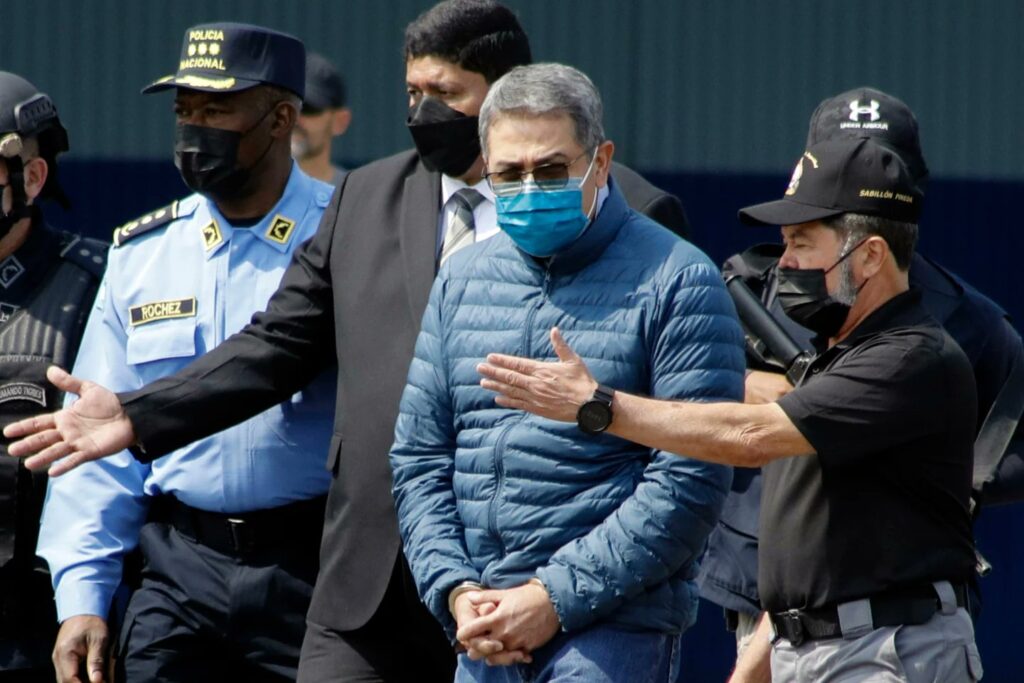
The political and judicial landscape of Honduras shifted dramatically this week, and the ripples reached Washington as well. Former Honduran President Juan Orlando Hernández, who only last year received a forty-five-year prison sentence in a New York federal courtroom for facilitating the passage of hundreds of tons of cocaine into the United States, walked free after a pardon from President Donald Trump. His release marked an abrupt reversal that stunned legal analysts, outraged anti-corruption activists, and energized political factions in Honduras on the eve of a crucial election.
The U. S. Bureau of Prisons confirmed Monday that Hernández had been released from the penitentiary in Hazelton, West Virginia. By Tuesday morning, his wife Ana García had publicly thanked Trump on the social platform X. Her post expressed profound relief, and it was accompanied by a photograph from the U. S. inmate registry showing her husband’s updated status.
Trump addressed the pardon while speaking with reporters aboard Air Force One. He said he had been lobbied by many in Honduras who believed Hernández had been framed. Trump characterized the conviction as a political setup carried out by the Biden administration. He also said he reviewed the facts and reached the conclusion that the former Honduran leader had been wrongfully targeted.
The case against Hernández was one of the most significant anti-narcotics prosecutions ever brought against a former head of state. After leaving office in 2022, he was swiftly arrested at Washington’s request. Prosecutors in New York argued that he protected traffickers who moved approximately four hundred tons of cocaine north through Honduras. They said he accepted millions of dollars in bribes and used the Honduran police and military to ensure safe passage for cartels that sought access to the U. S. market.
Throughout the proceedings, Hernández insisted he was the victim of retribution. He repeatedly portrayed himself as a partner in the fight against international drug trafficking, a leader who collaborated with American authorities under multiple presidential administrations. The judge in his case, P. Kevin Castel, flatly rejected that narrative. Castel said the former president used the trappings of office to mask illicit activity and warned that his sentence should stand as a message to powerful individuals who believe their status shields them from accountability.
The pardon now raises another complex question. What comes next for Hernández? Returning to Honduras will not be straightforward. Hours after Trump announced his intention to grant clemency, Attorney General Johel Zelaya said his office was obliged to pursue justice and end impunity. Zelaya did not specify which charges Hernández could face, although the former president’s time in office had been shadowed by several corruption probes.
President Xiomara Castro, who originally approved his extradition, remains in office until January. Her administration has positioned itself as an opponent of the political structures that supported Hernández. Any potential return for the former president would likely unleash fresh tensions between rival factions in Tegucigalpa.
The timing of the pardon added another layer of volatility to the political landscape. Honduras is in the midst of a presidential contest. Observers say Trump’s move boosted Nasry Asfura, the National Party candidate and one of the leading contenders. Asfura is closely aligned with Hernández’s political base, and the pardon reinforced longstanding party narratives of persecution at the hands of foreign powers and domestic rivals.
For many Hondurans, the sudden liberation of a former leader convicted in the United States rekindles difficult memories involving corruption, impunity, and the ongoing influence of narcotrafficking on national politics. For Washington, the move opens a new chapter in the already charged debate over presidential authority, international law enforcement cooperation, and the future of the United States’ role in Central American governance.
The story of Juan Orlando Hernández is not ending. It is transforming. It now enters a new and unpredictable phase, shaped by political calculations in two countries and the competing narratives of justice, sovereignty, and power that have long defined the troubled relationship between Honduras and the United States.