
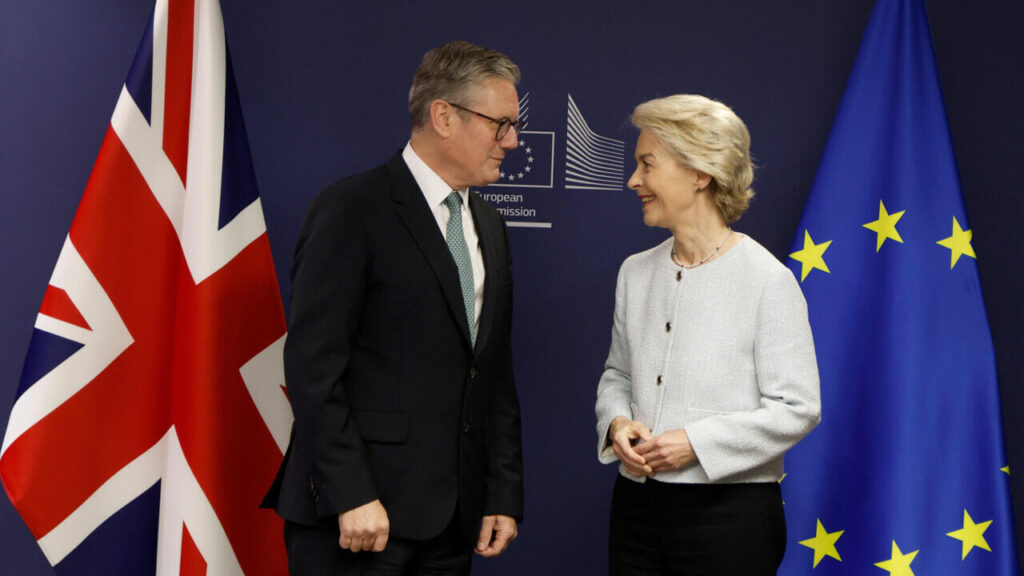
Image: from FRANCE 24 English X@France24_en
By Open Chronicle Staff with Agencies
BRUSSELS/LONDON — In a milestone for post-Brexit diplomacy, the United Kingdom and the European Union reached an agreement on Wednesday to allow British students to rejoin the Erasmus+ student exchange program. The move marks the most symbolic step toward repairing cross-channel relations since the UK’s departure from the bloc in 2020.
Prime Minister Keir Starmer, who has championed a “new era” of partnership since taking office, hailed the agreement as evidence that his strategy of closer alignment is yielding tangible results. Unlike the often contentious negotiations of previous administrations, Starmer’s government has prioritized pragmatism and mutual benefit.
“Today’s agreements prove that our new partnership with the EU is working,” stated EU Relations Minister Nick Thomas-Symonds. He characterized the return to the exchange scheme as “a huge win for our young people,” emphasizing that the deal “puts opportunity first.”
Nick Thomas-Symonds MP announces that the UK is rejoining Erasmus+. 🎉
"It will open up world class opportunities for students, teachers, youth workers, sports sector professionals and communities of all ages." pic.twitter.com/cPaVqePoaN
— Best for Britain (@BestForBritain) December 17, 2025
According to government figures, the UK’s contribution for the 2027/28 academic year is set at $760 million. Notably, British negotiators secured a 30 percent discount compared to the default terms outlined in the original post-Brexit trade agreement.
Officials estimate that more than 100,000 students across the UK could benefit from the scheme in its first year of operation, restoring a mobility right that had been a cornerstone of British academic life for decades.
The Erasmus+ deal is part of a broader package of cooperation. The two sides also announced:
- The start of formal negotiations on electricity market integration.
- A firm deadline to finalize a comprehensive food and drink trade deal by next year.
- Agreement on carbon markets linkage to address climate goals jointly.
The return to Erasmus+ has long been a “red line” and a primary demand for EU officials seeking to strengthen cultural and social ties. By conceding on this point, the UK government signals a definitive shift away from the isolationist rhetoric of the past four years, moving toward a future defined by shared knowledge and student mobility.