
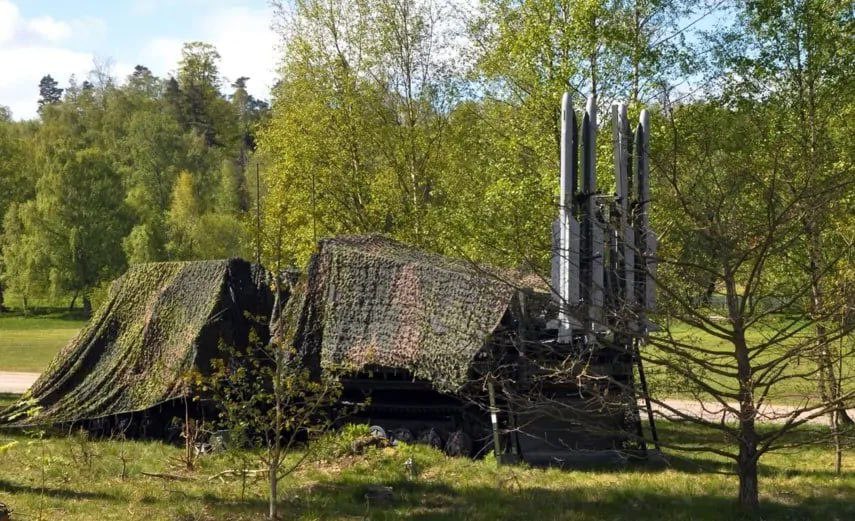
Image: from TACTIX X@TactixMilitary
By Open Chronicle Staff with Agencies | December 21, 2025
STOCKHOLM — Sweden’s Defence Materiel Administration (FMV) has officially placed a new order for additional IRIS-T SLS (Surface Launched Short-range) air defense launchers, signaling a rapid acceleration in the nation’s effort to shield its borders from low-altitude Russian threats.
The deal with German manufacturer Diehl Defence, confirmed on December 11, includes a robust logistics package and spare parts. It builds on Sweden’s role as a founding partner in the IRIS-T program, a family of missiles that has become the breakout star of European air defense following its high-performance debut on the battlefields of Ukraine.
Closing the “SHORAD” Gap
The IRIS-T SLS system, known in Sweden as Fire Unit 98 (RBS 98), is designed to occupy the Short-Range Air Defense (SHORAD) layer. Unlike long-range systems like the Patriot, the SLS is a mobile, agile shield focused on “low flight level” threats that use terrain masking to avoid radar detection.
The decision to expand this specific fleet is driven by two key strategic lessons:
-
The Drone & Cruise Missile Threat: The SLS is optimized to defeat small UAVs and cruise missiles flying below the radar horizon, which have become staple weapons in modern saturation attacks.
-
Logistical Commonality: The SLS uses the same infrared-guided missile as Sweden’s Gripen fighter jets. This “one-missile” strategy allows the Swedish military to share a single stockpile and maintenance pipeline for both its ground units and its air force.
Building a Layered Network
This latest purchase is the “close-in” component of a massive SEK 12.5 billion ($1.2 billion) modernization effort. Sweden is currently building a three-tier shield:
-
Tier 1 (High/Long): The Patriot (LvS 103) system for high-altitude ballistic and aircraft threats.
-
Tier 2 (Medium): The IRIS-T SLM (seven units ordered in June 2025), providing a 40 km bubble of protection.
-
Tier 3 (Short/Mobile): The IRIS-T SLS, protecting maneuver brigades and critical nodes against sudden, low-altitude strikes.
| System Variant | Range | Max Altitude | Primary Role |
| IRIS-T SLS | ~12 km | 8,000 m | Brigade Protection (SHORAD) |
| IRIS-T SLM | ~40 km | 20,000 m | Regional Area Defense |
| IRIS-T SLX | ~80 km | 30,000 m | Long-Range (Under Development) |
NATO Interoperability
As a new NATO member, Sweden’s investment aligns with the European Sky Shield Initiative (ESSI). Germany, Estonia, and Latvia have also committed to the IRIS-T ecosystem, creating a standardized defense corridor across the Baltic region. The SLS system’s mobility, often mounted on the BvS 10 all-terrain vehicle, allows Swedish forces to “shoot and scoot,” relocating before counter-battery fire or loitering munitions can strike back.
By doubling down on the IRIS-T lineage, Stockholm is ensuring it can not only defend its own rugged terrain but also plug seamlessly into a broader, networked NATO shield designed to deter a revisionist Russia.
Would you like me to find the specific delivery timeline for the SLM units ordered in June, or generate a set of tags for this article?
Sweden’s IRIS-T SLS Expansion: How Stockholm Is Building a Low-Altitude Shield
This video provides an in-depth military analysis of how the IRIS-T SLS fits into Sweden’s strategic defense posture and its role within the NATO alliance.