
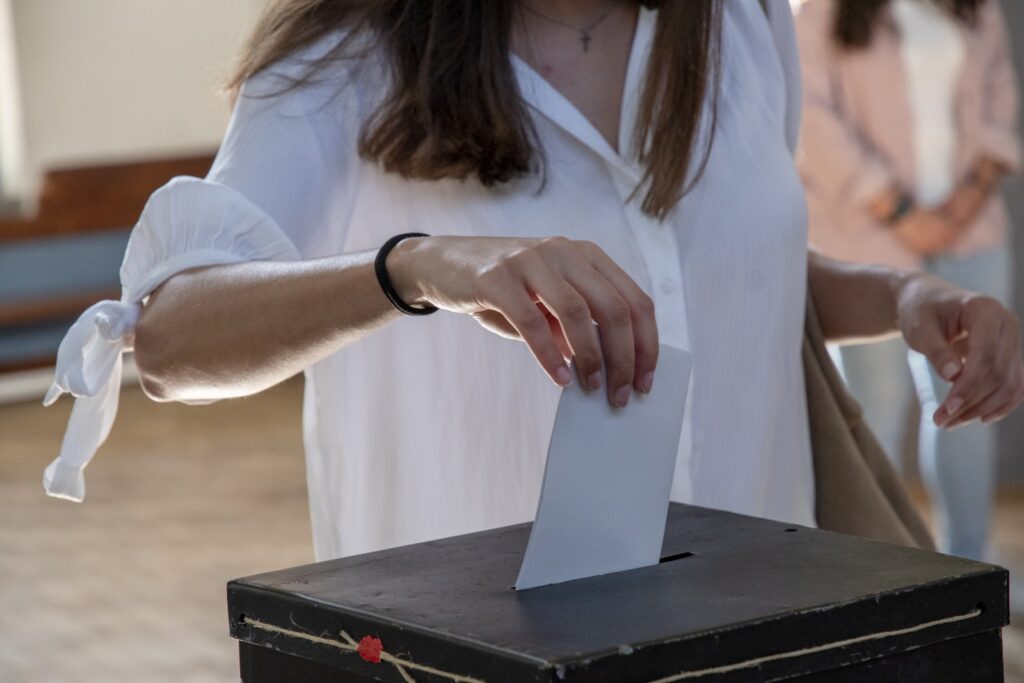
Image: from Resistência Lusitana X@resist_lusitana
LISBON — Sunday, January 18, 2026 — Portugal is witnessing a revitalized democratic spirit today. Early data suggest the country is on track for its highest presidential election turnout in two decades. According to projections from the Catholic University for RTP, the abstention rate is expected to fall between 35.6% and 40.6%, marking a significant increase in voter engagement compared to the last several election cycles.
Breaking the Trend of Apathy
If these projections hold, today’s vote will record the lowest abstention since 2006, when Aníbal Cavaco Silva was first elected. For comparison, the 2021 election—held during the height of the COVID-19 pandemic—saw a staggering 60.7% abstention rate.
By 4:00 PM local time, the Ministry of Internal Administration reported that 45.51% of the more than 11 million registered voters had already cast their ballots. This is a sharp rise from the 35.4% recorded at the same hour in 2021 and even surpasses the 37.7% seen in 2016.
A Record Field of Candidates
The high turnout is likely driven by the most competitive field in Portuguese history. With incumbent Marcelo Rebelo de Sousa term-limited, 11 validated candidates are vying for the Palace of Belém. The ballot features a diverse range of political visions:
-
The Establishment: Socialist António José Seguro and the PSD-backed Luís Marques Mendes.
-
The Surge: Far-right leader André Ventura (Chega), who is polling strongly alongside liberal João Cotrim de Figueiredo.
-
The Outsider: Retired Admiral Henrique Gouveia e Melo, running as an independent.
-
The Record-Breakers: The field also includes Catarina Martins (BE), Jorge Pinto (Livre), and several independent figures like musician Manuel João Vieira.
Calls for Unity and Participation
Prime Minister Luís Montenegro, who cast his vote earlier today, emphasized the weight of the occasion. “It is vital that there is great participation,” Montenegro stated, echoing the sentiments of all 11 candidates who have spent the day urging citizens to head to the polls. André Wemans, spokesperson for the National Electoral Commission (CNE), noted that the absence of major incidents at polling stations has allowed for a smooth and “quite superior” flow of voters during the afternoon hours.
Historical Context: Abstention at 4:00 PM
| Election Year | Turnout at 4:00 PM | Final Abstention Rate |
| 2026 (Projected) | 45.51% | 35.6% – 40.6% |
| 2021 | 35.44% | 60.74% |
| 2016 | 37.69% | 51.34% |
| 2006 | 45.56% | 38.47% |
| 1980 (Record Low) | Data N/A | 15.80% |
With polls closing at 7:00 PM (8:00 PM in the Azores), the high participation suggests that the Portuguese public is deeply invested in the transition of power. If no candidate secures more than 50% of the valid votes tonight, the two most-voted candidates will face a runoff on February 8. Given the current fragmented polling, a second round appears almost certain.