
By Open Chronicle News Desk | January 20, 2026
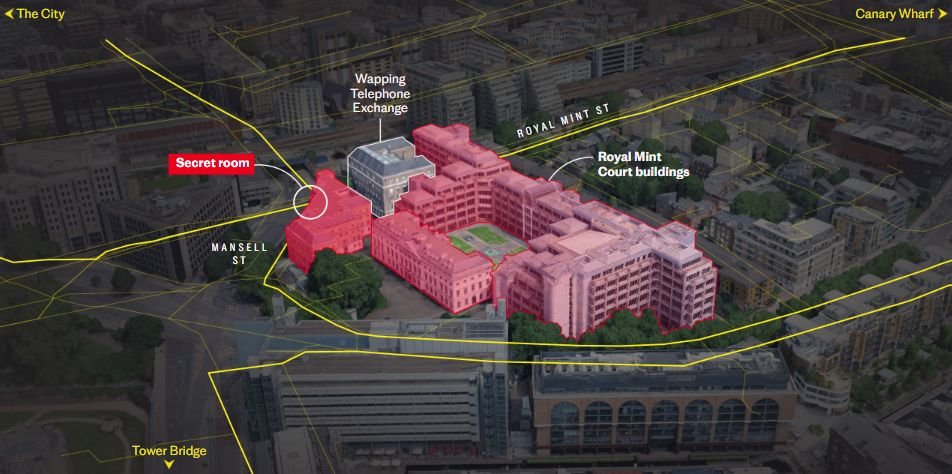
LONDON – In a move that has ignited a political firestorm, the British government has officially granted planning permission for China to build its largest diplomatic mission in Europe. The decision, signed off by Housing Minister Steve Reed on Tuesday, clears the way for a massive complex at Royal Mint Court, near the Tower of London, ending a seven-year planning standoff.
The approval comes just days before Prime Minister Keir Starmer is expected to visit Beijing—the first such trip by a UK leader since 2018, leading critics to accuse the government of prioritizing diplomatic “thaw” over national security.
BREAKING:
UK approves plan to build a new mega Chinese embassy in London featuring 208 underground rooms despite security fears. pic.twitter.com/cCEr8oz6Xz
— Globe Eye News (@GlobeEyeNews) January 20, 2026
A “Super Embassy” on a Historic Site
The People’s Republic of China purchased the 5-acre Royal Mint Court site in 2018 for an estimated £255 million ($301 million). The project will consolidate seven existing Chinese diplomatic offices across London into a single, 55,000-square-meter compound.
Plans for the site include:
-
Offices and Staff Housing: Accommodations for approximately 200 diplomats and staff.
-
Sensitive Infrastructure: A substantial basement area and a new tunnel system to connect key buildings.
-
Heritage Preservation: The restoration of the Grade II* listed Johnson Smirke Building, mixed with new high-security office blocks.
Espionage and Surveillance Alarms
The decision has faced fierce resistance from intelligence experts and lawmakers. Critics, including Conservative Party leader Kemi Badenoch and former Conservative leader Sir Iain Duncan-Smith, warned that the “super embassy” could serve as a “mega spy hub.”
A primary concern is the site’s proximity to underground fiber-optic cables that carry sensitive financial data between London’s financial districts. Security Minister Dan Jarvis acknowledged that China continues to pose a national security threat but insisted that a “range of measures” developed with intelligence agencies would manage the risks.
Protests and Dissident Fears
Human rights organizations and diaspora groups, including Hong Kongers, Tibetans, and Uyghurs, have staged large demonstrations at the site, fearing the facility will be used to monitor and intimidate critics of Beijing living in the UK.
Residents of Tower Hamlets, the local borough that originally rejected the plans in 2022 due to safety and protest concerns, have vowed to challenge the government’s “quasi-judicial” approval in the courts. “This is a betrayal of national security and the safety of dissidents on British soil,” stated a spokesperson for the residents’ association.
Diplomatic Leverage
The timing of the approval is widely seen as a reciprocal gesture. The UK has been seeking approval for its own £100 million embassy redevelopment in Beijing, which has been stalled by Chinese authorities for years.
By greenlighting the London project, the Starmer government hopes to secure progress on its own diplomatic interests and signal a reset in economic ties. However, with MI5 having recently warned of “targeted and widespread” efforts by Chinese agents to recruit UK lawmakers, the move remains one of the most contentious foreign policy decisions of the decade.