
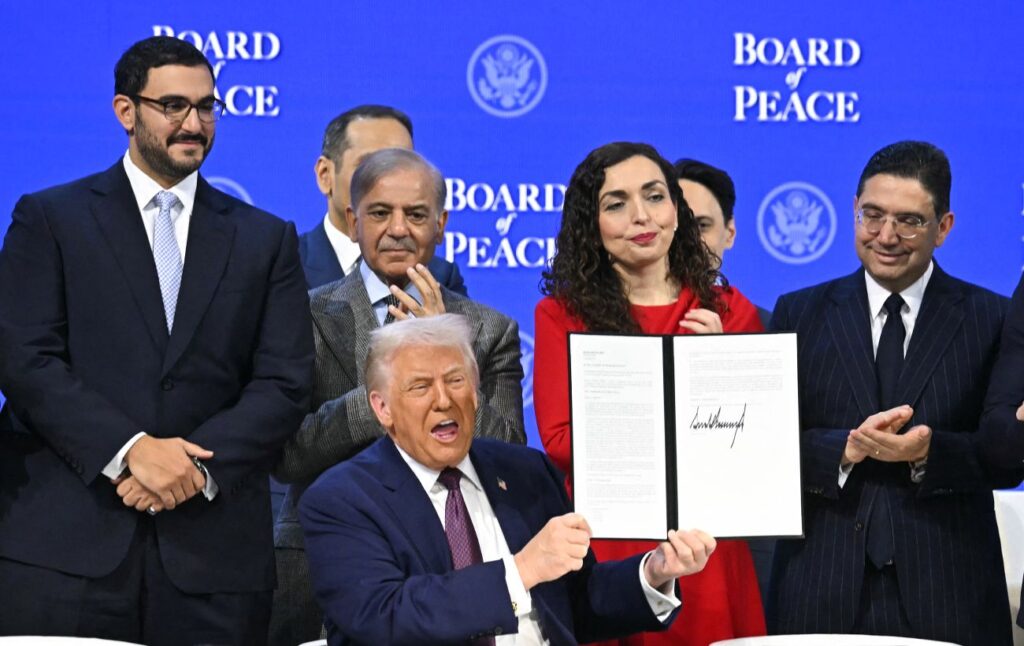
Image: from Anton Gerashchenko X@Gerashchenko_en
By Open Chronicle News Desk
BRUSSELS – The European Union’s diplomatic wing has identified significant legal and constitutional concerns regarding the founding charter of U.S. President Donald Trump’s newly proposed “Board of Peace.” According to internal documents seen by Euractiv, the initiative may conflict with the EU’s foundational principles and international legal standards.
The European External Action Service (EEAS) issued a document on January 19th stating that the board’s current governance structure “raises a concern under the EU’s constitutional principles.” Specifically, the EU is wary of the concentration of power in the hands of the chairman, a role President Trump has designated for himself as the “inaugural chairman,”—and his unilateral authority to appoint a successor and veto majority decisions.
Europe isn’t buying it.
Top EU leader Antonio Costa flags serious doubts over the so-called “Board of Peace”- questioning its scope, governance, and even its compatibility with the UN Charter.
When peace needs this many disclaimers, the world should pay attention. 👀🌍 pic.twitter.com/LgaAJ5gP7Z
— The Alternate Media (@AlternateMediaX) January 23, 2026
European Council President António Costa expressed “serious doubts” about the board following a summit in Brussels, noting that its statutes go far beyond the security council resolution initially expected. “Right now it’s more of a political decision than a legal one,” a senior EU official remarked, highlighting the tension between maintaining the transatlantic alliance and upholding the autonomy of the EU legal order.
The charter, which carries a $1 billion price tag for permanent membership, was unveiled by Trump at the World Economic Forum in Davos. While intended to oversee the rebuilding of Gaza, the charter’s scope appears much broader, potentially rivaling the United Nations. This has led countries like France and the UK to decline invitations to join, citing incompatibility with UN commitments and the controversial inclusion of Russian President Vladimir Putin.
While Hungary and Bulgaria have responded positively to the initiative, the broader EU consensus remains skeptical. The EU continues to scrutinize the legalities, with officials warning that joining such a body could undermine the multilateral system that has governed international diplomacy for decades.