
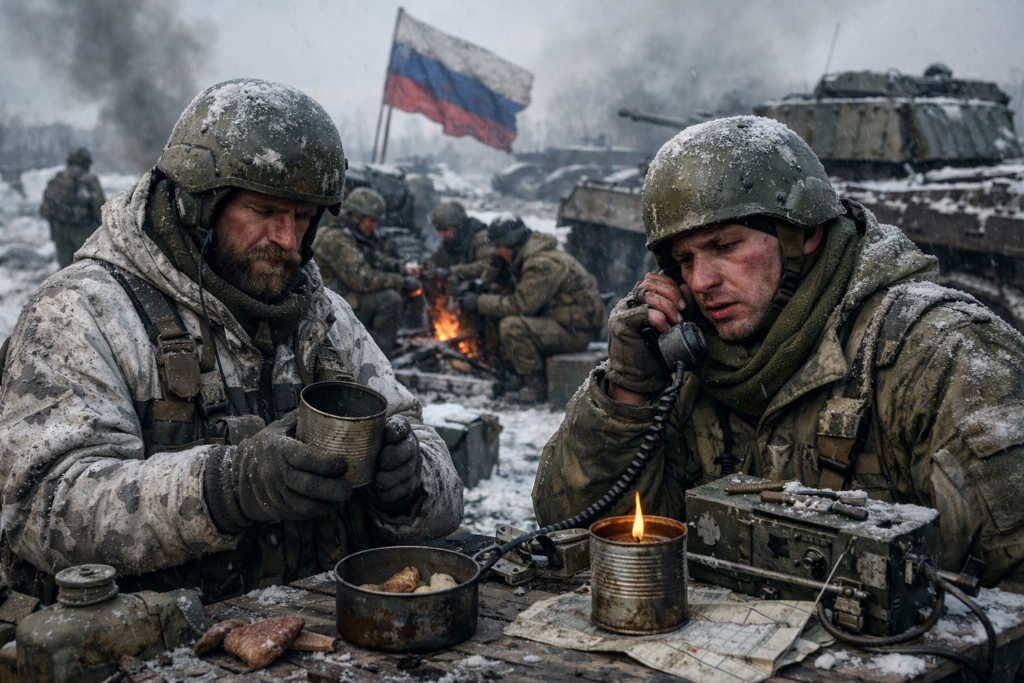
Image Credentials: Image Title: Intercepted Calls Reveal Crumbling Logistics and Exhaustion Within Russian Ranks Source: (sora.openai) Date: February 2026. Attribution: This image was created using AI-generated imagery (sora.openai) and does not depict a real-world scene.
By Open Chronicle Staff
KYIV, Ukraine — As winter’s grip tightens across the front lines, the Russian military is facing a deepening internal crisis. Intercepted communications released by Ukraine’s Main Intelligence Directorate (HUR) paint a grim picture of systemic logistical failure, with frontline infantry units reporting severe shortages of food, water, and basic supplies.
The intelligence reports suggest that the Russian logistical support system is entering a state of significant decline. Soldiers in entrenched positions are no longer merely complaining about the quality of their rations; many are reporting that they have no food at all for extended periods.
“Skin and Bones”
In one particularly graphic audio intercept, a Russian soldier describes his deteriorating physical condition with desperate frustration.
“How can things be like this? We don’t have any food or drinks,” the soldier says, using expletives to describe the situation. “If I turn sideways, you won’t even notice me. The uniform just hangs like on a hanger. It’s just skin, bones, and a beard.”
The recording, which intelligence officials say is representative of a growing trend, highlights a breakdown in the “last-mile” delivery of supplies to the most forward-deployed units. While the Kremlin continues to project an image of a well-oiled military machine, the reality on the ground appears to be one of physical and psychological exhaustion.
A Multidimensional Crisis
The lack of food is not the only issue plaguing the Russian ranks. Previous intelligence findings have indicated a surge in substance abuse as a coping mechanism for the harsh conditions and the reality of combat. In 2025 alone, over 100 deaths were attributed to drug addiction within Russia’s Central Military District as soldiers reportedly turned to opioids to escape the battlefield’s pressures.
Military analysts suggest that the combination of hunger, extreme cold, with temperatures recently plunging to -25°C, and poor supply lines is severely degrading the combat effectiveness of Russian infantry.
“Logistics is the lifeblood of any army,” said a defense analyst specializing in Eastern European security. “When you lose the ability to feed your men, you lose the ability to hold ground. Morale doesn’t just dip; it vanishes.”
Strategic Implications
The Ukrainian Main Intelligence Directorate continues to monitor these logistical fissures, viewing them as critical indicators of the Russian army’s long-term sustainability. While Russia has launched massive missile and drone strikes against Ukrainian energy infrastructure to freeze out civilians, its own troops appear to be suffering from a similar lack of warmth and sustenance in the trenches.
As the war of attrition continues, the ability of the Russian command to rectify these supply chain failures may determine whether their front lines remain stable or begin to fracture under the weight of systemic neglect.