
By Open Chronicle Staff | Tuesday, March 10, 2026
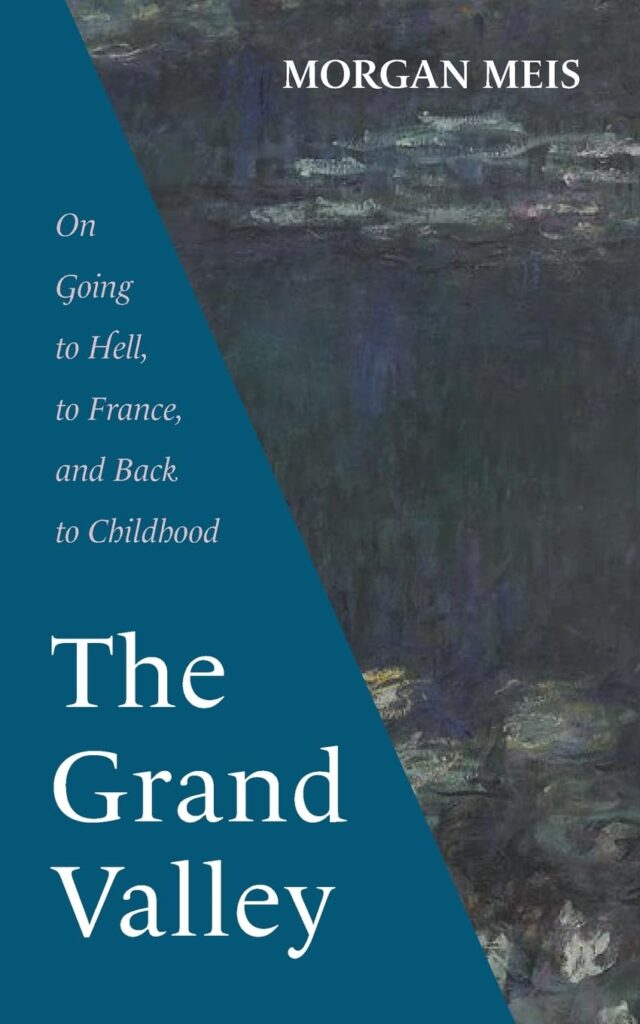
DETROIT — Essayist and critic Morgan Meis has brought his ambitious literary triptych to a close, offering a masterclass in how a single physical object can decode the complexities of human civilization. In his latest book, The Grand Valley (2025), Meis concludes a journey that began with Peter Paul Rubens and moved through Franz Marc, using the specific brushstrokes of master painters to grapple with war, philosophy, and the “cracks in reality.”
The trilogy, published by Slant Books, has garnered praise for its unique “spiraling” methodology, deeply examining the technical details of a canvas while simultaneously expanding outward into the intellectual history of the world.
A Triptych of Civilizational Crisis
Meis’s trilogy functions as a unified investigation into how art acts as a prophet and a barometer for the human condition:
-
Volume I: The Drunken Silenus (2020) – Focusing on Peter Paul Rubens’s Baroque masterpiece, Meis explores the thin line between the divine and the animalistic. He uses the figure of Silenus to discuss the religious wars of the 17th century and Nietzschean philosophy.
-
Volume II: The Fate of the Animals (2022) – Meis analyzes Franz Marc’s 1913 painting of the same name. Written through the lens of Marc’s letters from the trenches of World War I, Meis argues the painting was a terrifying prophecy of the “apocalypse” that eventually claimed the artist’s life at the Battle of Verdun.
-
Volume III: The Grand Valley (2025) – The final volume turns to Joan Mitchell’s La Grande Vallée series. Meis contrasts Mitchell’s desire to “obliterate the self” through abstraction with the critic’s own role in assigning meaning, weaving in the thoughts of Carl Jung, Gertrude Stein, and Claude Monet.
The “Spiraling” Method
In a recent interview featured on 3 Quarks Daily and Lapham’s Quarterly, Meis described his process as a way of “going deeper into the painting” to find truths that go beyond mere aesthetics. He argues that artists like Marc did not paint merely to “contribute to culture,” but as an “act of war” designed to break open existing cultural frameworks.
“Taking something very specific, this physical thing that sits in the world, you can spiral out into the bigger context it sits in historically and intellectually,” Meis explained. “But you’re also spiraling inward… going deeper into the painting.”
A Subjective Journey
The trilogy is noted for its highly personal and often “warts-and-all” style, blending traditional art criticism with biography and autobiography. While some critics have noted a distaste for the “hellish” or “creepy” nature of Rubens’s work, they acknowledge Meis’s skill in making these centuries-old creators feel visceral and dangerously relevant to the 21st century.
With the release of The Grand Valley, Meis cements his reputation as a critic who refuses to “smooth over” the discomforting aspects of art, choosing instead to lean into the mystery and violence inherent in the creative act.
Open Chronicle Arts Magazine
Explore the world of art, creativity and culture. Discover extraordinary artists, timeless masterpieces, contemporary movements and the stories behind the works that shape our world.
Back to Arts Magazine