
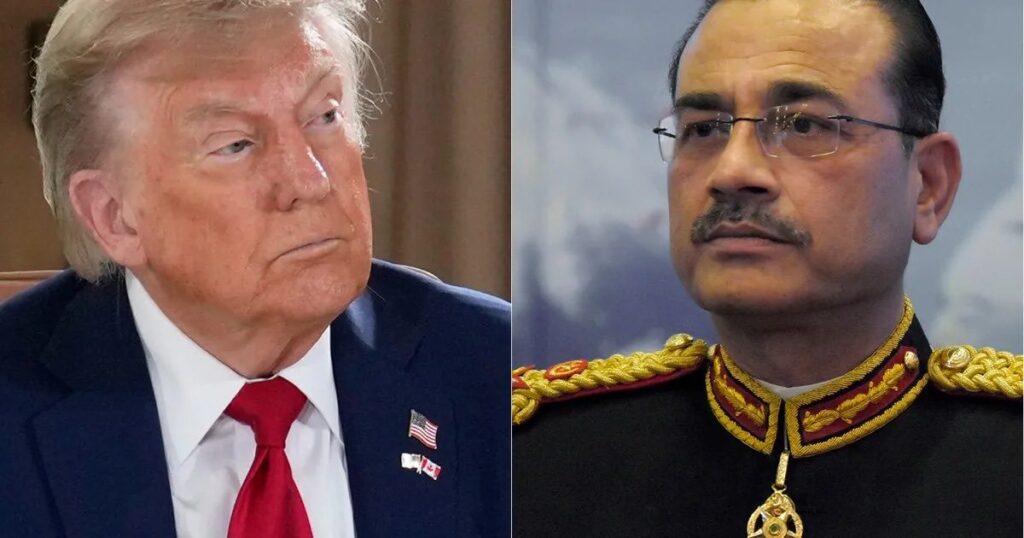
Image: from Nauman Feroz X @nomiferoz
By Open Chronicle Staff with Agencies | March 23, 2026
WASHINGTON, D.C. — In a dramatic pivot that has sent shockwaves through global markets, the United States has reportedly transmitted a formal message to Tehran via international mediators, signaling a potential path toward ending the 23-day-old conflict. The development comes as President Donald Trump expressed newfound optimism for a “complete and total resolution,” backing away from an ultimatum to strike Iran’s energy grid.
Senior Iranian Foreign Ministry officials confirmed Monday that they have received “specific points” from Washington through intermediaries, believed to include Turkey, Oman, and Pakistan. While Tehran initially dismissed the American overtures as “psychological warfare” designed to lower oil prices, the acknowledgment of a formal message suggests that backchannel diplomacy is gaining traction.
“15 Points of Agreement”
Speaking to reporters on Monday, President Trump claimed that the two warring nations have already identified roughly 15 points of agreement. “I think there’s a very good chance we’re going to end up in a deal,” Trump said, noting that Iranian officials had signaled a desire for peace.
The President’s son-in-law, Jared Kushner, and Middle East special envoy Steve Witkoff have reportedly been leading the American side of the discussions, which continued late into Sunday evening. Trump clarified that while the U.S. is communicating with a “top person” in the Iranian hierarchy, rumored by some sources to be Parliament Speaker Mohammad-Bagher Ghalibaf, he has not spoken directly with the new Supreme Leader, Ayatollah Mojtaba Khamenei.
A Five-Day Reprieve
The most immediate impact of the diplomatic flurry is a five-day stay on planned U.S. military strikes against Iranian power plants. Over the weekend, the White House had threatened to “obliterate” the country’s energy infrastructure if the Strait of Hormuz remained closed to international shipping.
“We’re doing five days, and we’ll see how that goes,” Trump told reporters. “Otherwise, we’ll just keep bombing our little hearts out.”
The strategic pause aims to provide breathing room for negotiators to address the two primary American demands: the permanent reopening of the Strait of Hormuz and the total surrender of Iran’s enriched uranium stockpiles. Trump asserted on Monday that Iran has already “agreed they will not have a nuclear weapon,” though no such confirmation has been issued by Tehran.
Markets React to “Peace Rally”
The hint of a de-escalation triggered an immediate and violent reaction in the commodities and stock markets. Brent Crude, the international oil benchmark, plunged more than 10% on Monday, falling to approximately $100 per barrel, a significant drop from the wartime peaks that had threatened to trigger a global recession.
On Wall Street, the S&P 500 rallied 1.15%, buoyed by hopes that the “energy catastrophe” of a regional blackout might be averted.
The Regional Wildcard
Despite the optimism in Washington, the situation on the ground remains volatile. Even as the U.S. paused its energy sector strikes, the Israeli military announced a “wide-scale wave” of infrastructure attacks in Tehran on Monday afternoon. Prime Minister Benjamin Netanyahu confirmed he had spoken with President Trump, stating that while there is a “chance” for an agreement, Israel will continue to strike “both in Iran and in Lebanon.”
With U.S. intelligence reporting at least a dozen Iranian mines still drifting in the Strait of Hormuz and the Iranian Revolutionary Guard warning of “humiliating punishment” for aggressors, the five-day window for diplomacy is widely viewed as a fragile, last-ditch effort to prevent the war from expanding into a permanent regional conflagration.