
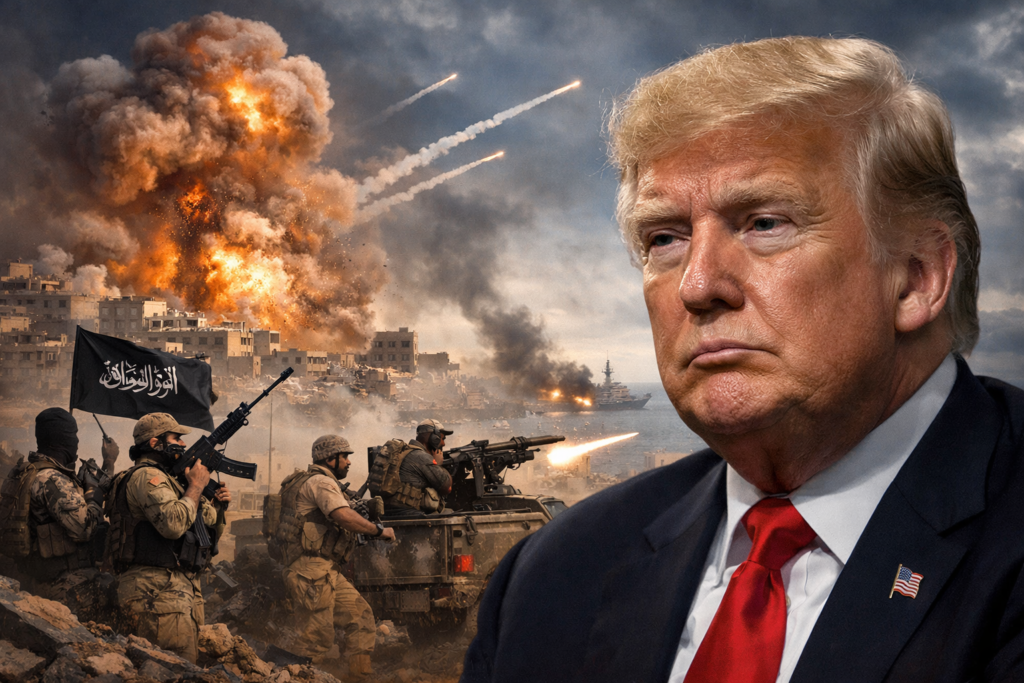
Image Credentials: Image Title: TRUMP SIGNALS HESITATION ON IRAN CEASEFIRE AS REGIONAL WAR ESCALATES Source: (sora.openai) Date: March 2026. Attribution: This image was created using AI-generated imagery (sora.openai) and does not depict a real-world scene.
By Open Chronicle with Agencies | March 26, 2026
WASHINGTON, D.C. — President Donald Trump expressed fresh skepticism on Thursday regarding the prospects of a looming ceasefire with Iran, despite earlier reports suggesting a deal could be reached by the weekend. Speaking during a high-stakes Cabinet meeting at the White House, the President characterized Tehran as an “eager” yet “unreliable” negotiating partner, casting a shadow of doubt over a 15-point U.S. peace proposal currently being reviewed by Iranian leadership.
“Iran wants a deal badly, but I’m not sure we’re ready to give them one yet,” Trump told reporters, even as he acknowledged the mounting human and economic toll of the conflict. “They have to understand the reality of the current moment. We are prepared to escalate sharply if they don’t.”
The President’s remarks come as a stark contrast to reports from Israeli media earlier this week, which indicated that a ceasefire announcement was expected as early as Saturday. The conflict, which has now entered its second month, has seen a dramatic expansion of hostilities across the Middle East, drawing in regional powers and devastating global supply chains.
A Region in Flames: On the ground, the “war-beyond-boundaries” described by UN Secretary-General António Guterres showed no signs of abating. In southern Lebanon, fresh waves of Israeli strikes killed at least nine people and wounded dozens more on Wednesday. Meanwhile, the strategic ripples of the war reached the Arabian Peninsula, where Saudi Arabian air defenses intercepted 28 drones and a ballistic missile targeting the country’s Eastern Region.
The maritime front also remains volatile. In Kuwait, authorities responded to a major fire at a fuel tank at Kuwait International Airport after a “hostile drone” strike. Across the Gulf, Iran’s Intelligence Ministry announced the arrest of 39 individuals in Tehran, alleging links to Israeli-backed “terrorist groups” and plots to destabilize the capital.
Global Economic Aftershocks: The hesitation in Washington sent immediate tremors through global markets. Oil prices surged past $100 per barrel on Thursday after Iranian officials ruled out direct talks with the U.S. and vowed to defend their sovereignty.
The economic fallout is being felt far beyond the pump. In the United States, gas prices have neared the $4 per gallon mark, triggering shipping surcharges that are driving up costs for suppliers and retailers alike. In East Africa, Kenya’s vital flower industry reported losing millions of dollars weekly due to the closure of traditional trade routes and soaring freight costs.
Diplomatic Deadlock: While the White House maintains it favors a peaceful resolution, the diplomatic path remains fraught with “double standards,” according to Spain’s Prime Minister, who joined other European leaders in calling for a consistent application of international law. European Council President Antonio Costa described the humanitarian situation in Lebanon as “appalling,” citing more than 1.3 million internally displaced persons.
In a move that further complicates the geopolitical landscape, Hungarian Prime Minister Viktor Orbán threatened to suspend gas supplies to Ukraine unless Russian oil transit through the Druzhba pipeline is restored, a demand that highlights how the Middle Eastern conflict is exacerbating existing European energy vulnerabilities.
As the Saturday deadline for a potential ceasefire approaches, the world remains on edge. For now, the “15 points” of the American proposal remain on the table in Tehran, but with President Trump’s latest rhetoric, the distance between the two sides appears as vast as ever.