
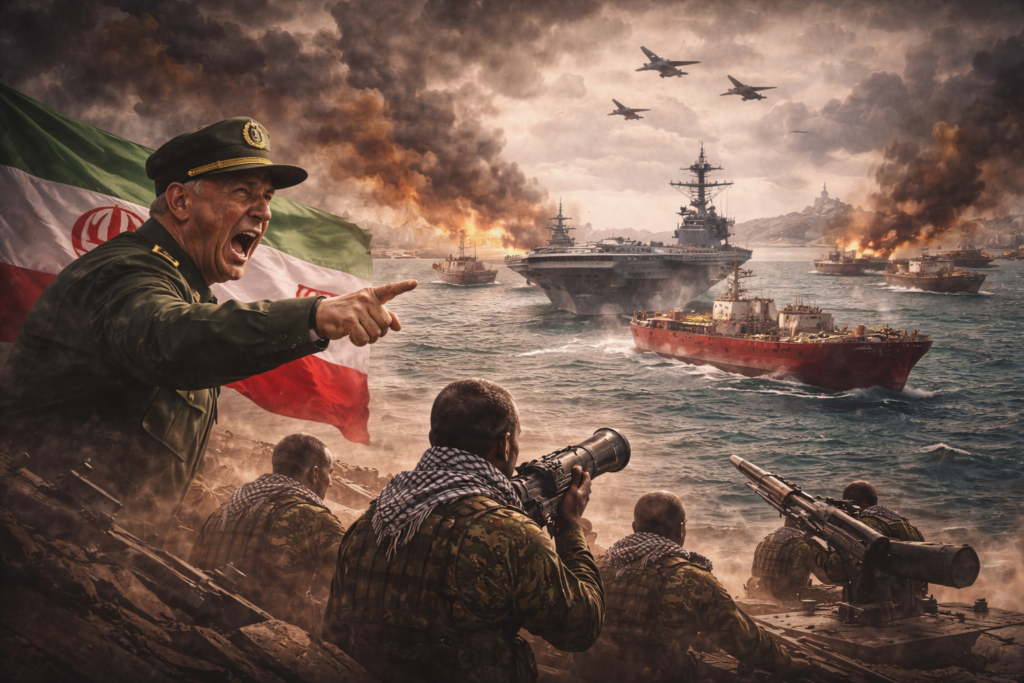
Image Credentials: Image Title: Iran Warns U.S. Naval Blockade Threatens Fragile Ceasefire Source: (chatgpt.com) Date: April 2026. Attribution: This image was created using AI-generated imagery (chatgpt.com) and does not depict a real-world scene.
Open Chronicle | With Agencies
Tehran — Iran has warned that the ongoing United States naval blockade in the Strait of Hormuz could collapse the current ceasefire, raising fears of renewed escalation in an already volatile regional conflict.
Senior Iranian military officials said continued restrictions on Iranian shipping would be interpreted as a direct violation of the truce, which has held tenuously for just over a week amid ongoing diplomatic efforts.
Tehran Signals Retaliation
Iranian commanders, including senior figures within the Islamic Revolutionary Guard Corps, warned that if the blockade persists, Tehran could halt all trade across key maritime routes, including the Persian Gulf, the Sea of Oman, and the Red Sea.
Officials described the U.S. actions as illegal and destabilizing, arguing that interference with Iranian commercial vessels and oil tankers undermines both economic stability and diplomatic progress.
The warning signals a potential escalation that could disrupt not only regional trade but also global energy markets, given the strategic importance of the Strait of Hormuz.
Washington Maintains Pressure
The United States has defended the blockade as a necessary measure, with officials stating it has effectively halted maritime trade linked to Iran. The policy is part of a broader effort by the administration of Donald Trump to pressure Tehran into reaching a comprehensive agreement to end the conflict.
Trump has indicated that negotiations may resume soon, hinting at a possible second round of talks mediated by regional actors, though no formal timeline has been confirmed.
Diplomatic Channels Remain Open
Despite rising tensions, diplomatic activity continues behind the scenes. Delegations from regional powers have engaged in shuttle diplomacy, with Pakistan playing a mediating role in facilitating communication between Washington and Tehran.
Iranian officials have reiterated that any future agreement must include a full cessation of hostilities and the lifting of economic sanctions. They also maintain that their nuclear program remains peaceful and subject to international safeguards.
Internal Pressure and Hardline Stance
Inside Iran, political pressure is mounting. Hardline factions and segments of the public have voiced strong opposition to concessions, particularly regarding uranium enrichment and control over the Strait of Hormuz.
Lawmakers and officials have emphasized national sovereignty, warning that Tehran will not yield to external demands. Some have argued that Iran’s endurance through weeks of conflict has strengthened its negotiating position.
Rising Tensions Beyond the Battlefield
The الأزمة is further complicated by ongoing domestic developments. Authorities have reported arrests linked to alleged espionage and security threats, alongside continued enforcement of harsh judicial measures.
Human rights organizations have raised concerns about a sharp increase in executions and crackdowns during the conflict period, adding another layer of scrutiny to Iran’s internal policies.
A Precarious Moment
The situation now stands at a critical juncture. While diplomatic efforts continue, the risk of miscalculation remains high, particularly as military pressure and political rhetoric intensify on both sides.
For the global community, the stakes extend far beyond the region. Any disruption to the Strait of Hormuz could have immediate consequences for energy supplies, trade flows, and economic stability worldwide.
As negotiations hang in the balance, the coming days may determine whether the ceasefire evolves into a lasting peace or collapses into renewed confrontation.