
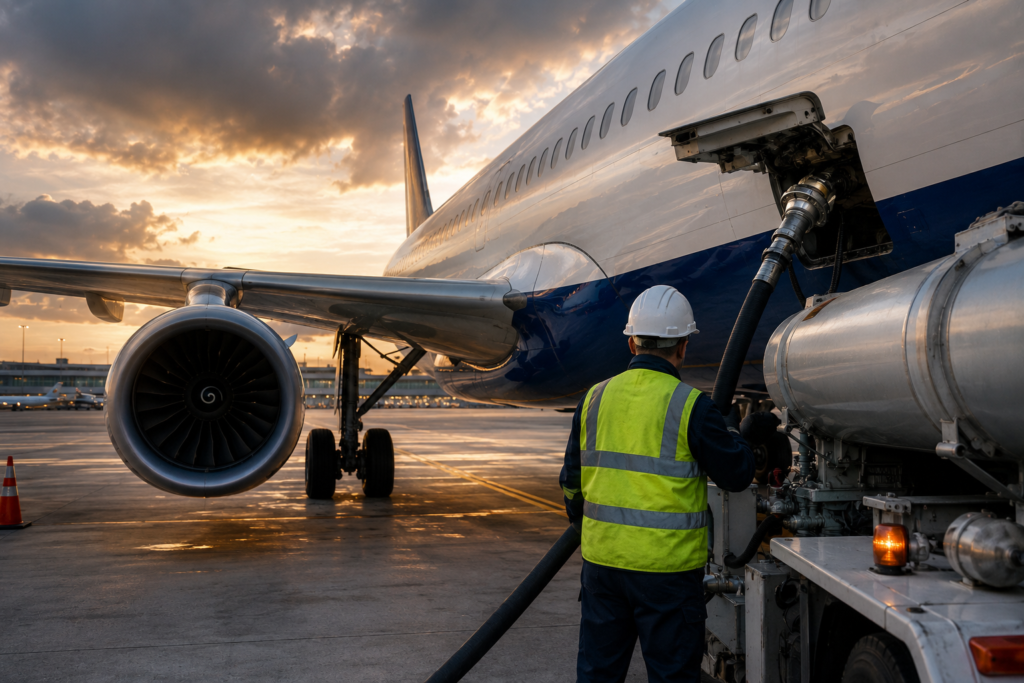
Image Credentials: Image Title: US Airline Fuel Costs Surge as Oil Prices Intensify Industry Pressure. Source: (chatgpt.com) Date: May 2026. Attribution: This image was created using AI-generated imagery (chatgpt.com) by Open Chronicle and does not depict a real-world scene.
By Open Chronicle with agencies
US airlines faced a sharp increase in fuel expenses in March, as rising global oil prices pushed operational costs significantly higher and added fresh strain across the aviation sector.
According to data released by the US Transportation Department’s Bureau of Transportation Statistics, fuel spending by scheduled-service airlines climbed to $5.06 billion in March, marking a 56.4% increase from February’s $3.23 billion. Compared with March 2025, fuel costs were up more than 30%.
The surge reflected both higher fuel consumption and a steep increase in the average cost per gallon. Airlines consumed approximately 1.615 billion gallons of fuel during the month, nearly 20% more than in February. Meanwhile, the average fuel price rose to $3.13 per gallon, up 74 cents from the previous month.
The increase comes amid prolonged volatility in global energy markets, fueled in part by instability in the Middle East and ongoing tensions affecting maritime shipping routes and oil supply chains.
For airlines already operating under narrow profit margins, the jump in fuel prices has become a major financial challenge. Fuel remains one of the largest operating expenses for carriers, particularly low-cost airlines that depend on aggressive pricing models and high passenger volumes.
The pressure has already produced casualties within the industry. Spirit Airlines announced earlier this month that it would begin an orderly shutdown of operations after financial conditions worsened due to elevated fuel prices and broader market pressures.
Spirit CEO Dave Davis said the company had previously negotiated a restructuring agreement with bondholders intended to stabilize operations. However, the rapid and sustained rise in fuel costs ultimately undermined those efforts.
The US Transportation Department later said it was coordinating with other airlines to assist affected passengers and employees following Spirit’s collapse.
Industry analysts warn that if oil prices remain elevated through the summer travel season, additional carriers may face growing financial stress. Higher fuel expenses are also expected to place upward pressure on ticket prices, potentially weakening consumer demand in the months ahead.
The Bureau of Transportation Statistics noted that some airlines use fuel hedging strategies to reduce exposure to volatile energy prices, though the effectiveness of those measures varies significantly between carriers.
As geopolitical uncertainty continues to affect global energy markets, the aviation industry is once again confronting one of its most persistent vulnerabilities: dependence on stable and affordable fuel supplies.