
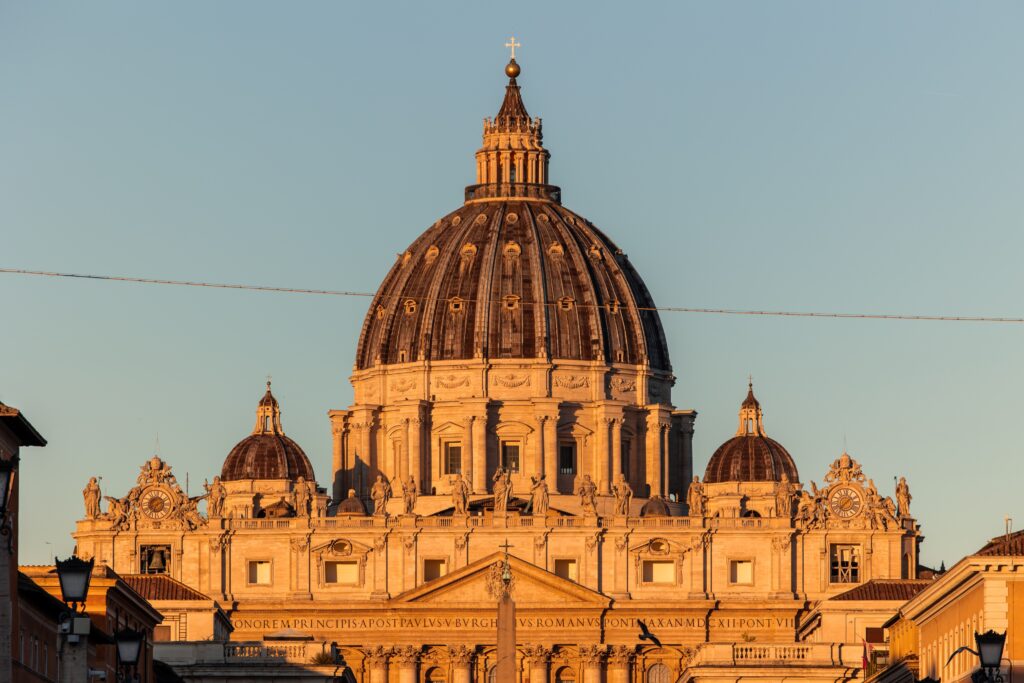
Image: from CatholicVote X @CatholicVote
By Open Chronicle
The Vatican has formally declared the Society of St. Pius X (SSPX) to be in schism with the Catholic Church following the unauthorized consecration of four bishops in Switzerland, imposing some of the most severe canonical sanctions seen in decades.
The decree, issued on Thursday by the Holy See, goes beyond the minimum penalties required under canon law by excommunicating not only the newly consecrated bishops and those who ordained them, but also declaring the society’s priests to be schismatic and warning that faithful who formally adhere to the movement could also incur excommunication.
The decision follows Wednesday’s consecration ceremony at the SSPX seminary in Écône, Switzerland, where four new bishops were ordained without papal approval despite repeated appeals from Pope Leo XIV to cancel the ceremony in the interest of Church unity.
Vatican declares formal rupture
In its decree, the Vatican described the episcopal consecrations as a “schismatic act” and stated that the Society of St. Pius X had intentionally broken communion with the Catholic Church.
The Holy See excommunicated the four newly ordained bishops as well as the two bishops who participated in the consecrations.
The Vatican also ruled that the society’s approximately 750 priests are considered schismatic, rendering the sacraments of confession and marriage they administer invalid under Church law.
Catholics were warned against attending SSPX Masses, with the decree stating that those who formally adhere to the movement are likewise regarded as schismatic and subject to excommunication.
A stronger response than expected
Observers noted that the Vatican’s response was considerably harsher than many anticipated.
After years of dialogue and attempts at reconciliation under previous pontificates, the sanctions suggest Pope Leo XIV has chosen to draw a clear line following the society’s decision to proceed with the consecrations despite repeated warnings.
An estimated 15,500 faithful attended the five-hour ceremony in Écône, demonstrating the continued international support enjoyed by the traditionalist movement.
SSPX condemns the sanctions
The Society of St. Pius X reacted with surprise and disappointment.
Marc-André Mabillard, the society’s media manager, described the measures as “unjust” and said extending excommunication to ordinary faithful was particularly severe.
He argued that the sanctions reflected a breakdown in dialogue between the Vatican and the SSPX rather than a pastoral approach aimed at reconciliation.
Earlier this year, Cardinal Víctor Manuel Fernández, Prefect of the Dicastery for the Doctrine of the Faith, met with SSPX Superior General Father Davide Pagliarani in an effort to continue discussions.
Pagliarani requested a personal meeting with Pope Leo XIV, but instead received a final letter from the pontiff urging the society to abandon its plans before the ordinations proceeded.
Roots of a decades-long dispute
The Society of St. Pius X was founded in 1970 by French Archbishop Marcel Lefebvre in opposition to the reforms introduced by the Second Vatican Council (1962–1965).
The council transformed many aspects of Catholic life, including allowing Mass to be celebrated in local languages rather than exclusively in Latin, while promoting ecumenical dialogue and broader engagement with the modern world.
The movement’s first major rupture came in 1988, when Lefebvre consecrated four bishops without papal authorization.
Those consecrations also resulted in excommunications and a declaration of schism.
In 2009, Pope Benedict XVI lifted the excommunications of the surviving bishops as part of an effort to restore full communion, although the SSPX never achieved canonical recognition within the Church.
A growing traditionalist movement
Despite remaining outside full communion with Rome for decades, the SSPX has continued to expand globally.
According to its own figures, the society now includes:
- Six bishops
- 751 priests
- 264 seminarians
- 145 religious brothers
- 88 oblates
- 250 religious sisters
The organization operates in dozens of countries and represents around 50 nationalities.
The Vatican appears concerned that the SSPX has evolved into a parallel traditionalist Catholic structure operating independently of papal authority.
Vatican leaves the door open
Despite the unprecedented sanctions, the Holy See stressed that reconciliation remains possible.
Accompanying the decree, the Vatican described itself as acting “like a caring mother” and said it remained willing to welcome members of the SSPX back into full communion with the Catholic Church.
Responsibility for handling any future reconciliations will be coordinated through papal representatives and local bishops around the world.
Traditionalist Catholics who remain fully united with Rome also expressed surprise at the severity of the measures.
While acknowledging that the bishops involved in the unauthorized ordinations were subject to automatic excommunication under canon law, several commentators questioned the broader extension of sanctions to priests and faithful, describing the decision as unusually severe.
The latest decree marks one of the most significant developments in relations between the Vatican and the Society of St. Pius X since the original schism nearly four decades ago, underscoring Pope Leo XIV’s determination to defend Church unity while leaving open the possibility of future reconciliation.