
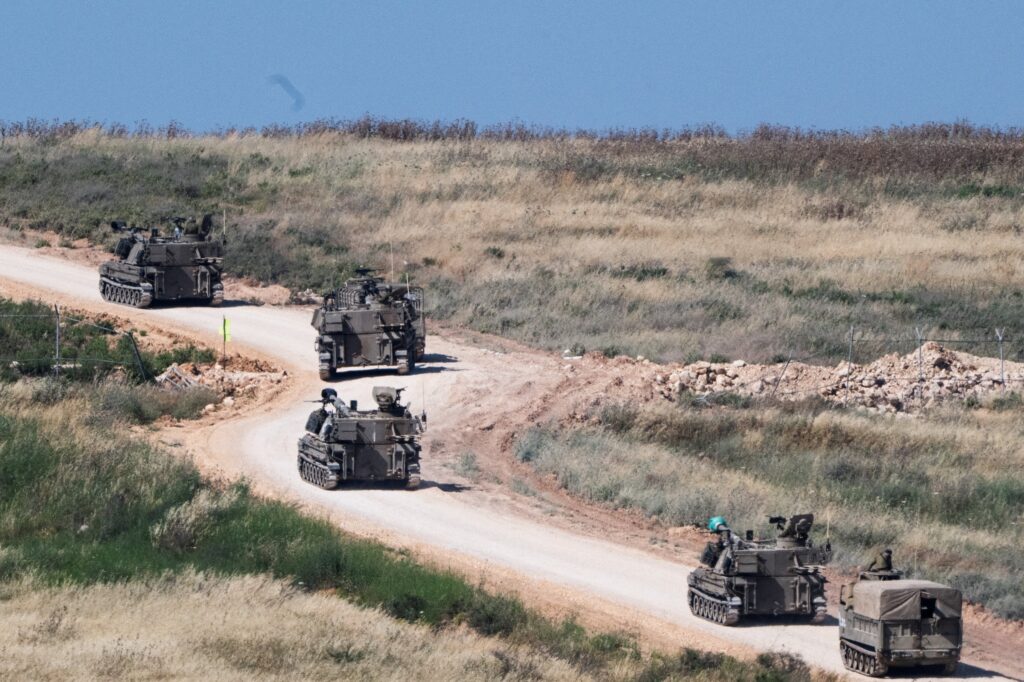
Image: from Al Jazeera English X @AJEnglish
By Open Chronicle News Desk with Agencies
The United States has announced the start of pilot zone operations in southern Lebanon, marking the first practical implementation of a U.S.-brokered framework designed to reduce tensions between Israel and Lebanon and gradually restore Lebanese government control over border areas.
The initiative follows ambassador-level talks held in Rome last week and represents an important step in efforts to stabilize southern Lebanon after months of conflict involving Israel and Hezbollah.
Operations begin in three villages
According to the US State Department, pilot zone operations have commenced in the villages of Froun, Srifa and Zawtar Al-Gharbiya under the supervision of the Military Coordination Group for Lebanon, which is overseeing implementation of the trilateral framework involving the United States, Israel and Lebanon.
US officials described the launch as a direct result of the discussions held between Israeli and Lebanese representatives in Rome, where negotiators agreed on guidelines for the first phase of the plan.
Lebanese Army to assume greater control
Under the broader agreement, the Lebanese Armed Forces are expected to gradually assume responsibility for security within the designated pilot zones as militant groups are disarmed and Israeli forces progressively withdraw from selected areas of southern Lebanon.
The pilot zones are intended to test the operational framework before any expansion to additional locations along the border.
Officials say the arrangement seeks to strengthen the authority of the Lebanese state while reducing the likelihood of renewed cross-border hostilities.
Part of a wider peace effort
The pilot zone initiative forms part of a broader framework agreement announced in late June following intensive US mediation.
The agreement aims to establish conditions for a lasting reduction in violence by combining several elements:
- Progressive Israeli military withdrawal from designated areas.
- Increased deployment of the Lebanese Army.
- Disarmament of armed militant groups in the pilot zones.
- International monitoring through the Military Coordination Group.
- Continued negotiations between Lebanon and Israel.
US officials have emphasized that successful implementation in the initial areas could pave the way for broader security arrangements across southern Lebanon.
Hezbollah rejects the framework
Despite the diplomatic progress, Hezbollah has rejected the agreement and continues to oppose any plan involving its disarmament.
The Iran-backed group argues that discussions over its military capabilities cannot be separated from wider regional negotiations and has signaled resistance to aspects of the US-backed initiative.
The disagreement remains one of the principal obstacles to achieving a comprehensive settlement.
Questions remain over implementation
Some Lebanese officials have noted that Israeli forces were already absent from portions of the designated pilot areas before operations officially began, raising questions about the practical significance of the initial withdrawals.
Nevertheless, both Washington and Beirut view the launch as an important confidence-building measure that could facilitate future negotiations.
Technical discussions are expected to continue in the coming weeks as military representatives finalize monitoring mechanisms and prepare for potential expansion of the program.
A cautious step toward stability
Although significant political and security challenges remain, the commencement of pilot zone operations represents one of the most concrete developments in US-led diplomatic efforts to reduce tensions along the Israel-Lebanon frontier.
Whether the initiative succeeds will depend largely on sustained cooperation between the participating governments, continued international oversight and the ability to prevent renewed violence from undermining the fragile process.