
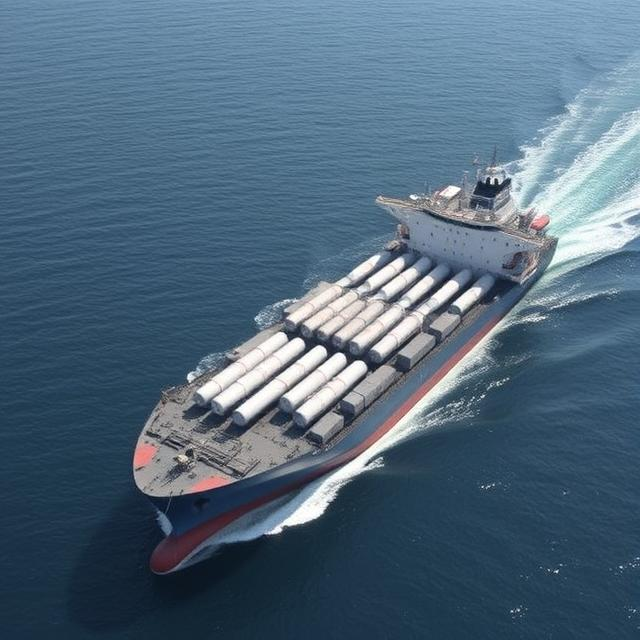
Image Credentials: Generated by Open Chronicle with AI ChatBox
By Staff Writer with Agencies
Bandar Abbas, Iran — The Iranian cargo vessel Jairan, which has been linked to the transport of missile components, has docked at the port of Bandar Abbas after departing from China. The ship, already under U.S. sanctions, arrived despite international concerns over Iran’s missile program and its affiliations with the Islamic Republic of Iran Shipping Lines (IRISL).
Strategic and Security Implications
The arrival of the Jairan could signal an increase in Iran’s missile development capabilities. Reports indicate that the vessel has been associated with the procurement of sodium perchlorate, a critical component used in the manufacturing of solid rocket fuel. The Financial Times previously reported that Iran was allegedly attempting to import 1,000 metric tons of sodium perchlorate—an amount sufficient for producing hundreds of medium-range ballistic missiles if converted into ammonium perchlorate.
The U.S. government and its allies closely monitor Iran’s missile activities, particularly amid rising tensions in the region. If China is found to be assisting Tehran in acquiring these sensitive materials, diplomatic strains between Beijing and Washington could intensify, adding to already contentious geopolitical dynamics.
Tracking the Jairan
Over the past weekend, maritime analysts identified a vessel matching the Jairan’s profile at the Bandar Abbas Anchorage, near the strategically significant Strait of Hormuz. The ship’s dimensions and deck cranes were consistent with the sanctioned 16,694-ton cargo vessel. Tracking data confirms the ship’s departure from China, reinforcing suspicions about its cargo and intended use.
This latest arrival follows reports that another Iranian cargo ship, the Golbon, completed a similar voyage last month. Both vessels remain under sanctions imposed by the U.S. Treasury Department, which has linked them to efforts to proliferate missile-related materials.
U.S.-Iran Tensions Escalate
The docking of the Jairan in Iran comes at a time of heightened tensions between Tehran and Washington. President Donald Trump recently issued a stark warning regarding Iran’s nuclear ambitions, declaring, “If they don’t make a deal, there will be bombing.” The threat follows ongoing concerns over Iran’s uranium enrichment and its potential pursuit of nuclear weapons.
Iran’s Supreme Leader Ayatollah Ali Khamenei has responded forcefully, stating, “If they commit any mischief, they will surely receive a strong reciprocal blow.” Khamenei has consistently dismissed the possibility of negotiations with the Trump administration, viewing them as deceptive maneuvers rather than genuine diplomatic overtures.
Sanctions and International Response
A U.S. Treasury Department spokesperson reiterated that both Jairan and Golbon remain under sanctions due to their association with IRISL, which has been accused of facilitating the proliferation of missile-related technology.
“Both vessels are blacklisted due to their connections with Iran’s missile supply chain,” the spokesperson stated. “The U.S. remains committed to preventing the expansion of Iran’s missile program and will continue to enforce sanctions against those involved.”
Looking Ahead
The arrival of the Jairan raises fresh concerns over Iran’s military ambitions and its defiance of international regulations. As the situation develops, further scrutiny will be placed on Tehran’s missile procurement efforts and the potential implications for regional stability.
With the U.S. signaling a more aggressive stance and Iran showing no signs of backing down, the risk of further confrontations remains high. Analysts warn that unless diplomatic efforts find common ground, an escalation of hostilities in the Gulf region could be inevitable.