
Image: فلسطین (پښتو) X @PalestinePashtu
Isabella Harper | Staff Writer with Agencies
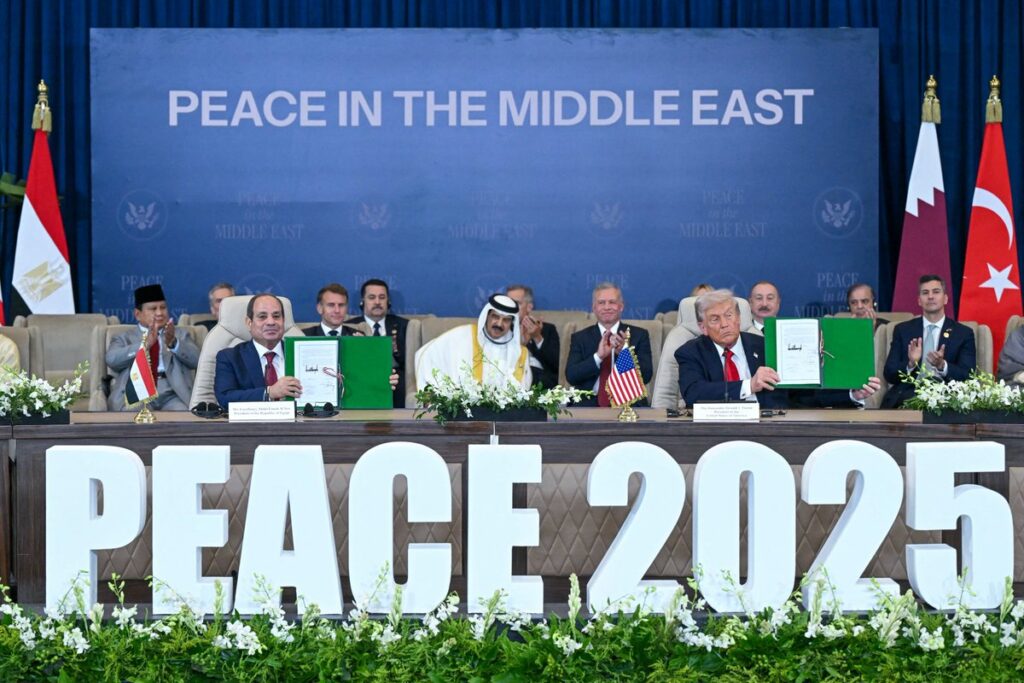
SHARM EL-SHEIKH, Oct 2025 — A pivotal international summit on Middle East peace was held on Monday in the Egyptian resort city of Sharm El-Sheikh. The event was co-chaired by Egyptian President Abdel Fattah El-Sisi and U.S. President Donald Trump, with the participation of leaders and representatives from over 31 countries, including Arab nations, global powers, and regional organizations. The summit marked a significant step in the ongoing diplomatic efforts to end the long-standing conflict in Gaza and bring lasting peace to the Middle East.
A Landmark Ceasefire Agreement
The summit’s most important achievement came early in the proceedings, with leaders from the United States, Turkey, Qatar, and Egypt signing a comprehensive ceasefire agreement aimed at halting the ongoing conflict in Gaza. The agreement, hailed as a historic breakthrough, officially ended the war in Gaza that had ravaged the region for over two years. Under the terms of the agreement, hostilities will cease, and the flow of humanitarian aid into Gaza will begin.
President Trump in Egypt alongside 20 world leaders for the first phase of the Middle East peace deal, declaring an “end to years of bloodshed in Gaza.” All Israeli hostages freed, Palestinian prisoners released, and families reunited in emotional scenes of hope and healing.… pic.twitter.com/Qr5o6HOssk
— One America News (@OANN) October 13, 2025
In his opening remarks, Egyptian President El-Sisi emphasized the importance of peace as a “strategic choice” for the people of the Middle East, underscoring the need for justice and equal rights as the foundation for any lasting peace. “Decades of experience have shown that peace cannot be built on anything but justice,” El-Sisi said, calling for the realization of the Palestinian people’s right to self-determination and freedom. He expressed hope that this agreement would bring an end to a painful chapter in history, marked by years of conflict.
Trump Calls the Agreement “Historic”
U.S. President Donald Trump echoed El-Sisi’s optimism, calling the ceasefire agreement a “historic achievement” that had once been considered impossible. “Together, we have achieved what everyone said was impossible — peace in the Middle East,” Trump said. He confirmed that the war in Gaza had officially ended and that humanitarian aid was already being distributed to those in need.
Trump also acknowledged that the next phase of the peace process—reconstruction in Gaza—would be challenging, but he expressed confidence that the international community would rally together to support the recovery efforts. He thanked Arab and Islamic countries for their contributions to bringing about this breakthrough.
A Broader Vision for Regional Stability
The Sharm El-Sheikh summit is part of a broader effort to promote peace, stability, and regional security in the Middle East. The ongoing conflict in Gaza, which has devastated the lives of millions, has been a source of tension not just between Israel and Palestine, but across the entire region. The agreement signed at this summit is seen as a crucial step in ending the two-year-long war and promoting the long-term peace process.
The summit was attended by key leaders, including King Abdullah II of Jordan, Palestinian President Mahmoud Abbas, Emir of Qatar Sheikh Tamim bin Hamad Al Thani, and numerous international dignitaries. Their participation highlighted the broad regional and international support for the ceasefire agreement and the pursuit of a more stable and peaceful Middle East.
Challenges and Next Steps
While the ceasefire agreement represents a significant step forward, the path ahead remains fraught with challenges. The reconstruction of Gaza will require substantial international support and resources, and the broader issue of Palestinian self-determination and the creation of a viable Palestinian state will continue to be a contentious issue in future negotiations. Moreover, the role of Israel and its stance on the peace process remains a key question that will need to be addressed as talks move forward.
Nevertheless, the Sharm El-Sheikh summit has provided renewed hope for peace in the Middle East. With a ceasefire now in place, the focus will shift to rebuilding Gaza, addressing the humanitarian crisis, and negotiating a broader peace agreement that could bring long-term stability to the region.
Conclusion
The Sharm El-Sheikh Peace Summit in Egypt represents a watershed moment in the Middle East peace process. While many challenges remain, the agreement reached between key regional powers and international leaders has provided a glimmer of hope for a region long plagued by conflict. The coming months will be crucial as efforts to rebuild Gaza and lay the foundation for a lasting peace continue. The commitment of the international community, led by Egypt, the U.S., and other key players, will be essential in determining whether this fragile peace can be sustained.