
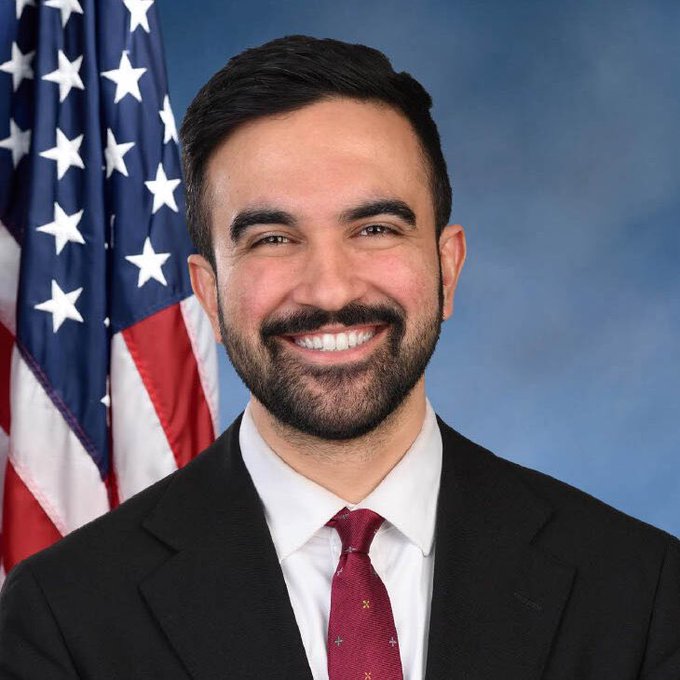
Image: from Protect Kamala Harris X@DisavowTrump20
By Benjamin Foster | Staff Writer with Agencies
In a historic victory, Zohran Mamdani has been elected as New York City’s first Muslim and South Asian mayor, marking a significant milestone in both the city’s political landscape and American urban governance. Mamdani, a 34-year-old democratic socialist, won in a tight race against former Governor Andrew Cuomo and Republican candidate Curtis Sliwa. His victory paves the way for a new chapter in the city’s leadership, reflecting a commitment to progressive politics and religious diversity.
A Progressive Platform for New York City
Mamdani’s platform resonated strongly with voters who are seeking more affordable living and greater access to social services. Among his key proposals are ambitious plans to tackle economic inequality, such as providing free public transit, universal childcare, and rent stabilization programs. Mamdani has also called for the creation of municipal grocery stores to address food insecurity in underserved neighborhoods.
One of the most striking elements of his campaign was his pledge to raise New York City’s minimum wage to $30 per hour by 2030. This wage increase would be funded through a combination of increased corporate taxes and a proposed 2% income tax surcharge on high earners, specifically those making over one million dollars annually. Mamdani’s progressive economic policies aim to reduce income inequality and improve the quality of life for working-class New Yorkers.
International Policy and Foreign Affairs
Mamdani’s political agenda extends beyond domestic issues, particularly in the realm of international relations. One of his most controversial proposals was his stance on Israeli Prime Minister Benjamin Netanyahu. Mamdani has pledged to instruct New York City’s police to arrest Netanyahu if he visits, citing an outstanding arrest warrant issued by the International Criminal Court (ICC) for alleged war crimes in Gaza. This bold foreign policy stance stirred both support and criticism during the campaign, but it also solidified Mamdani’s reputation as a progressive leader unafraid to challenge traditional international norms and take a stand on human rights issues.
Historical Significance and Reactions
Mamdani’s election is being hailed as a historic turning point in Muslim American political representation. The Council on American-Islamic Relations (CAIR) praised his victory, recognizing the importance of having a Muslim-American mayor in the country’s largest city. Mamdani’s candidacy was particularly significant considering the anti-Muslim rhetoric he faced throughout the campaign. Despite this, he remained steadfast in his advocacy for Palestinian rights and his opposition to what he describes as genocide in Gaza, issues that resonated with many of New York’s diverse communities.
The victory is also seen as an important achievement for South Asian representation in American politics, as Mamdani becomes the first South Asian to hold the office of mayor of New York City. His election marks a triumph not only for the progressive movement but also for underrepresented communities in U.S. politics, inspiring a new generation of leaders from diverse backgrounds.
Moving Forward
As Mamdani prepares to take office, the city faces numerous challenges, including affordable housing, healthcare access, and addressing the socioeconomic disparities exacerbated by the COVID-19 pandemic. His progressive agenda, centered on equity and justice, is set to transform New York City’s political direction. With a focus on social welfare, income redistribution, and inclusive policies, Mamdani aims to create a more equitable and accessible city for all its residents.
Mamdani’s election is a landmark event in New York City’s history, one that promises to bring bold changes and greater inclusivity to the forefront of American politics. His leadership will undoubtedly be a critical factor in shaping the future of the city and could serve as a model for other major urban centers across the country.