
Image Credentials: Image Title: Image Credentials: Image Title: Putin’s Deadly Message to the West: NATO and Russia on the Brink of War Source: (sora.openai) Date: November 2025. Attribution: This image was created using AI-generated imagery (sora.openai) and does not depict a real-world scene.
By Benjamin Foster | Staff Writer with Agencies
Tensions between Russia and NATO have escalated in recent months, with the Kaliningrad region emerging as a potential flashpoint. According to a statement made by Russian Deputy Foreign Minister Alexander Grushko, NATO’s activities in the Baltic have crossed a dangerous threshold. Grushko claimed that NATO is actively developing mechanisms to blockade the Kaliningrad region, a move that could push relations to the breaking point. In response, Russia has made it clear that it will employ “all available means” to defend its national interests, including military force if necessary.
The Kaliningrad Region: A Crucial Strategic Asset
Kaliningrad, situated on the western edge of Russia and surrounded by NATO member states, holds vital importance for Moscow. As the westernmost point of Russian territory, it hosts the headquarters of the Baltic Fleet and is home to Russian nuclear forces. Grushko emphasized the region’s strategic value, highlighting that any threat to its security would be met with a fierce response from Moscow. Russia views NATO’s increasing military presence in the Baltic as part of a broader effort to isolate and destabilize its position in the region.
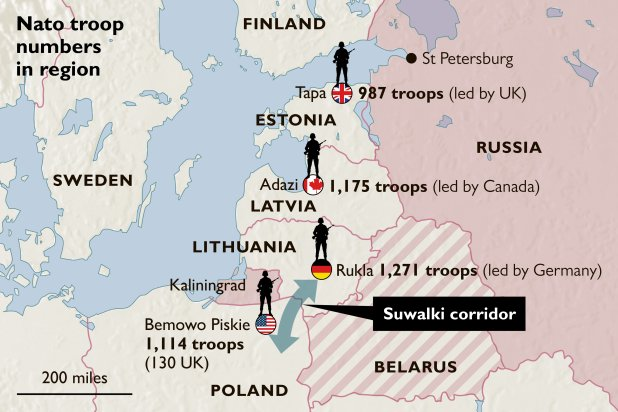
Grushko’s comments reflect ongoing concerns in Moscow about NATO’s militarization of Eastern Europe. He accused the Alliance of inflating its presence in the region, particularly through military exercises aimed at simulating a blockade of Kaliningrad. According to the Russian diplomat, this is a calculated attempt by NATO to undermine Russia’s security and provoke a confrontation.
NATO’s Response: A Potential Flashpoint for Confrontation
The accusations from Russia are not being taken lightly by NATO, which has long expressed concerns about Russian military activities and the potential for conflict. U.S. General Ben Hodges weighed in on the growing threat by warning that, in the event of an attack on any NATO member, the Alliance would respond decisively. In an interview, Hodges stated that if Russia were to attack Poland, an event that mirrors its actions in Ukraine, NATO would destroy Russian military capabilities in Kaliningrad and other key areas within hours. “Kaliningrad would be obliterated in the first hours,” he asserted, underscoring the potential for rapid escalation.
Kaliningrad’s status as a heavily militarized exclave, positioned between Poland and Lithuania, has made it a focal point for military experts. Both NATO and Russia have been preparing for the possibility of a military confrontation in the region, with the potential for devastating consequences. The presence of Russian nuclear forces in Kaliningrad further complicates the situation, raising the stakes for both sides.
Russia’s Strong Warning to the West
Russia has consistently voiced concerns over NATO’s growing influence in Europe, particularly since the Alliance’s eastward expansion in recent decades. Grushko accused NATO of forcing a confrontational course toward Russia, one that threatens peace and stability in the Baltic region. Moscow has long argued that NATO’s actions are intended to provoke a broader conflict, and Russian officials, including Deputy Chairman of the Russian Security Council Dmitry Medvedev, have frequently warned the West of the destructive consequences of such a confrontation.
Medvedev, speaking in less formal terms, has repeatedly threatened Western capitals with destruction should hostilities break out. In his rhetoric, he emphasized that Russia would not hesitate to respond with overwhelming force if provoked. These remarks reflect the broader sense of unease in Moscow, where many view NATO’s encroachment on Russian borders as an existential threat.
A History of Conflict and Controversy
The history of Kaliningrad adds another layer of complexity to the current tensions. The region, once part of Germany, was annexed by the Soviet Union after World War II and renamed Kaliningrad in honor of Soviet leader Mikhail Kalinin. Before its conquest by Russia, the area was home to a diverse population of Prussians, Germans, Lithuanians, and Poles. The city of Königsberg, the capital of the former East Prussia, was a center of culture and learning in the region. Today, Kaliningrad remains a symbol of Russia’s complex historical relationship with Eastern Europe.
The region’s location, wedged between NATO members Poland and Lithuania, makes it particularly vulnerable to potential conflict. In recent years, NATO has significantly increased its military presence in the Baltic, including frequent air and naval exercises aimed at countering Russian influence. Moscow, in turn, has stepped up its own military presence, creating a volatile situation that could lead to war if tensions continue to rise.
The Path Forward: Diplomacy or Escalation?
As the situation in Kaliningrad continues to develop, the question of how the West and Russia will navigate these dangerous waters remains uncertain. With both sides positioning themselves for a potential military showdown, diplomacy may be the only means of preventing an all-out conflict. However, with NATO’s commitment to the defense of its members and Russia’s insistence on protecting its national interests, the risk of war is higher than ever before.
In the coming months, the world will be watching closely as these two nuclear powers face off in a high-stakes game of geopolitics. The fate of Kaliningrad, and by extension, the stability of the entire Baltic region, may very well determine the course of future relations between Russia and the West.