
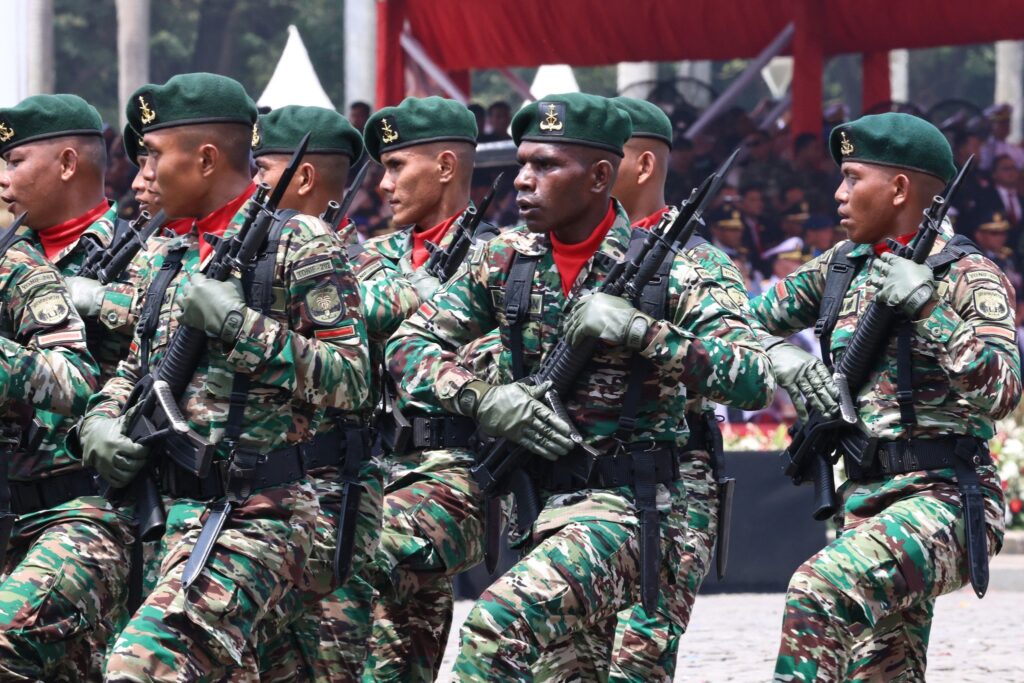
Image: from Open Source Intel X@Osint613
By Isabella Harper | Staff Writer with Agencies
Jakarta – Indonesia is preparing to deploy 20,000 personnel from the Indonesian National Armed Forces (TNI) for a humanitarian peacekeeping mission in Gaza. The mission, which aims to provide critical medical assistance and infrastructure support, is awaiting approval from both the Indonesian government and the United Nations (UN).
Major General Freddy Ardianzah, Head of the TNI Information Center, confirmed on Saturday that the 20,000 personnel are highly trained and experienced in humanitarian operations. “They are well-versed in military operations other than war (OMSP), both at home and abroad,” he said, emphasizing that the troops’ skills, operational readiness, and ability to work in diverse terrains have been rigorously tested.
The personnel being prepared for this peace mission are drawn from units that regularly undergo OMSP training and have been involved in previous United Nations peacekeeping missions. As a result, they possess the required expertise in medical services, logistics, and construction operations in conflict zones.
According to Ardianzah, the force includes medical units that will provide healthcare to civilians affected by the ongoing conflict in Gaza. “The medical teams are prepared to offer emergency care, field hospitals, and essential medical equipment to alleviate the suffering of the civilian population,” he said.
In addition to the medical units, engineering units will be part of the mission. These units will focus on rebuilding vital infrastructure and public facilities that have been damaged or destroyed by the conflict. “We are preparing heavy machinery, construction tools, and resources for water purification and sanitation,” Ardianzah added.
The TNI’s peace mission to Gaza will be equipped with a wide array of support tools for both medical and construction tasks. These include emergency medical equipment, ambulances, clean water systems, sanitation tools, and materials for rebuilding infrastructure. The mission will focus on both immediate relief efforts and long-term reconstruction.
“We are committed to providing comprehensive support, including medical care and the rebuilding of essential facilities that are vital for the well-being of the people in Gaza,” Ardianzah stated.
Currently, the TNI is awaiting official approval from the Indonesian government and the United Nations to deploy the troops. Indonesia has historically been a strong advocate for peace and humanitarian efforts, and the deployment of troops to Gaza would mark another significant contribution to global peacekeeping initiatives.
Indonesia’s Minister of Defense, Sjafrie Sjamsoeddin, outlined two potential paths for obtaining approval for the mission. The first involves deploying the troops under the auspices of the United Nations, as part of a coordinated international peacekeeping effort. “There are two alternatives. The first is under the auspices of the United Nations,” said Sjamsoeddin.
Indonesia has a longstanding history of cooperating with the UN for peacekeeping missions, with previous deployments in conflict zones such as Africa and Lebanon. Sjamsoeddin emphasized that diplomatic efforts, including communication between heads of state, will be key in securing international support for the mission.
Sjamsoeddin also highlighted the importance of securing approval from key regional and international stakeholders, especially in the Middle East. “Indonesia must gain support from influential countries involved in addressing the Gaza conflict,” he explained. This includes securing support from Arab nations such as Saudi Arabia, Jordan, Egypt, Qatar, and the United Arab Emirates, all of which are central to the situation in Gaza.
In addition to regional backing, Indonesia will also need approval from Israel, as the country is a central party in the conflict. “If the Arab countries and Israel give their support, Indonesia will be pleased to play a role in peacekeeping efforts in Gaza,” Sjamsoeddin added.
As one of the largest contributors to UN peacekeeping operations, Indonesia has demonstrated its commitment to global peace and stability. Its readiness to send 20,000 troops to Gaza reflects its longstanding dedication to humanitarian missions and peace efforts around the world.
The TNI’s experience in international peacekeeping operations, combined with its logistical capabilities and commitment to humanitarian assistance, will play a vital role in supporting Gaza’s recovery in the wake of the ongoing conflict. With international approval, Indonesia’s peace mission could serve as a beacon of hope for a region ravaged by violence, providing essential aid and support to the people of Gaza in their time of need.