
Image: from Royal Intel X@RoyalIntel_
By Open Chronicle Staff with Agencies | December 27, 2025
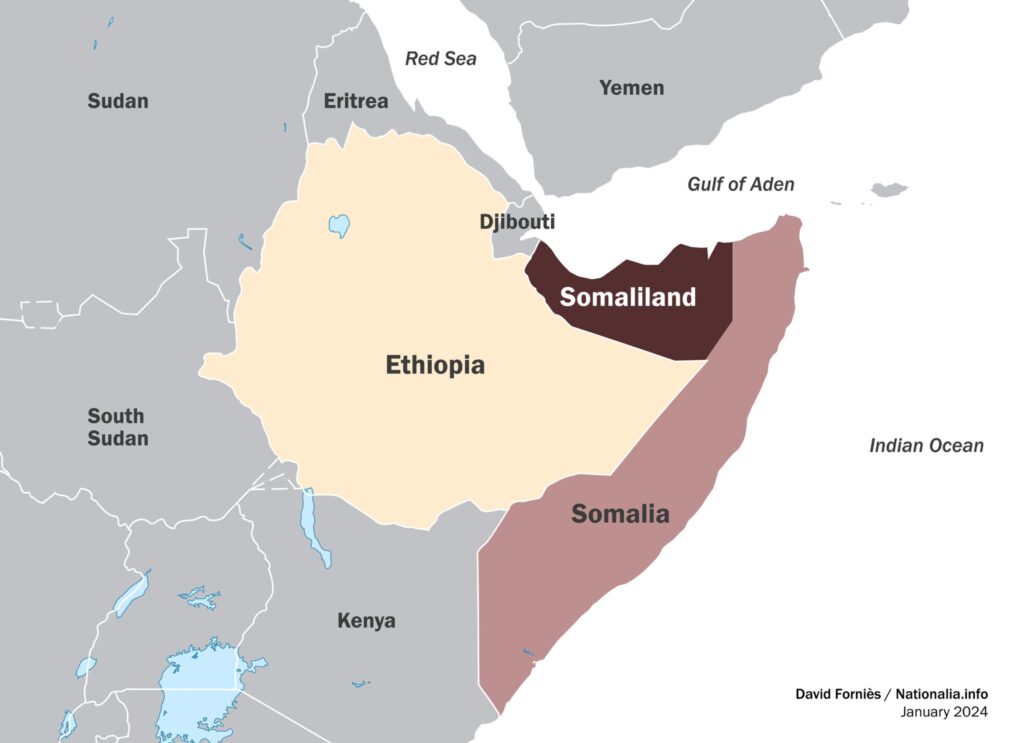
JERUSALEM / HARGEISA — In a historic move that has sent shockwaves through the Horn of Africa and the international community, Israel has become the first nation in the world to officially recognize Somaliland as an independent and sovereign state.
Israeli Prime Minister Benjamin Netanyahu announced the decision on Friday, following the signing of a joint declaration with Somaliland’s President Abdirahman Mohamed Abdullahi. The move is framed as an extension of the Abraham Accords, the signature foreign policy framework of U.S. President Donald Trump, aimed at normalizing ties between Israel and nations across the Middle East and Africa.
The Prime Minister announced today the official recognition of the Republic of Somaliland as an independent and sovereign state.
Prime Minister Netanyahu, Foreign Minister Sa'ar, and the President of the Republic of Somaliland signed a joint and mutual declaration. pic.twitter.com/M0AeTs5oxY
— Prime Minister of Israel (@IsraeliPM) December 26, 2025
The Declaration and Abraham Accords
Prime Minister Netanyahu posted to X (formerly Twitter), stating that the recognition was made “in the spirit of the Abraham Accords.” He emphasized that Israel and Somaliland would seek “immediate cooperation” in critical sectors, including:
-
Agriculture
-
Healthcare
-
Technology
-
Economic Development
President Abdullahi, who came to power last year with a mandate to secure international recognition, confirmed that Somaliland would officially join the Abraham Accords. He described the partnership as a significant step toward “regional and global peace.”
From Kurdistan, we support the independence of Somaliland ❤️💚 pic.twitter.com/XcslJE0k0l
— Kurdistan (@Kurdistan_C) December 26, 2025
Somalia’s Denunciation and Regional Backlash
The announcement was met with immediate and fierce condemnation from the federal government of Somalia in Mogadishu. Somalia’s Foreign Ministry labeled the recognition a “deliberate attack” on its sovereignty and territorial integrity.
“Illegitimate actions of this nature seriously undermine regional peace and stability, and exacerbate political and security tensions,” the Somali ministry stated.
Other regional powers quickly joined the dissent:
-
Egypt: Foreign Minister Badr Abdelatty held emergency calls with counterparts in Turkey and Djibouti, warning that the move poses a “threat to international peace.”
-
Turkey: The Turkish Foreign Ministry issued a scathing statement, calling the move “overt interference” in Somalia’s domestic affairs and linking it to Israel’s “expansionist policy.”
-
African Union (AU): The AU reaffirmed its support for Somalia’s unity, warning that recognizing breakaway regions sets a “dangerous precedent” for the entire continent.
Why it Matters: Africa’s “Pandora’s Box.”
Political analysts suggest that by recognizing Somaliland, Israel has opened a “Pandora’s box.” Since the post-colonial era, the borders of African nations have been considered sacrosanct to prevent a domino effect of secessionist movements across the continent.
Before this announcement, only two major exceptions existed in the Horn of Africa: the independence of Eritrea from Ethiopia and South Sudan from Sudan. By breaking the long-standing international consensus on Somaliland, which declared independence from Somalia in 1991, Israel may have fundamentally altered African diplomacy.
| Key Entity | Official Position |
| Israel | Established full diplomatic relations; plans for embassies. |
| Somaliland | Joins Abraham Accords; seeks mutual prosperity. |
| Somalia | Views action as a violation of international law. |
| African Union | Warns of a threat to the sovereignty of all AU members. |
The Strategic Horizon
The recognition aligns with President Trump’s second-term goals to expand the Abraham Accords. For Somaliland, it marks the end of 34 years of diplomatic isolation. For Israel, it secures a strategic partner along the Red Sea—a vital maritime corridor. However, the cost of this alliance may be a deepened rift with significant Muslim-majority nations like Turkey and Egypt, and a period of heightened instability in the already volatile Horn of Africa.