
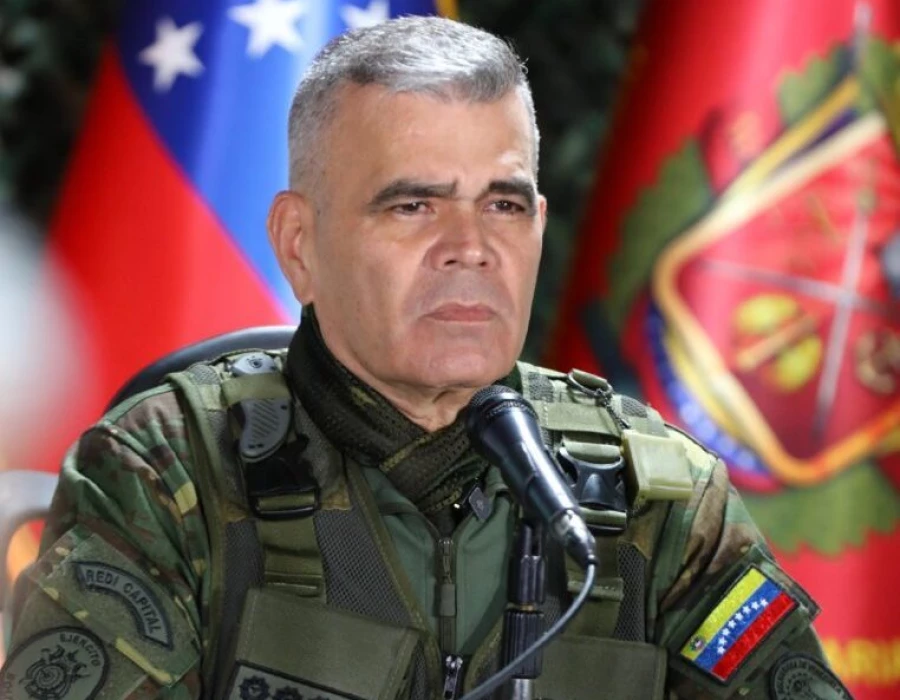
Image: General Vladimir Padrino Lopez, Minister of Defense of Venezuela. Photo credits: Prensa FANB
By Open Chronicle News Desk with Agencies | January 5, 2026
Venezuela has declared a nationwide state of emergency following what authorities describe as a large-scale United States military attack that struck Caracas and several surrounding regions, culminating in the capture of President Nicolás Maduro.
The emergency decree applies to the entire national territory and was announced after strikes were reported in the capital as well as in the states of Miranda, Aragua, and La Guaira. According to official statements, both military installations and civilian infrastructure were damaged during the operation, prompting the government to activate extraordinary constitutional measures.
Defense Minister Vladimir Padrino López, speaking on behalf of the armed forces, confirmed full military support for the decree and said the army remains united and cohesive in the face of what he described as foreign aggression. In a televised address, Padrino denounced Maduro’s capture as a cowardly kidnapping and said it followed the killing of members of the presidential guard during the assault.
The Bolivarian National Armed Forces urged citizens to remain calm and avoid internal confrontation, stressing that their immediate priority is maintaining stability and public order. Military leaders warned against actions that could deepen divisions at a moment they described as critical for national security.
The declaration activates Article 338 of the Venezuelan Constitution, which allows the government to temporarily restrict certain freedoms such as movement and public assembly during a state of emergency. Authorities insisted, however, that fundamental rights would continue to be protected under the constitutional framework.
The United States has confirmed that military pressure on Venezuela will continue. Secretary of State Marco Rubio said Washington’s primary tool remains a naval quarantine targeting Venezuelan oil exports. He stated that sanctions and tanker controls would stay in place until Caracas opens its state oil company to foreign investment, particularly from the United States.
US officials have also indicated that further troop deployments are not being ruled out if deemed necessary for American interests. Rubio said the expanded naval presence in the Caribbean would be maintained to prevent what he called revenue flows sustaining the current regime.
A US Navy official added that there have been no significant changes in the composition of American naval forces in the region since the operation, suggesting that existing deployments are considered sufficient to enforce the blockade and maintain pressure.
As Venezuela enters a period of heightened uncertainty, the state of emergency underscores the deepening confrontation between Caracas and Washington, with regional stability and civilian safety increasingly at the center of international concern.