
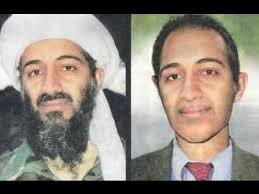
Image: from PEPE KEK AKA ChristQoph Crispy Meer X@christqoph45472
By Open Chronicle Military Intelligence Desk
During the 1980s, as the Soviet Union maintained its occupation of Afghanistan, a figure known to the intelligence community by the alias “Tim Osman” emerged in U.S. and allied operational circles. While the name itself sounds innocuous, it masked the presence of a young Osama bin Laden (UBL/OBL), who would later rise to global notoriety as the founder of Al-Qaeda. The alias reportedly allowed him to move discreetly through the United States and military installations while seeking support for Afghan resistance forces.
The Soviet invasion of Afghanistan in 1979 triggered a major Cold War confrontation. The United States, eager to counter Soviet expansion, launched Operation Cyclone, one of the largest covert operations in CIA history, channeling money, weapons, and logistical support to the Afghan mujahideen. Pakistan, through its Inter-Services Intelligence (ISI), served as the primary intermediary for these supplies.
Osama bin Laden, coming from a wealthy Saudi background, participated in the anti-Soviet jihad, establishing ties with local Afghan resistance groups. Though he did not work directly for the CIA, his activities overlapped with U.S. strategic goals. Funding, equipment, and political support funneled through Pakistan indirectly strengthened his operations. These resources provided him with the tools to expand his own network, ultimately laying the foundations for Al-Qaeda, which would later challenge the very powers that had indirectly supported him.
The name Tim Osman—sometimes abbreviated “T.O.”—is reported to have been a CIA-assigned cover used during bin Laden’s visits to the U.S. and allied military bases. These trips allowed him to network, cultivate support, and understand the broader political and military landscape. Contemporary accounts suggest he presented himself as a Westernized, “civilized” figure: clean-shaven, articulate, and diplomatic, far removed from the image he would later cultivate as a militant leader in the Middle East.
The alias and his discreet presence illustrate how intelligence agencies often relied on intermediaries and aliases to operate in politically sensitive contexts. Bin Laden’s case is particularly notable because while he was temporarily aligned with U.S. objectives, his ultimate intentions diverged sharply from those of his American benefactors.
The resources and networks developed during the Afghan conflict enabled bin Laden to consolidate power and organize his followers under the banner of Al-Qaeda. With a growing base of committed fighters and a sophisticated understanding of international logistics, he transformed from a regional jihadist to a global threat. By the 1990s, he had turned against the United States, orchestrating attacks that would redefine modern counterterrorism policy, including the 1998 U.S. embassy bombings and the September 11, 2001, attacks.
This trajectory highlights the unintended consequences of proxy warfare. A figure initially useful in a Cold War strategy ultimately became one of its most dangerous adversaries, demonstrating the complexity and unpredictability of covert operations and intelligence alliances.
The Tim Osman episode remains a case study in espionage and foreign policy: the use of aliases, third-party intermediaries, and covert funding can achieve short-term strategic objectives but carry long-term risks. Bin Laden’s evolution from a “Tim Osman” persona into the global leader of Al-Qaeda underscores the need for careful assessment of allies in conflict zones, especially when ideological motivations diverge from operational objectives.