
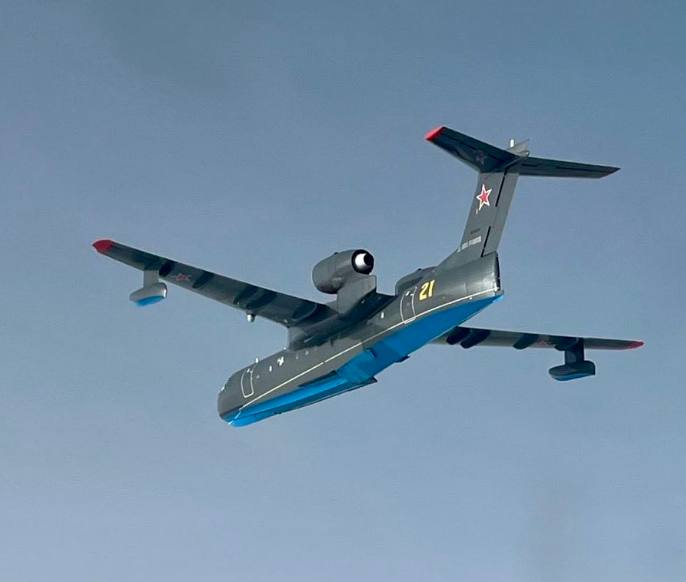
Image: from Authentic World Updates X@authworldnews
By Open Chronicle Military Affairs with Agencies
AMARI AIR BASE, ESTONIA — Saturday, January 17, 2026 — NATO Air Command confirmed that Italian Eurofighter Typhoons were scrambled from Estonia yesterday to intercept a rare Russian amphibious aircraft. The encounter, occurring at 11:30 a.m. on January 16, serves as a sharp reminder of the heightened state of vigilance along the alliance’s eastern flank, where over 500 such scrambles have already been recorded since the beginning of last year.
🇺🇸A Russian Navy Be-200PS amphibious aircraft (tail number “21 Yellow”) was escorted by an Italian Air Force Eurofighter Typhoon over the Baltic Sea in 2026. pic.twitter.com/MKefxmZJEo
— Authentic World Updates (@authworldnews) January 17, 2026
The Intercept: Italian Typhoons vs. “21 Yellow”
The radar at Amari Air Base detected an unidentified aircraft approaching the Baltic Sea without a flight plan or prior coordination. Within minutes, Italian Typhoons, currently leading the NATO Baltic Air Policing mission, were airborne.
The target was identified as a Beriev Be-200PS, an amphibious jet bearing the tail number “21 Yellow.” Operated by Russian Naval Aviation, the aircraft was shadowed by the Italian pilots until it cleared the sensitive area. NATO officials described the mission as a “routine but necessary” response to uncoordinated military flights near Allied borders.
The “Shadow Fleet” Connection
The appearance of the Be-200PS, a search-and-rescue variant of a plane originally designed for firefighting, has raised eyebrows among Western intelligence analysts. While the aircraft is not a combat platform, its deployment is increasingly linked to Russia’s maritime logistics.
Military sources suggest the Be-200 is being used to support and monitor Russia’s “shadow fleet” of tankers. These vessels, which operate in international waters to bypass Western sanctions, require specialized maritime surveillance and potential evacuation support—roles for which the Be-200’s ability to land on water is uniquely suited.
Technical Profile: The Beriev Be-200PS
| Feature | Specification / Detail |
| Role | Maritime Patrol / Search and Rescue (SAR) |
| Unique Capability | Amphibious (Runway and Water landings) |
| Engine Status | Critical: Powered by Ukrainian-origin engines. |
| Sustainment | Limited by the lack of domestic Russian replacements. |
| Operational Rarity | High; limited production numbers in military service. |
A Fleet in Jeopardy?
Despite its versatility, the long-term viability of the Be-200 fleet is under threat. The aircraft relies on engines manufactured in Ukraine, a supply chain that has been severed since the 2022 invasion. Russia has struggled to produce a domestic alternative, meaning “21 Yellow” and its counterparts are likely operating on the last of their service life.
As NATO maintains 24/7 situational awareness, the presence of such niche assets indicates that Moscow is stretching its remaining specialized aviation resources to protect its economic lifelines in the Baltic.
The interception of the Be-200PS highlights a shift in Baltic tensions toward the monitoring of maritime economic interests. While NATO’s 500+ scrambles since 2025 demonstrate a “sustained pace” of military activity, the use of rare, aging amphibious jets suggests Russia is forced to use specialized tools to manage the logistical complexities of its sanctioned shadow fleet.