
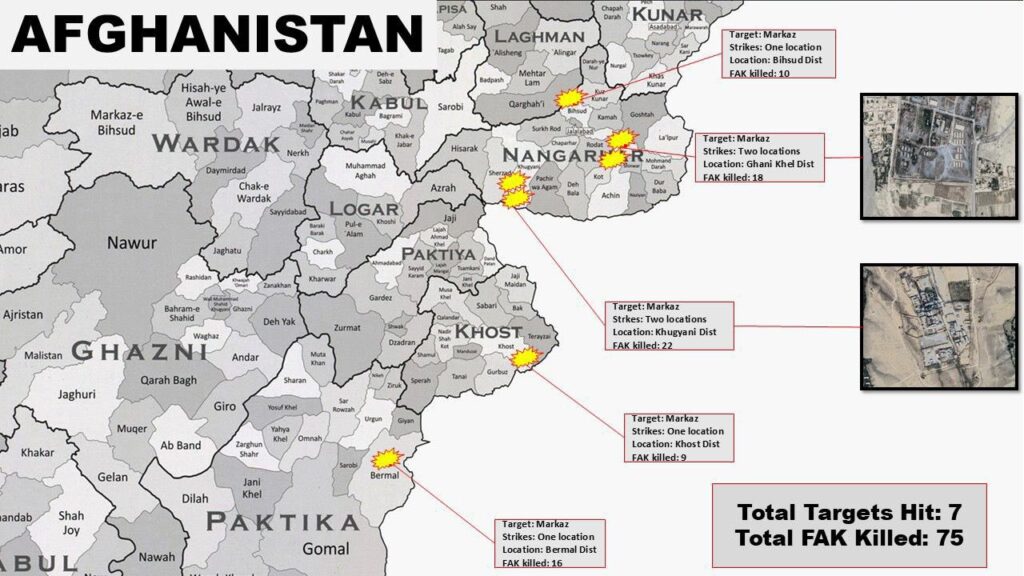
Image: from Faisal X @92security
By Open Chronicle Staff | Sunday, February 22, 2026
ISLAMABAD/KABUL – Tensions between neighboring South Asian nations reached a boiling point this weekend after Pakistan launched a series of coordinated airstrikes against seven targets inside Afghan territory. The military operation has drawn a sharp rebuke from the Taliban-led government in Kabul, which characterized the strikes as a violation of sovereignty and warned of a potential military response.
🚨 Afghan families are openly expressing anger after Pakistani strikes reportedly killed civilians in border areas.
On-ground visuals from TOLOnews show grief turning into outrage. 🎥
Kabul has vowed a response “at a time of its choosing.”
When strikes spark public fury… pic.twitter.com/2Lkgi9Qk5c
— KashmirFact (@Kashmir_Fact) February 22, 2026
The Midnight Strikes
The Pakistan Air Force carried out the strikes in the early hours of Saturday, targeting what Islamabad described as “terrorist hideouts” in the border provinces of Khost and Paktika. According to a statement from the Pakistani Ministry of Foreign Affairs, the operation was a “preemptive measure” aimed at intelligence-driven targets belonging to the Tehrik-i-Taliban Pakistan (TTP), also known as the Pakistani Taliban.
Islamabad has long accused the Taliban administration in Kabul of providing a haven for TTP militants, who have significantly ramped up cross-border attacks against Pakistani security forces over the past year.
“Pakistan has repeatedly urged the Afghan authorities to take effective action against terrorists using Afghan soil,” the statement read. “The security of our citizens is paramount, and we will not allow our restraint to be mistaken for weakness.”
Kabul’s Defiant Response
The Afghan Ministry of Defense confirmed the strikes but disputed Pakistan’s claims regarding the targets. Local officials in Khost reported that the bombardment hit residential areas, resulting in civilian casualties, including women and children.
Zabihullah Mujahid, the chief spokesperson for the Taliban government, issued a stern warning following an emergency security meeting in Kabul.
“The Islamic Emirate of Afghanistan strongly condemns these cowardly attacks,” Mujahid stated. “Pakistan should not test the patience of the Afghan people. Such reckless actions will have dire consequences, and the responsibility for any escalation will rest entirely on Islamabad.”
In a show of force, Taliban border forces reportedly engaged in brief skirmishes with Pakistani outposts along the Durand Line—the contested 2,600-kilometer border—shortly after the airstrikes were concluded.
A Deteriorating Relationship
The strikes mark a significant low point in the relationship between the two nations. When the Taliban returned to power in August 2021, many in Islamabad hoped for a more cooperative security partner. Instead, the rise in TTP activity has led to a cycle of blame and military posturing.
International observers are watching the situation with growing concern. The United Nations and several regional powers, including China and Qatar, have called for immediate de-escalation, fearing that a full-scale border conflict could further destabilize an already volatile region.
Humanitarian Concerns
Humanitarian organizations operating in the border regions have reported that hundreds of families have begun fleeing their homes in anticipation of further strikes or ground clashes. The border crossings at Torkham and Chaman, vital lifelines for trade and transit, remain reportedly closed or under heavy restriction, strangling the local economy and delaying aid shipments.
As of Sunday evening, both militaries remain on high alert. While diplomatic channels are said to be open behind the scenes, the rhetoric from both capitals suggests that the “neighborly” relationship has shifted into a dangerous new phase of confrontation.