
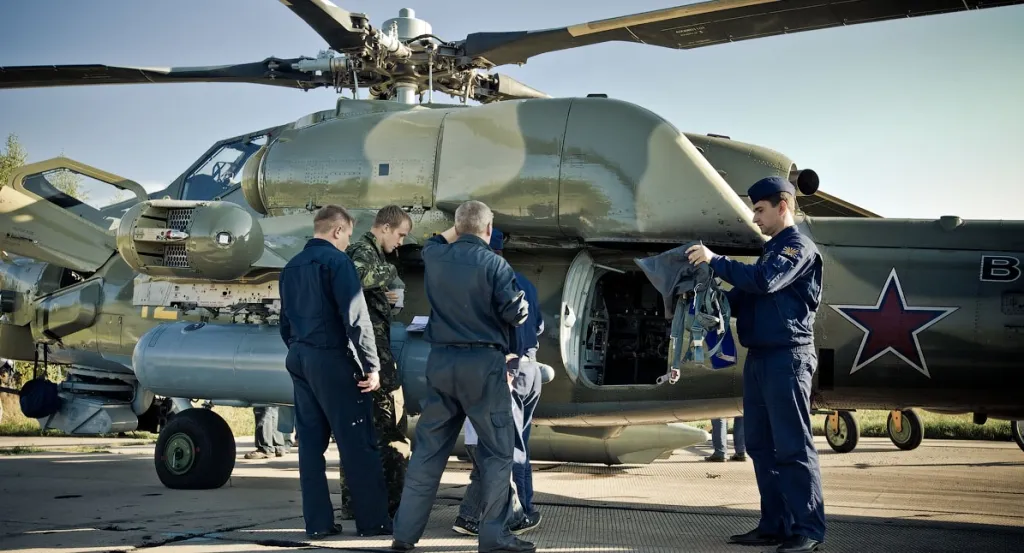
Image: Mi-28 rear-fuselage compartment, with the access door open. via X
MOSCOW — In the high-octane world of attack helicopters, where every inch of airframe is typically reserved for ammunition, fuel, or armor, the Russian Mi-28 “Havoc” carries a peculiar secret. While its American counterpart, the AH-64 Apache, is strictly a two-man affair, new footage from the conflict in Ukraine has shed light on a rarely seen feature of the Russian gunship: a tiny, windowless fuselage compartment designed to rescue stranded comrades.
The footage, recently broadcast by Russian state media, shows a technician performing maintenance on a Mi-28NM, the most modern variant of the helicopter, with a small door on the port side left open. The glimpse inside reveals a cramped, austere space tucked behind the main cockpit. This design choice sets the “Havoc” apart from almost every other dedicated attack helicopter in service today.
🚁Mi-28NM attack helicopter • Preflight Checks & Takeoff.
[b/n "05" yellow?]
📹VGTRK(Feb. 2026) https://t.co/F5sBjCQ3rB pic.twitter.com/0QRbVgQFSN— Massimo Frantarelli (@MrFrantarelli) February 23, 2026
A Legacy of the ‘Flying Infantry Vehicle’
The inclusion of this compartment is a nod to Soviet-era philosophy. Its predecessor, the legendary Mi-24 “Hind,” was famously a hybrid, part gunship, part troop transport, capable of carrying a full squad of eight soldiers. When the Mil Design Bureau began work on the Mi-28 in the late 1970s, it shifted its focus toward a more traditional “tank-killer” role, mirroring the U.S. Apache.
However, Russian engineers were reluctant to abandon the utility of the “Hind” entirely. They compromised by including a miniature cabin, just large enough to squeeze in two or three people. It was never intended for troop deployment; rather, it was a specialized “life insurance policy” for pilots.
🚁Mi-28NM attack helicopter • Preflight Checks & Takeoff.
[b/n "05" yellow?]
📹VGTRK(Feb. 2026) https://t.co/F5sBjCQ3rB pic.twitter.com/0QRbVgQFSN— Massimo Frantarelli (@MrFrantarelli) February 23, 2026
The Ultimate Rescue Mission
If a wingman is shot down behind enemy lines, the Mi-28 doesn’t have to wait for a dedicated Combat Search and Rescue (CSAR) team. The pilot can land, usher the downed crew into the fuselage compartment, and take off immediately.
“It’s an emergency-only feature,” notes military aviation analyst Thomas Newdick. “There are no windows, no climate control, and the space is often shared with sensitive avionics. It’s dark, loud, and incredibly cramped, but in a war zone, it’s the difference between being captured and making it home.”
Beyond rescue, the compartment provides logistical flexibility. It allows the helicopter to carry its own maintenance technicians and tools to forward operating bases, enabling rapid repairs without needing a separate transport aircraft.
Western Alternatives
Western forces have historically lacked this internal luxury. During a famous 2007 mission in Afghanistan, British Royal Marines were forced to strap themselves to the outside of AH-64 Apaches, clinging to the small “stub wings” to recover a fallen comrade. While effective, the maneuver left the soldiers completely exposed to enemy fire and the elements.
The Cost of Complexity
Despite this unique survival feature, the Mi-28 remains a high-risk asset. Data from open-source intelligence suggests Russia has lost approximately 19 Mi-28s since the full-scale invasion of Ukraine began four years ago.
As the “Havoc” continues to evolve, with new radar systems and long-range missiles seen on the latest NM models, the “tiny room” remains a constant. It is a stark reminder of a Russian design doctrine that prioritizes self-sufficiency and the brutal reality of low-level aerial combat.