
Image: from Vania Ávila X @aniaAvila
COPENHAGEN — In a political move that has sent ripples across Scandinavia, Danish Prime Minister Mette Frederiksen announced Thursday that Denmark will head to the polls on March 24. The snap election comes months ahead of the October 2026 deadline, as the government moves to capitalize on a significant surge in popularity following a high-stakes diplomatic standoff with the United States.
The “Greenland Bounce”
The decision to dissolve parliament follows a tense period of relations with Washington. U.S. President Donald Trump’s renewed interest in acquiring Greenland, the resource-rich, semi-autonomous territory of the Danish Kingdom, has dominated national discourse.
Frederiksen’s firm refusal to entertain such proposals, combined with her efforts to rally European allies in defense of Arctic sovereignty, has seen her approval ratings climb by nearly 10 percentage points since December. Analysts are calling this surge the “Greenland bounce,” a political windfall the Prime Minister is eager to secure before domestic economic concerns can regain the spotlight.
A Turning Point for Europe
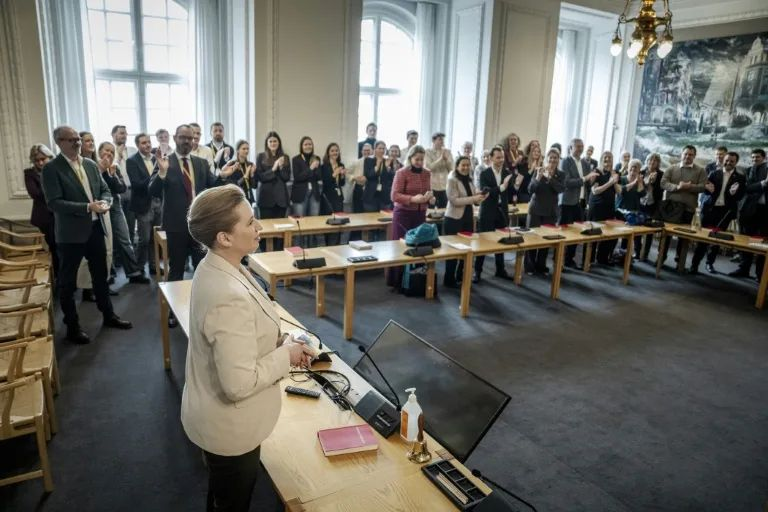
Addressing the Folketing (Parliament) on Thursday, Frederiksen framed the upcoming vote as a decisive moment for both Denmark and the broader European continent.
“This will be a crucial election, because in the next four years, we as Danes and as Europeans will really have to stand on our own two feet,” Frederiksen stated. “We must define our relationship with the U.S. and arm ourselves to ensure peace on our continent.”
The Prime Minister emphasized that the future of the Danish Commonwealth, comprising Denmark, Greenland, and the Faroe Islands, is at stake, necessitating a government with a clear mandate to navigate escalating geopolitical pressures.
Domestic Hurdles and Coalitions
While the Greenland dispute has bolstered the Social Democrats, Frederiksen faces a complex path to a third term. Her current government, a rare cross-bloc coalition with the centrist Moderates and the centre-right Liberals, has faced criticism over:
-
The “Great Prayer Day” Controversy: A 2023 decision to abolish a public holiday to fund defense spending remains deeply unpopular.
-
Economic Pressure: Rising living costs and the strain on welfare services continue to be primary concerns for the electorate.
The Road to March 24
The election will decide all 179 seats in the Folketing, including two seats each for Greenland and the Faroe Islands. As campaigning begins, the focus is expected to shift between national sovereignty on the global stage and traditional left-right debates over taxation and the future of the Danish welfare state.
For Frederiksen, the gamble is clear: she is betting that voters will reward her role as a “defender of the kingdom” on the international stage rather than punishing the government for domestic frustrations.