
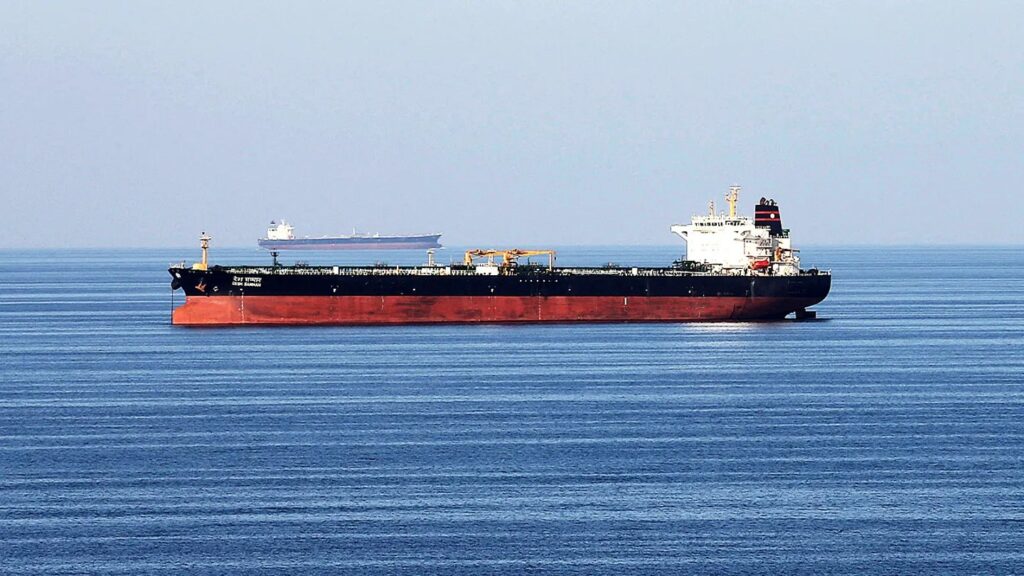
Image: from Mario Nawfal X @MarioNawfal
By Open Chronicle Staff with Agencies
Sunday, March 1, 2026
MANAMA, Bahrain — Global energy markets and maritime security agencies are on high alert today as traffic through the Strait of Hormuz has reportedly dropped to a standstill following the initiation of “Operation Epic Fury,” a massive joint U.S.-Israeli military offensive against the Iranian regime.
The strategic waterway, which serves as the world’s most important oil transit chokepoint, has become the center of a burgeoning regional crisis. Sources indicate that commercial shipping has slowed significantly as companies wait to assess the risk of Iranian retaliation or accidental entanglement in the escalating conflict.
Chaos on the High Seas
Reports from the Gulf describe scenes of high tension aboard commercial vessels. In one instance, passengers on a ship in the region received emergency mobile alerts at 4:30 p.m. local time, instructing them to shelter in interior compartments and avoid windows following a “large bang” in the immediate vicinity.
The maritime anxiety follows a series of decisive strikes. In a statement posted to Truth Social, U.S. President Donald Trump claimed that American forces have already “destroyed and sunk nine Iranian naval ships,” including several large vessels. “We are going after the rest,” the President warned. “They will soon be floating at the bottom of the sea.”
Regional Fallout
The disruption comes as the Gulf Cooperation Council (GCC) held an emergency meeting, warning Tehran that it would take “all necessary measures” to protect its member states. While the U.S. maintains that the operation is intended to dismantle Iran’s offensive capabilities, the immediate fallout has been a near-paralysis of one of the world’s most vital trade routes.
Fox News senior strategic analyst Jack Keane noted that the objective of the strikes is to “take Iran off the board” by eliminating its ability to conduct offensive operations. However, with the Iranian Supreme Leader Ayatollah Ali Khamenei reported killed and the Iranian Revolutionary Guard Corps (IRGC) vowing a “ferocious offensive” in return, the safety of the Strait remains in doubt.
Economic Implications
As insurance premiums for regional transit skyrocket, global oil prices have shown significant volatility. Military officials say that the U.S. and Israel are currently focused on suppressing remaining Iranian air defenses and naval assets to ensure the “freedom of navigation” that the Iranian regime has long threatened to obstruct.
For now, the world watches the narrow passage of the Hormuz with bated breath, as the “Epic Fury” of the weekend’s strikes ripples through the global economy.