
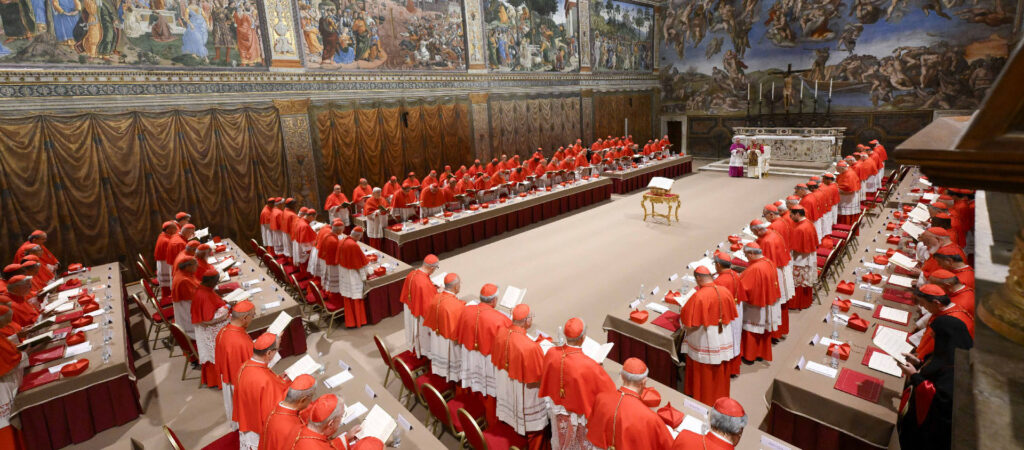
Image: from L’Écho Chrétien X @lechochretien
By Open Chronicle Staff
VATICAN CITY — In a scene described as “better than fiction,” the sacred silence of the 2025 Papal Conclave was shattered not by prayer, but by the digital ring of a mobile device. New revelations from the recently published book, The Election of Pope Leo XIV, detail a historic security breach that briefly paralyzed the election of the current Holy Father in May of last year.
A “Grave Security Failure”
According to authors Gerard O’Connell and Elisabetta Piqué, the incident occurred within the high-security confines of the Sistine Chapel. As 133 cardinals prepared for their initial vote to elect a successor to the late Pope Francis, specialized signal-jamming equipment detected an active mobile connection.
The discovery sparked immediate confusion among the world’s highest-ranking clerics, who are strictly forbidden from communicating with the outside world under the threat of excommunication.
Confusion in the Chapel
The source of the signal was eventually traced to one of the senior cardinals. The book describes a moment of high tension followed by embarrassment as the elderly clergyman realized he still had a smartphone in his pocket.
“The scene was unimaginable, even for a film, and never before seen in the history of modern conclaves,” the authors noted, drawing comparisons to the 2024 thriller Conclave.
The unidentified cardinal, described as “disoriented and distressed,” immediately surrendered the device. While the book does not suggest any malicious intent or a desire to leak information, the breach has raised serious questions regarding the protocols used to vet the Princes of the Church before they enter the “extra omnes” (everyone out) phase of the election.
The Rise of Leo XIV
Despite the digital distraction, the process moved forward with relative speed. On May 8, 2025, after just two days and four rounds of voting, the white smoke rose above St. Peter’s Square.
Cardinal Robert Francis Prevost, 69, was elected as the 266th Bishop of Rome, choosing the name Leo XIV. Born in Chicago, Illinois, the Augustinian friar previously served as the Prefect of the Dicastery for Bishops. He succeeded Pope Francis, who passed away on April 21 at the age of 88.
Leo XIV’s election marked a significant moment for the Church, bringing a North American perspective to the Papacy during a period of transition and, as it turns out, unexpected technological drama.