
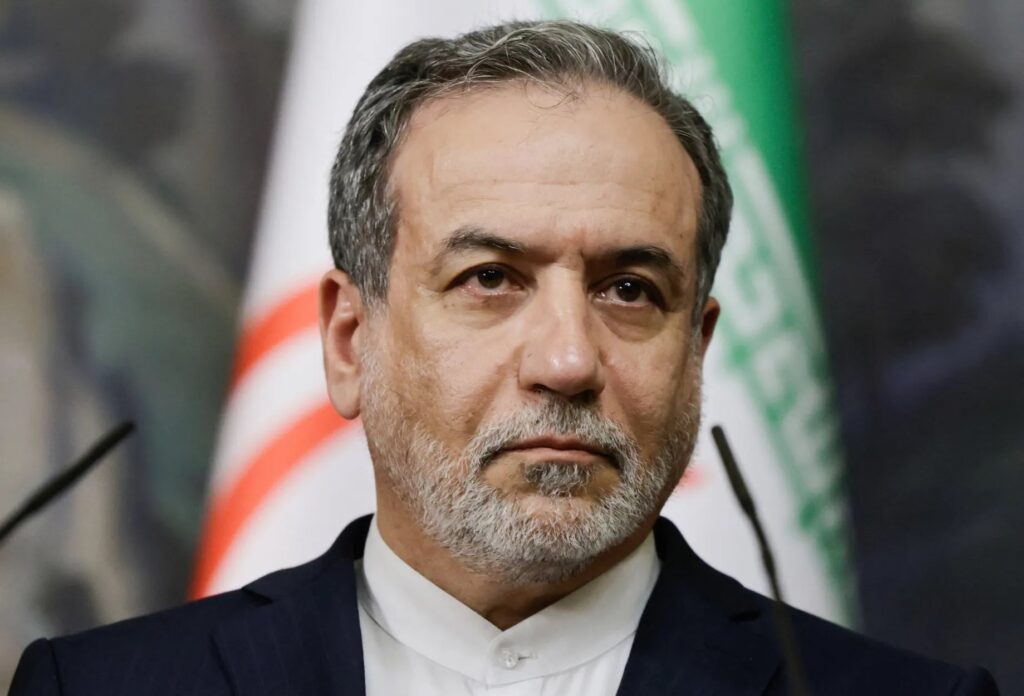
Image: from BRICS News X @BRICSinfo
By Open Chronicle Staff with Agencies
TEHRAN / MOSCOW — Amidst a devastating aerial campaign by U.S. and Israeli forces, Iranian Foreign Minister Abbas Araghchi revealed on Friday that both Russia and China are providing “political and other forms” of support to the Islamic Republic. The statement, made during an interview with NBC News, highlights the complex web of global alliances currently being tested by the war in the Middle East.
“Not a Secret”: Military Cooperation Defended
While Araghchi remained guarded regarding the specifics of current assistance, he pointedly refused to rule out ongoing military coordination. “I am not going to give details about our cooperation with other countries right in the middle of a war,” Araghchi stated. He did, however, emphasize that long-standing military ties between Moscow and Tehran have “never been a secret.”
The Foreign Minister’s comments come at a critical juncture as Iran seeks to bolster its defenses following the destruction of nearly 200 military targets and the loss of over 30 naval vessels to U.S. strikes.
🇮🇷🇨🇳🇷🇺 NBC News journalist: "Are Russia and China actively helping you in this war?"
Iranian Foreign Minister Araghchi: "They have always helped us."
Journalist: "Does that mean 'yes'?"
Araghchi: "I'm not going to disclose details in the midst of a war." https://t.co/VLWIa95atA pic.twitter.com/B23SjsNHVP
— Lord Bebo (@MyLordBebo) March 5, 2026
Moscow’s Delicate Balance: “Not Our War”
Despite the Iranian rhetoric, the Kremlin has moved to distance itself from direct kinetic involvement. On Thursday, Kremlin spokesperson Dmitry Peskov struck a notably colder tone, seemingly tempering expectations of a Russian military intervention.
-
Official Stance: Russia claims it has received no official request for military aid from Tehran.
-
The “Interests” Clause: “It is not our war,” Peskov told state television. “We are seeing an increasing number of countries being dragged into the conflict. We are doing what corresponds to our interests.”
While Russia has criticized Gulf nations for failing to condemn the initial U.S.-Israeli strikes, Moscow’s primary focus appears to be diplomatic mediation with regional powers rather than confrontation with Washington.
China’s Shadow Support
Araghchi was notably more elusive when questioned about Beijing. Despite repeated prompts from NBC journalists, the Foreign Minister avoided direct mention of China, though he grouped them into the broader category of nations providing “political and other” support. China has historically been Iran’s largest oil buyer and a key economic lifeline, but like Russia, it has officially called for restraint and a ceasefire.
A Global Pivot Point
The diverging statements from Tehran and Moscow suggest a friction point in the “no-limits” partnership often touted by the two nations. While Iran signals that it is not fighting alone, Russia’s rhetoric indicates a pragmatic “Russia-first” approach as the conflict escalates.
“The Islamic Republic will use every available channel to defend its sovereignty,” Araghchi concluded, even as his counterparts in Moscow signal they are not ready to commit their own forces to the fray.