
Image: from Global Flash Alert X @GlobalFlashHQ
By Open Chronicle Staff | Tuesday, March 10, 2026
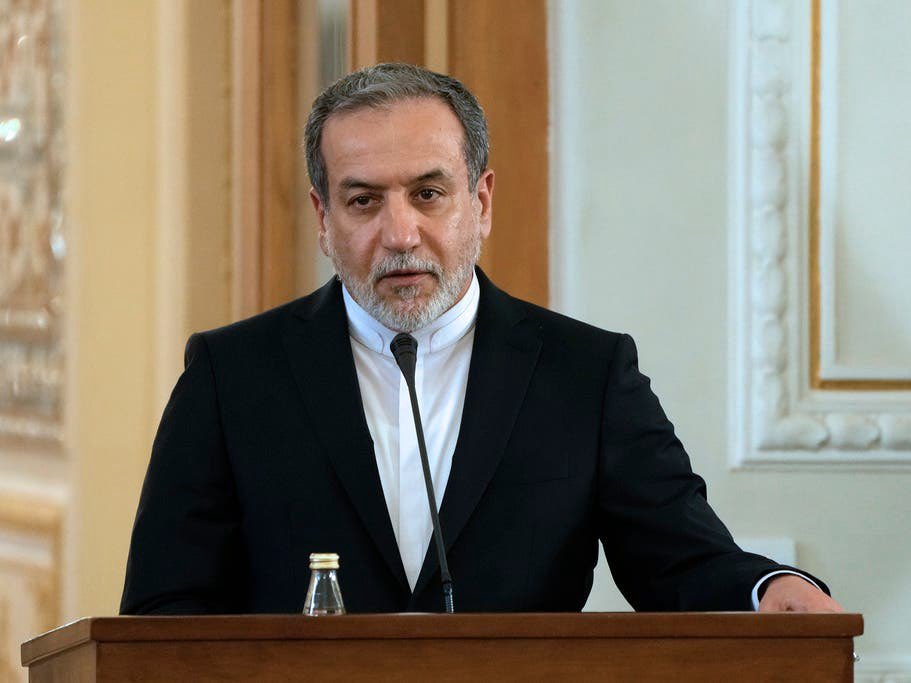
TEHRAN — In a defiant televised interview with PBS News, Iranian Foreign Minister Abbas Araghchi declared on Monday that the “negotiation track” with the United States is officially dead. Speaking from a capital still reeling from a week of coalition airstrikes, Araghchi asserted that Tehran is prepared to wage a missile war “as long as it takes” to repel what he termed illegal U.S. and Israeli aggression.
The Foreign Minister’s remarks serve as the first major foreign policy statement under the authority of the newly appointed Supreme Leader, Mojtaba Khamenei, signaling a hardline pivot away from the diplomatic overtures of the previous year.
Diplomacy Discarded
Araghchi revealed that Iran had participated in three rounds of secret negotiations with U.S. representatives as recently as June 2025. Despite “significant progress” reported by both sides at the time, Araghchi claimed the subsequent U.S. decision to launch strikes on February 28 proved that Washington cannot be trusted.
“I don’t think talking with Americans anymore would be on our agenda,” Araghchi stated. “The option Plan A was a failure… and now they are trying other plans, but all of them have failed as well.”
The “Minab Massacre” and Civilian Toll
A central theme of the interview was the mounting civilian cost of the conflict. Araghchi directly accused the United States of responsibility for the strike on a girls’ school in Minab, southern Iran, which reportedly killed 168 students.
“It is now a consensus that the attack was made by the United States,” Araghchi said, dismissing Pentagon denials. He contrasted this with Iranian operations, which he claimed do not intentionally target civilians, despite reports of Iranian missiles striking residential and oil infrastructure in neighboring Saudi Arabia and the UAE.
“As Long as It Takes”
Addressing the state of Iran’s military after a week of intense bombardment, Araghchi remained bullish:
-
Nuclear Resilience: He claimed that while facilities were hit, the “technologically advanced” nuclear program remains intact because it was developed domestically.
-
Missile Persistence: “They have attacked our missile facilities, but they have not been able to stop us from firing missiles against them.”
-
Targeting U.S. Assets: Araghchi was blunt about regional spillover: “Since we cannot reach American soil, we have to attack their bases in the region, their facilities, their installations, their assets.”
Internal Support and Leadership
Araghchi described a nation unified by “anger and patriotism,” claiming millions have taken to the streets in support of Mojtaba Khamenei. He dismissed U.S. intelligence suggestions that the strikes are weakening the regime’s domestic standing, arguing instead that the “aggression” has only served to mobilize the public behind the armed forces.
The interview concluded with a grim outlook for global markets. Araghchi warned that the ongoing instability in the Persian Gulf and the slowdown of oil transportation are the “huge consequences” of the U.S.–Israeli campaign, for which the international community will continue to pay.