
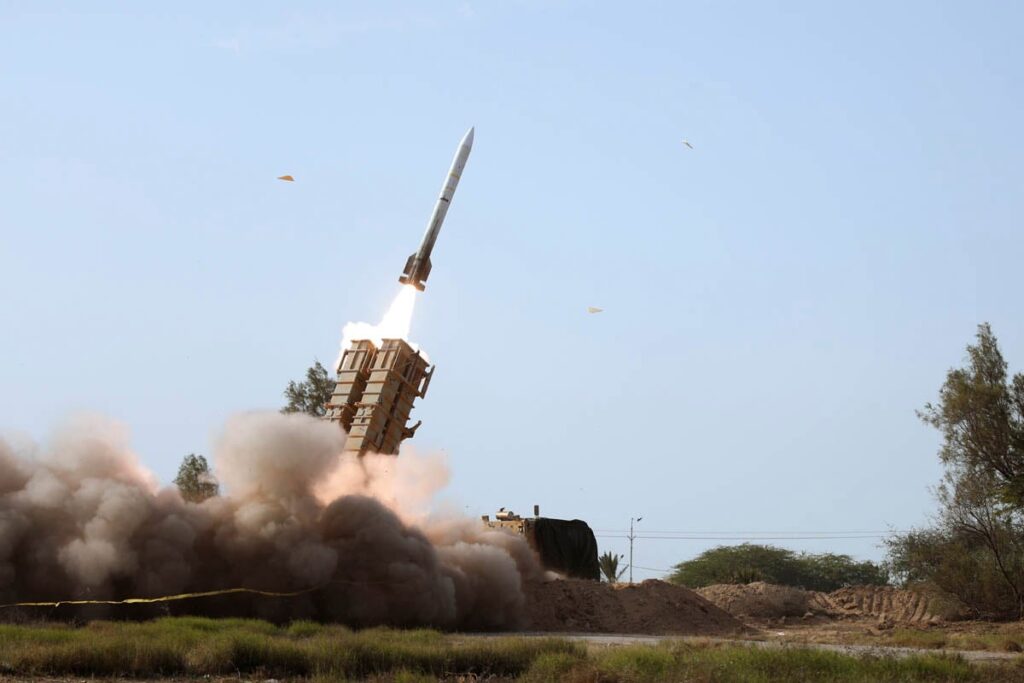
Image: from Levant24 X @Levant_24_
By Open Chronicle Staff with Agencies | Tuesday, March 10, 2026
ANKARA / MALATYA — The Turkish Ministry of National Defense announced Tuesday that a U.S. Patriot air defense system is now operational in the southeastern province of Malatya. The deployment, situated near the critical Kurecik NATO radar base, serves as a direct response to a series of ballistic missile violations of Turkish airspace originating from Iranian territory.
The activation marks the second Patriot battery currently stationed in Türkiye, joining a Spanish-contributed system, as the 11-day-old war between the U.S.–Israeli coalition and Iran spills increasingly into neighboring sovereign skies.
Defensive Shield at Kurecik
The Kurecik radar station has become the “eyes and ears” of the regional defense effort. According to the Defense Ministry, the facility’s early-warning data was instrumental in the successful interception of two Iranian ballistic missiles over the past week:
-
March 4: A missile detected immediately after launch was neutralized by an SM-3 interceptor from a U.S. naval vessel.
-
March 9: A second projectile was intercepted over the province of Gaziantep, with debris falling in a vacant lot.
“In addition to our national measures, NATO has enhanced air and missile defense measures,” the ministry stated on X. “The Patriot system in Malatya is being prepared for operational readiness to support the protection of our airspace.”
Turkish MoD says a NATO Patriot missile defense system has been deployed in Malatya as part of enhanced air and missile defense measures amid rising regional tensions.
The Turkish Ministry of National Defense stated the system is being prepared for operational readiness to help… pic.twitter.com/coAI65rs9Q
— The Daily News (@DailyNewsJustIn) March 10, 2026
The “Pacific Pivot” for the Middle East
Reports from Seoul indicate that the new battery likely originated from the U.S. Forces Korea (USFK) inventory. South Korean President Lee Jae-myung confirmed Tuesday that while Seoul expressed opposition to the redeployment of Patriot and THAAD components, it “cannot fully carry through its opinion” regarding the movement of American military assets.
The shift underscores the Pentagon’s urgent need for “unlimited munitions” and advanced interception capabilities in the Middle East, even at the cost of temporarily reducing air defense coverage in Northeast Asia.
High-Stakes Diplomacy: Erdoğan vs. Pezeshkian
The deployment follows a tense telephone conversation on Monday between President Recep Tayyip Erdoğan and Iranian President Masoud Pezeshkian.
-
The Warning: Erdoğan reportedly told Pezeshkian that violations of Turkish airspace “cannot be excused for any reason whatsoever” and that Türkiye is being “negatively affected” by a war in which it is not a direct participant.
-
The Denial: President Pezeshkian maintained that the missiles intercepted were “not of Iranian origin” and promised a comprehensive investigation, though he was recently contradicted by IRGC spokesperson Ali Mohammad Naini, who vowed continued strikes on U.S. assets throughout the region.
Erdoğan also used the call to express condolences for the death of Supreme Leader Ali Khamenei and voiced hope that the rise of Mojtaba Khamenei might eventually contribute to peace, despite the new leader’s early refusal to reopen diplomatic channels with Washington.