
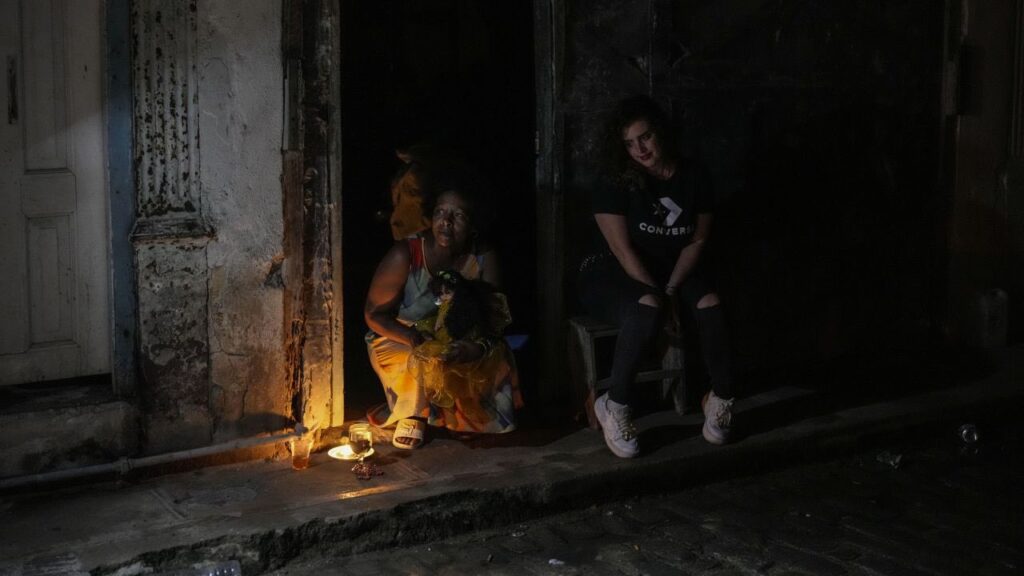
Image: from Visegrád 24 X @visegrad24
HAVANA ACCUSES U.S. OF “ENERGY TERRORISM” AS BLACKOUTS EASE; TRUMP ADVISERS SIGNAL “MAXIMUM PRESSURE 2.0”
By OPEN CHRONICLE STAFF
HAVANA — After seventy-two hours of near-total darkness that paralyzed the island and stoked rare domestic unrest, the Cuban government announced Tuesday that its national electricity grid has been “90% restored.” The recovery of the aging system, which collapsed over the weekend following a fuel shortage and mechanical failure at the Antonio Guiteras power plant, was framed by President Miguel Díaz-Canel not as a technical fix, but as a victory of “unbreakable resistance” against U.S. economic pressure.
“The empire tried to suffocate us in the dark,” Díaz-Canel stated in a televised address from a brightly lit government office. “But the Cuban people have proven that their dignity cannot be switched off by Washington.”
A Fragile Recovery
Despite the government’s triumphalism, the reality on the streets of Havana and Santiago remains precarious. While the “total collapse” has ended, rotating blackouts, known locally as alumbrones, continue to plague the provinces. The recovery was reportedly made possible by an emergency shipment of Russian crude that bypassed the tightened U.S. naval monitoring in the Caribbean.
Engineers warn that the grid remains “held together by wire and prayer.” Decades of underinvestment, combined with the current administration’s move to block secondary shipping insurance for tankers bound for Cuba, have made acquiring spare parts nearly impossible.
“Energy Terrorism” and the U.S. Stance
The Cuban Foreign Ministry has officially labeled the U.S. embargo “energy terrorism,” claiming that the Trump administration’s recent sanctions on Venezuelan oil exports were specifically timed to trigger a Cuban humanitarian crisis.
In Washington, the sentiment is one of “maximum pressure.” A senior advisor to the National Economic Council suggested that the blackout was a “self-inflicted wound” by a failed communist state. “If Havana wants the lights to stay on, they know exactly what they need to do: stop exporting revolution to Venezuela and start importing democracy.”
Internal Tensions and “Cacerolazos”
While the lights are back on, the psychological impact of the blackout has left a mark. During the height of the darkness on Sunday night, the sounds of cacerolazos, the rhythmic banging of pots and pans, echoed through the darkened streets of several Havana neighborhoods.
Human rights observers noted a heavy police presence near the Malecón on Tuesday, an indication that the government remains wary of the “energy spark” that led to the historic July 11 protests in 2021. For many Cubans, the restoration of electricity is a relief, but the underlying crisis of food and medicine shortages remains as dark as ever.
The Geopolitical Chessboard
The energy crisis has once again turned Cuba into a focal point of the broader confrontation between Washington and Moscow. With the U.S. occupied by the escalating conflict in the Persian Gulf, Russia has utilized the Cuban energy void to reassert its influence in the Western Hemisphere, providing both technical advisors and the fuel necessary to restart the Antonio Guiteras plant.
As the Caribbean heat intensifies leading into the summer months, the stability of Cuba’s grid and its government may depend less on revolutionary rhetoric and more on whether the “Maximum Pressure” campaign from the North breaks before the Cuban people do.