
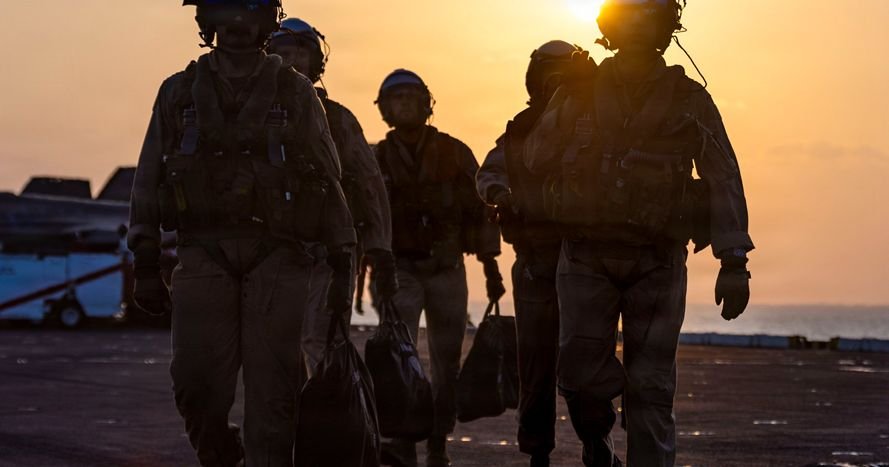
Image: from Red Line Report X @worldwar_3__
By Open Chronicle Staff with Agencies | Friday, March 20, 2026
WASHINGTON — In a significant escalation of the U.S. military posture in the Middle East, the Pentagon has ordered a Marine Expeditionary Unit (MEU) and three Navy warships to the region. The move comes as the U.S. and its allies face heightened instability and ongoing maritime threats in the Persian Gulf.
According to Defense Department officials, approximately 2,200 Marines from the 31st Marine Expeditionary Unit, normally based in Okinawa, Japan, are currently en route aboard an Amphibious Ready Group. The fleet, spearheaded by the aviation-focused amphibious assault ship USS Tripoli, also includes a squadron of F-35B Lightning II fighter jets and MV-22 Osprey tiltrotor aircraft, providing a versatile range of “over-the-horizon” strike and rapid-response capabilities.
The deployment, approved by Secretary of Defense Pete Hegseth following a request from U.S. Central Command (CENTCOM), is seen as a direct response to Iranian activities in the Strait of Hormuz. For weeks, the strategic waterway has been a flashpoint, with Iranian forces attempting to disrupt global oil shipping routes in retaliation for a series of precision strikes on their military infrastructure.
“This is about providing flexible operational capabilities to our commanders on the ground,” a senior defense official told ABC News. “While our primary goal remains deterrence, we must be prepared to protect commercial shipping and ensure the free flow of commerce through one of the world’s most vital maritime corridors.”
The arrival of the 31st MEU, expected as early as next week, could be followed by even more reinforcements. Military sources indicate that the 11th MEU, currently operating in the Pacific aboard the USS Boxer, USS Comstock, and USS Portland, has also been placed on notice for a potential redirection to the Middle East.
If both units are deployed, the surge would bring nearly 9,000 additional personnel to a region where the U.S. already maintains a footprint of roughly 50,000 troops. Speculation among defense analysts suggests the Marines could be tasked with securing key energy hubs, such as Kharg Island, or conducting shoreline raids to disable missile batteries targeting international tankers.
President Trump, speaking on the ongoing military campaign, reaffirmed his administration’s commitment to “restoring order” in the region. “We have degraded their capabilities significantly,” the President stated in a recent interview, “and we will continue to take whatever steps are necessary to protect American interests and our allies.”
As the warships draw closer to the Gulf, the international community remains on edge, with world leaders calling for de-escalation even as the Pentagon prepares for all contingencies.