
Image: Tsukumo_eX.(ツクモeX.)X @Tsukumo_eX
By Julian Thorne | Open Chronicle Technology Columnist
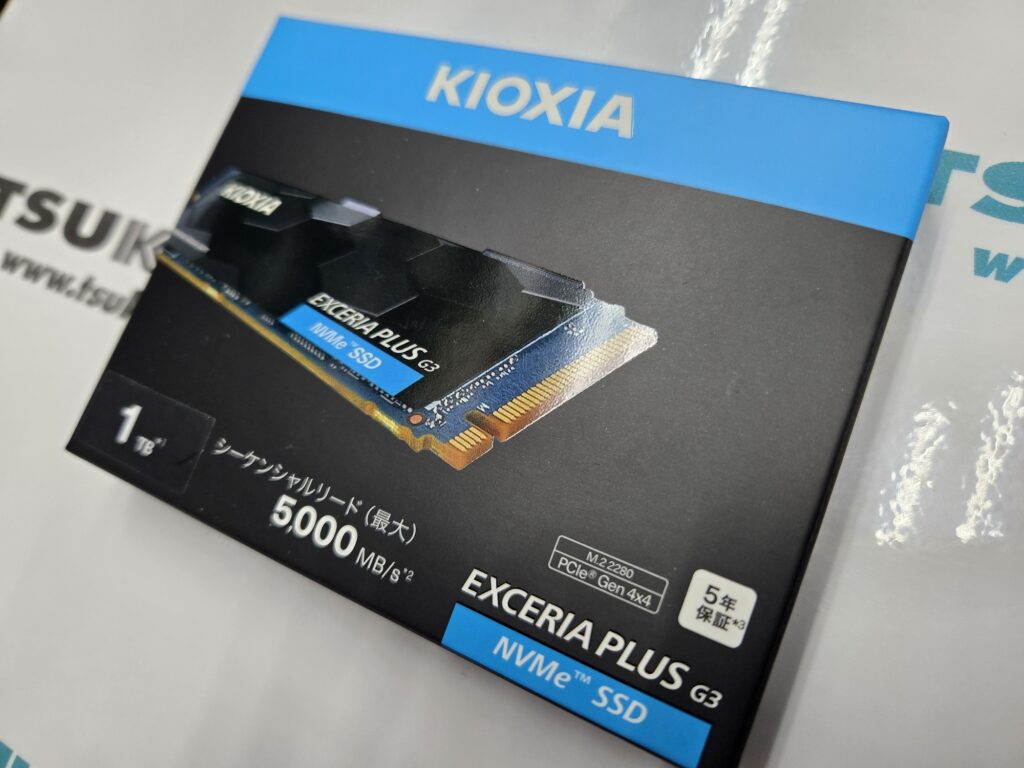
LISBON, PT — In a hardware market often obsessed with the bleeding edge of PCIe 5.0 speeds and astronomical price tags, Kioxia is making a compelling case for the “sensible middle.” The Japanese storage giant has officially launched the Exceria Plus G3, an NVMe SSD that prioritizes thermal efficiency and consistent performance over record-breaking benchmarks.
As gaming libraries swell and 4K video editing becomes a household hobby, the G3 enters the fray as a mainstream hero, aiming to replace the aging G2 with a modern PCIe 4.0 architecture.
Bridging the Generational Gap
The Exceria Plus G3 represents a significant architectural leap for Kioxia’s mid-range lineup. Moving from the PCIe 3.0 standard to PCIe 4.0, the drive boasts sequential read speeds of up to 5,000 MB/s and write speeds of 3,900 MB/s. While these figures won’t dethrone top-tier enthusiast drives, they represent a near 50% improvement over the previous generation.
In real-world testing, the drive excels in “burst” workloads—the kind of tasks everyday users actually perform, such as booting Windows in seconds or launching heavy applications like Adobe Premiere.
Cool Under Pressure
Perhaps the most impressive feat of the G3 is its thermal management. Most high-speed SSDs require bulky, expensive heatsinks to prevent “thermal throttling”, a safety mechanism that slows the drive down when it gets too hot.
Kioxia has engineered the G3 with a single-sided M.2 2280 form factor that runs remarkably cool even under sustained load. This makes it an ideal candidate for thin-and-light laptops and the Sony PlayStation 5, where internal airflow is limited, and space is at a premium. By utilizing Kioxia’s proprietary BiCS FLASH 3D technology, the drive achieves its speed without the power draw typically associated with the Gen4 era.
The Value Proposition
The Exceria Plus G3 arrives at a time when flash memory prices are beginning to stabilize. By opting for a DRAM-less design—utilizing Host Memory Buffer (HMB) technology to maintain snappiness—Kioxia has been able to keep the MSRP aggressive.
However, the drive is not without its trade-offs. For professional users moving terabytes of data daily, the lack of dedicated DRAM may result in slower speeds once the high-speed SLC cache is exhausted. For the 95% of users who use their PCs for gaming, office work, and content consumption, this is a compromise that will likely go unnoticed.
Verdict
The Kioxia Exceria Plus G3 isn’t trying to be the fastest drive on the planet; it’s trying to be the most reliable drive for your wallet. It offers a “set it and forget it” solution for those looking to upgrade their storage without worrying about overheating or compatibility.