
Image Credentials: Image Title: Global News Brief: Key Events and Developments for March 25, 2026 Source: (sora.openai) Date: March 2026. Attribution: This image was created using AI-generated imagery
By Open Chronicle with Agencies
A fragile diplomatic opening is emerging in the Middle East as military escalation between the United States, Israel, and Iran enters a critical phase. Political signals, military developments, and economic reactions are shaping a complex and uncertain global landscape.
Top Stories
Proposed US-Iran framework outlines sweeping nuclear restrictions
New details have surfaced regarding a reported 15-point framework presented by the United States to Iran, aimed at ending the ongoing conflict. According to Israeli media, the proposal includes the full dismantlement of Iran’s nuclear infrastructure, including key facilities at Natanz Nuclear Facility, Isfahan Nuclear Technology Center, and Fordow Fuel Enrichment Plant.
The plan would require Tehran to transfer all enriched nuclear material to the International Atomic Energy Agency and commit to abandoning any pursuit of nuclear weapons. It also includes provisions to halt Iran’s support for regional proxy groups and to ensure that the Strait of Hormuz remains open and secure for global trade.
Washington signals active diplomatic engagement
Donald Trump stated that the US is now in contact with what he described as the “right people” in Iran, suggesting behind-the-scenes diplomatic channels are active. While no formal negotiations have been confirmed, intermediaries are reportedly facilitating communication between the two sides.
The remarks indicate cautious optimism in Washington that a negotiated settlement could be within reach, even as military operations and tensions persist.
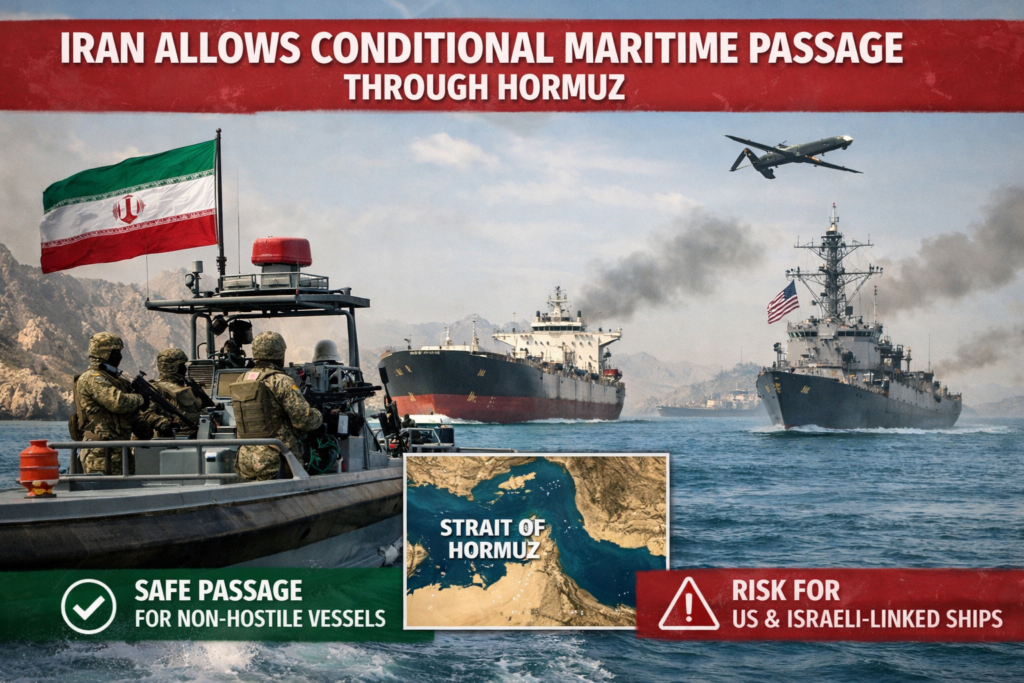
Iran allows conditional maritime passage through Hormuz
Iran’s mission to the United Nations announced that vessels not involved in hostile actions will be granted safe passage through the strategically vital Strait of Hormuz. However, the condition introduces uncertainty for global shipping, particularly for nations perceived as aligned with US or Israeli operations.
The strait remains one of the world’s most critical energy chokepoints, and any disruption continues to pose significant risks to global supply chains.
News in Brief
- A drone strike triggered a fire at Kuwait International Airport, highlighting the widening geographic scope of the conflict.
- Recep Tayyip Erdogan and Tamim bin Hamad Al Thani exchanged condolences following a deadly helicopter crash involving military personnel.
- Denmark’s parliamentary elections produced no clear majority, positioning the Moderates party as a potential kingmaker.
- Iran appointed Mohammad Bagher Zolghadr as the new secretary of its Supreme National Security Council following the death of Ali Larijani in a reported strike.
- Saudi Arabia intercepted drones and a ballistic missile targeting its Eastern Region.
- Canada condemned Israeli plans to occupy parts of southern Lebanon.
- Nearly 290 US troops have been wounded since the start of operations against Iran, according to the United States Central Command.
- China called for renewed diplomatic efforts involving all parties to prevent further escalation.
- Philippines declared a national energy emergency due to supply disruptions linked to the conflict.
Business & Economy
Oil markets react to diplomatic signals
Global oil prices declined amid renewed hopes for de-escalation. Brent Crude Oil dropped to around $98 per barrel, reflecting cautious optimism that supply disruptions may be avoided if negotiations progress.
LNG supply disruptions ripple globally
QatarEnergy declared force majeure on several liquefied natural gas contracts following damage to key infrastructure. The move affects major importers, including China, Italy, Belgium, and South Korea, raising concerns over global energy stability.
Outlook
While diplomatic efforts appear to be gaining momentum, the situation remains volatile. Military activity continues across multiple fronts, and the conditions attached to proposals, particularly regarding Iran’s nuclear program and regional influence, present significant obstacles.
The coming days will be critical in determining whether the current diplomatic signals evolve into a tangible ceasefire or whether the conflict deepens further with broader regional consequences.