
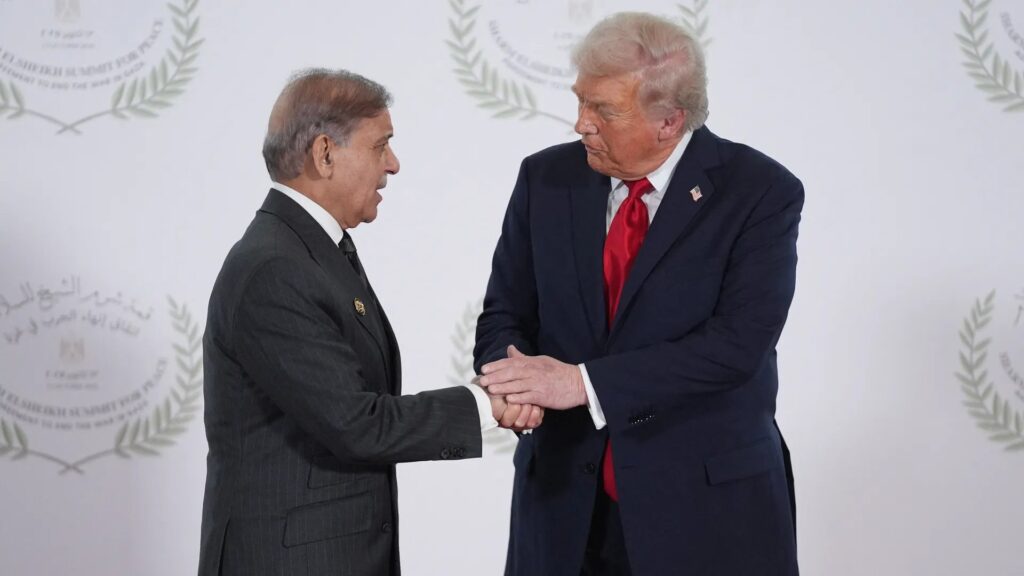
Image: from NewsForce X @Newsforce
By Open Chronicle Staff with Agencies Tuesday, April 7, 2026
ISLAMABAD/WASHINGTON — In a final attempt to avert a catastrophic escalation in the Middle East, Pakistani Prime Minister Shehbaz Sharif issued an urgent appeal on Tuesday, calling for a two-week extension of President Donald Trump’s deadline for military strikes against Iran.
The plea, described by officials as an “11-hour” diplomatic maneuver, seeks to provide a cooling-off period in the ongoing U.S.-Israeli conflict with Tehran. Prime Minister Sharif urged President Trump to delay his 8 p.m. ET deadline, while simultaneously calling on Iran to reopen the Strait of Hormuz for the same duration as a “goodwill gesture.”
A “Steadily Progressing” Peace Push
In a statement posted to social media, Prime Minister Sharif expressed optimism that a diplomatic resolution is within reach if the warring parties step back from the brink.
“Diplomatic efforts for peaceful settlement of the ongoing war in the Middle East are progressing steadily, strongly and powerfully with the potential to lead to substantive results in near future,” Sharif wrote. “To allow diplomacy to run its course, I earnestly request President Trump to extend the deadline for two weeks.”
White House Press Secretary Karoline Leavitt told Axios that the president is aware of the proposal and that a response is forthcoming. Meanwhile, a senior Iranian official told Reuters that Tehran is currently “positively reviewing” the request.
BREAKING: ~4 HOURS UNTIL TRUMP DEADLINE — PAKISTAN SEEKS EXTENSION ⏰️
Pakistan has asked to extend Trump’s deadline on potential strikes, saying diplomacy is strongly progressing.
The White House confirms Trump has been briefed on the proposal and a response is coming.… pic.twitter.com/M0kTqtcJOo
— CryptosRus (@CryptosR_Us) April 7, 2026
Escalation Amidst Negotiation
Despite the diplomatic activity, the situation on the ground remains volatile. Since the U.S.-Israeli military operations began on February 28, Iran has effectively halted maritime traffic through the Strait of Hormuz—a corridor responsible for 20% of the world’s oil and liquefied natural gas.
Recent hours have seen a surge in kinetic activity:
-
Israeli Strikes: Israel reportedly targeted railways and bridges across various regions in Iran on Tuesday.
-
Iranian Retaliation: Iranian forces launched strikes against targets in Bahrain, Qatar, and the United Arab Emirates.
-
IRGC Warnings: The Islamic Revolutionary Guard Corps (IRGC) warned that its response will “extend beyond the region” if U.S. forces cross “red lines.”
Legal Warnings and “Exhibit A”
As President Trump’s rhetoric intensified Tuesday, including a Truth Social post suggesting the potential end of an entire “civilization,” legal experts are sounding alarms over the targeting of civilian infrastructure.
Oona Hathaway, a professor at Yale Law School, noted that targeting power plants and bridges constitutes a war crime under international law. Referring to the president’s recent social media posts, Hathaway remarked that such statements would likely serve as “Exhibit A in future war crimes trials.”
“There is no statute of limitations on war crimes,” Hathaway warned. “Eventually, those responsible will have to be held to account.”
As the 8 p.m. ET deadline nears, Islamabad remains the primary mediator, with sources telling Al Jazeera that while the risk of escalation is at its peak, the “possibility of diplomacy can’t be ruled out till the last minute.”