
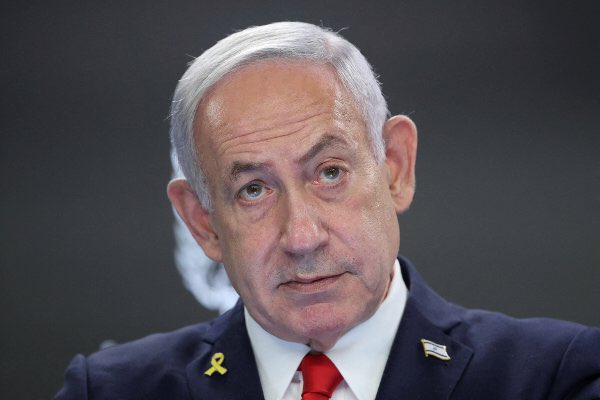
Image: from Velstrád 24 X @velstrad24
By Open Chronicle Staff with Agencies
Thursday, April 9, 2026
JERUSALEM/BEIRUT — In a sudden shift of diplomatic strategy, Israeli Prime Minister Benjamin Netanyahu announced Thursday that he has instructed his cabinet to begin direct negotiations with Lebanon “as soon as possible.” The surprise move aims to reach a historic agreement to disarm Hezbollah and establish peaceful relations, even as the region reels from the deadliest day of strikes since the war began on March 2.
The announcement followed a wave of over 100 Israeli airstrikes on Wednesday—dubbed “Operation Eternal Darkness”, which killed at least 303 people and wounded more than 1,000 across Lebanon.
Negotiating Under Fire
Netanyahu’s office framed the invitation as a response to “repeated requests” from the Lebanese government. The talks, which are reportedly being organized to take place in Washington as early as next week, would feature delegations led by the respective ambassadors to the United States.
Israeli PM Netanyahu vows no ceasefire in Lebanon, continuing full-force strikes on Hezbollah to restore northern security.
Follows massive airstrikes killing over 250 amid disputed US-Iran truce excluding Lebanon. Cabinet pursues peace deals isolating Hezbollah. #Netanyahu… pic.twitter.com/neSbYLquqk
— Neelotpal Srivastav (@NS_Neelotpal) April 9, 2026
However, Netanyahu made it clear that diplomacy does not mean a ceasefire.
“There is no ceasefire in Lebanon,” Netanyahu said in a video address. “We continue to strike Hezbollah with force and we will not stop until we restore your security.”
On Thursday, Israel continued its campaign, claiming to have killed Ali Yusuf Harshi, a key aide to Hezbollah leader Naim Qassem. In response, Hezbollah launched 20 operations against Israeli positions and rejected direct talks, with lawmaker Ali Fayyad demanding an immediate Israeli withdrawal as a precondition for any state-level engagement.
The Beirut Ban
In a significant domestic development, Lebanese Prime Minister Nawaf Salam’s cabinet on Thursday instructed security forces to restrict weapons in Beirut exclusively to state institutions. The decree seeks to “monopolize weapons in the hands of legitimate authorities alone,” a direct challenge to Hezbollah’s military presence in the capital.
Netanyahu praised the move, stating that Israel “appreciates the call by the Prime Minister of Lebanon to demilitarize Beirut.”
The Truce Tangle
The proposed Israel-Lebanon track is emerging as a “separate but parallel” process to the fragile US-Iran ceasefire brokered by Pakistan earlier this week. Disagreement persists over the scope of that truce:
-
The U.S. & Israel: Contend that Lebanon is excluded from the Iran deal, with President Donald Trump labeling the situation a “separate skirmish.”
-
Iran & Pakistan: Insist the ceasefire covers all fronts, “including Lebanon.”
Iranian President Masoud Pezeshkian warned Thursday that continued strikes on Lebanon render negotiations “meaningless,” though he confirmed an Iranian delegation will still arrive in Islamabad on Friday for high-level talks with U.S. representatives.
As the death toll in Lebanon nears 1,900 since the start of March, the international community remains split. While the UK and France have called for an immediate, comprehensive ceasefire, the reality on the ground remains one of “talk-talk, fight-fight,” with a million Lebanese civilians trapped in the crossfire of a war that refuses to pause.