
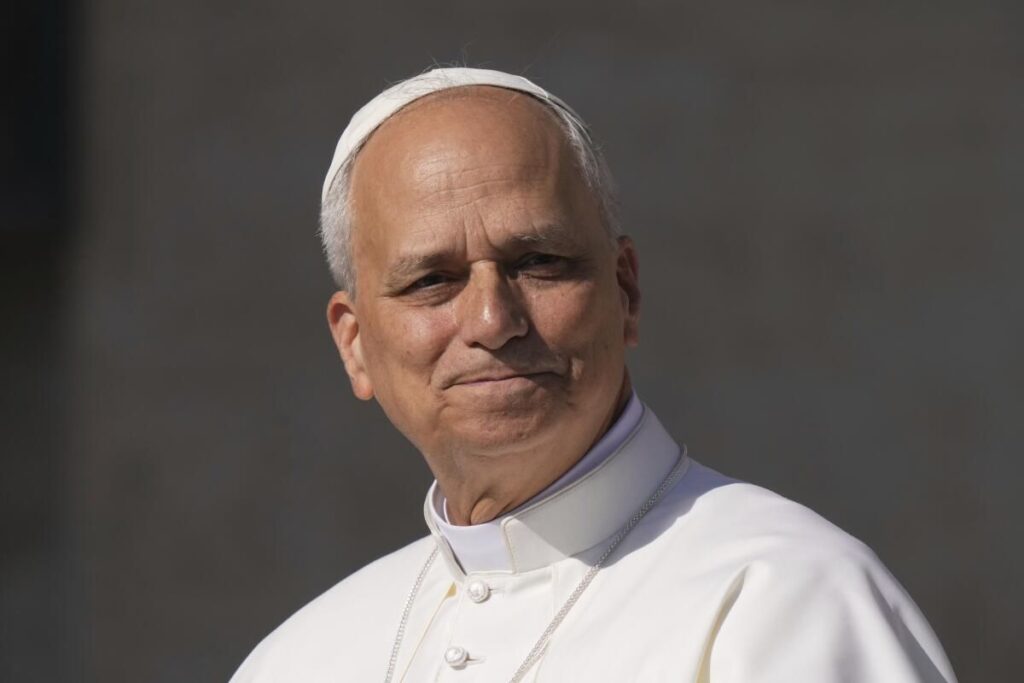
Image: from Sabria Chowdhury Balland X @SabriaCBalland
By Open Chronicle Staff with Agencies
Friday, April 10, 2026
VATICAN CITY/WASHINGTON — In what has been described as a historic diplomatic rupture, reports emerged this week that the Pentagon issued a blunt warning to Pope Leo XIV—the first American-born Pontiff—after he repeatedly criticized the Trump administration’s military operations in Venezuela and Iran.
The controversy centers on a January meeting at the Pentagon where U.S. officials allegedly invoked the “Avignon Papacy”—a 14th-century period when the French monarchy forced the papacy into submission—as a warning to the Vatican to align with American interests.
The Meeting: “Take America’s Side”
According to a report by The Free Press and independent Vatican analyst Christopher Hale, U.S. Under Secretary of Defense for Policy Elbridge Colby summoned the Vatican’s diplomatic representative, Cardinal Christophe Pierre, to a closed-door meeting on January 22, 2026.
Colby reportedly told the Cardinal that the U.S. “has the military power to do whatever it wants in the world” and that “the Catholic Church had better take its side.” The mention of the Avignon Papacy by another official was interpreted by Vatican insiders as a veiled threat of military force or detention against the Holy See.
🇺🇸🇻🇦 The Pope may not return to the U.S while Trump is in office after the Pentagon reportedly threatened him.
Officials allegedly told his Ambassador they have the military power to do whatever they want, and the Pope had better take America's side.pic.twitter.com/uUCFBDquh2 https://t.co/Zh2dqmCHaH
— Mario Nawfal (@MarioNawfal) April 9, 2026
Pentagon Response:
The Department of Defense (renamed the Department of War by the Trump administration) denied these claims on Thursday, labeling the reports “highly exaggerated and distorted.” A spokesperson described the meeting as “substantive, respectful, and professional.”
Moral Friction: Venezuela and Iran
The tension stems from Pope Leo’s outspoken opposition to the “diplomacy of force” characterizing Trump’s second term.
-
Venezuela: Following the January 3rd U.S. strike in Caracas and the subsequent abduction of President Nicolás Maduro, Pope Leo lamented the replacement of dialogue with “imperialist occupation.”
-
Iran: During the recent escalation in the Middle East, the Pope called Trump’s threat to destroy “a whole civilization” in Iran “truly unacceptable.” 3. Palm Sunday Rejection: In a pointed homily, the Pope appeared to reject Defense Secretary Pete Hegseth’s call for Americans to pray for U.S. troops “in the name of Jesus Christ,” stating that God “does not listen to the prayers of those who wage war… your hands are full of blood.”
The “Lampedusa” Snub
The diplomatic fallout has effectively canceled any plans for a papal visit to the United States. Despite being American-born, Pope Leo has formally declined a White House invitation to attend the U.S. 250th Anniversary celebrations on July 4, 2026.
Instead, the Vatican confirmed the Pope will spend Independence Day on the Italian island of Lampedusa, a symbolic landing point for North African migrants. Observers noted that the choice of date is a deliberate statement against the administration’s mass deportation policies and “oil blockades” affecting nations like Cuba.
Domestic Reaction
Vice President JD Vance, a prominent Catholic, dismissed the reports of the threat as “uncorroborated” on Wednesday. However, critics like writer Pedro Gonzalez pointed to newly released “Epstein Files” which allegedly show former Trump advisors discussing strategies to “take down” the papacy as far back as 2017.
As the U.S. navigates a fragile ceasefire with Iran, the “cold war” between the White House and the Holy See represents a significant new fracture in global moral and political leadership.