
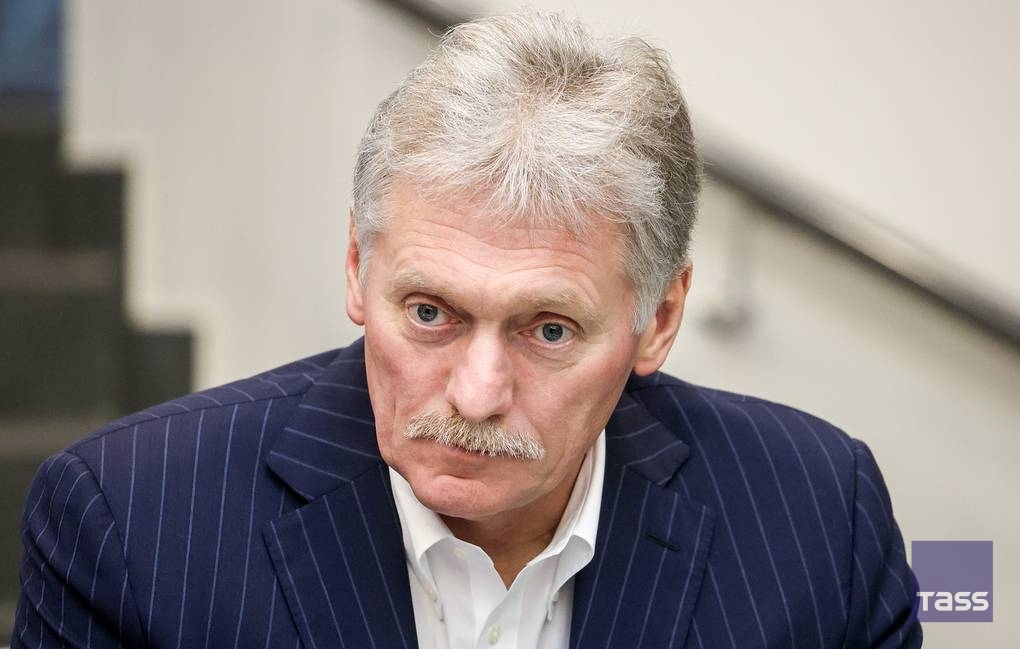
Image: from TASS X @tassagency_en
By Open Chronicle Staff with Agencies April 13, 2026
MOSCOW — The Kremlin announced on Monday that Russia remains ready to take custody of Iran’s enriched uranium as part of a potential peace settlement with the United States. The offer comes as a critical 1400 GMT deadline approaches for a U.S.-led naval blockade of all Iranian ports.
With global energy markets reeling and diplomatic efforts in Pakistan reaching a stalemate over the weekend, Moscow is repositioning itself as a central mediator in the conflict that has devastated the region since late February.
The Russian Proposal
Kremlin spokesman Dmitry Peskov confirmed that the offer, initially proposed by President Vladimir Putin, remains on the table despite the recent collapse of high-level talks.
“This proposal was voiced by President Putin in contacts with both the United States and regional states. The offer still stands, but has not been acted upon,” Peskov told reporters in response to questions regarding the failed negotiations in Pakistan.
By hosting Iran’s stockpile, Russia, which possesses the world’s largest nuclear arsenal, aims to provide a “neutral” solution to U.S. concerns regarding Tehran’s nuclear breakout capacity. However, Washington has thus far shown little interest in the Russian-led initiative, opting instead for a “maximum pressure” military strategy.
Criticism of the U.S. Blockade
The Kremlin also issued a sharp rebuke of the imminent U.S. naval blockade of the Strait of Hormuz and the Gulf of Oman.
While U.S. Central Command (CENTCOM) has clarified that the blockade will target vessels bound only for Iranian ports, Peskov warned that the disruption of the world’s most vital oil transit point would have catastrophic consequences.
“Such actions will likely continue to negatively impact the international market,” Peskov stated. “The standstill of this key waterway since late February has already thrown the global economy into turmoil.”
Stalled Diplomacy
The failure of the weekend talks in Pakistan has left the region in a precarious state. While Israel has indicated it will adhere to a fragile two-week ceasefire, the U.S. decision to proceed with a total blockade suggests a shift toward a “siege” strategy.
The standoff is further complicated by the public feud between President Donald Trump and Pope Leo XIV, with the latter calling for an “off-ramp” to prevent the destruction of Iranian civilization. Moscow’s offer to remove the uranium is seen by some analysts as the last remaining “off-ramp” before a potential naval confrontation in the Gulf.