
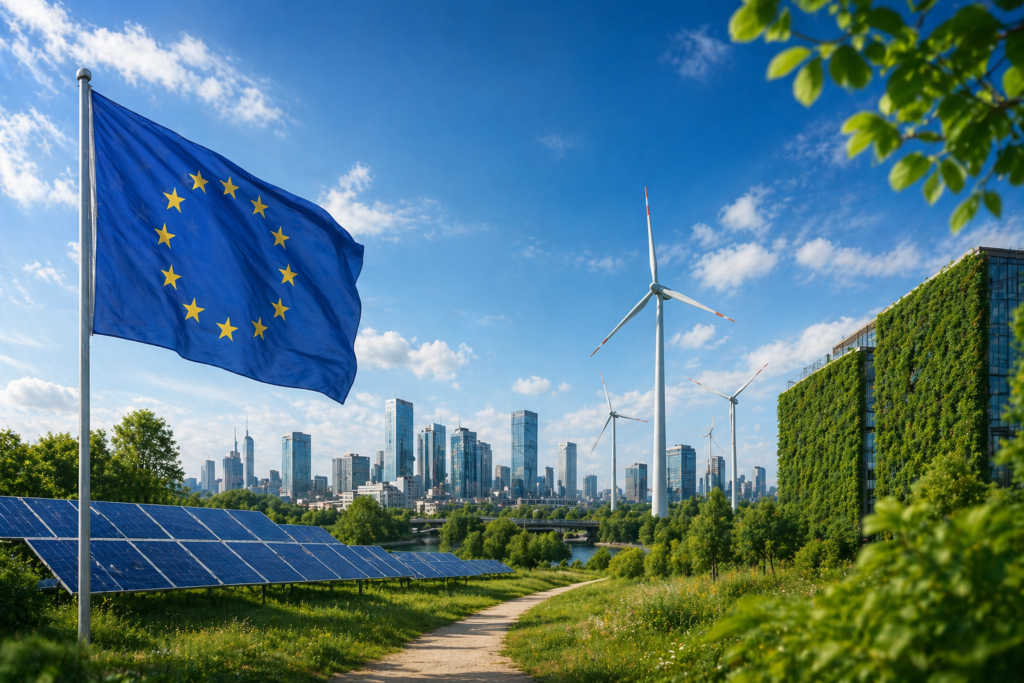
Image Credentials: Image Title: European Union cuts greenhouse gas emissions by 40% since 1990. Source: (chatgpt.com) Date: April 2026. Attribution: This image was created using AI-generated imagery (chatgpt.com) and does not depict a real-world scene.
Open Chronicle | Climate & Energy
The European Union has reduced its greenhouse gas emissions by 40 percent compared to 1990 levels, marking a significant milestone in its long-term climate strategy. The latest data, submitted to the United Nations Framework Convention on Climate Change and analyzed by the European Environment Agency, also shows a further 3 percent drop between 2023 and 2024.
The figures reflect more than three decades of structural transformation across the bloc’s economy, energy systems, and environmental policies.
Energy transition drives progress
The most substantial reductions have come from the energy sector, particularly electricity and heat production. Emissions in this area have fallen by 58 percent since 1990, largely due to a shift away from coal and oil toward cleaner energy sources and improved efficiency.
The use of solid fossil fuels in thermal power plants has dropped sharply, while oil consumption has declined even more dramatically. Although natural gas use increased over the same period, emissions linked to gas have recently begun to fall, indicating a broader transition toward lower-carbon energy systems.
Renewable energy has played a central role in this shift. Its share in electricity and heat generation has expanded significantly, contributing to a steady decline in carbon intensity across the sector.
Industry and households contribute to the decline
Beyond energy production, key industries such as manufacturing, construction, and iron and steel have also recorded major emissions cuts. Improvements in efficiency, alongside technological changes and evolving industrial practices, have helped reduce their environmental footprint.
In the residential sector, emissions have dropped due to better insulation, more efficient heating systems, and, in some cases, milder winters that reduced demand for heating.
However, not all sectors have followed the same trajectory.
Transport remains a challenge
Road transport emissions have continued to rise, despite the growing adoption of electric vehicles and more efficient engines. Increased demand for both passenger travel and freight has outpaced technological gains, making transport one of the most difficult sectors to decarbonize.
Meanwhile, emissions from hydrofluorocarbons, commonly used in refrigeration and air conditioning, surged for decades before beginning a steady decline over the past ten years. This reversal is largely attributed to EU regulations phasing down these high-impact gases.
Nature’s role under pressure
The EU’s natural carbon sinks, particularly forests, are becoming less effective at absorbing emissions. Aging forests, increased logging, and the effects of climate change have all contributed to a decline in their capacity to remove carbon from the atmosphere.
This trend highlights the growing importance of protecting and restoring ecosystems as part of the broader climate strategy.
Policy impact and future targets
EU policies have been central to the emissions reduction effort. Early agricultural and environmental measures laid the groundwork in the 1990s, while more recent initiatives, including the EU Emissions Trading System, have accelerated progress since the mid 2000s.
Despite the achievement, challenges remain. The bloc is aiming for a 55 percent reduction in emissions by 2030 under its climate law, a target that includes additional sectors such as international aviation and shipping.
The latest data suggests the EU is moving in the right direction, but sustaining momentum will require continued investment, policy enforcement, and innovation across all sectors of the economy.