
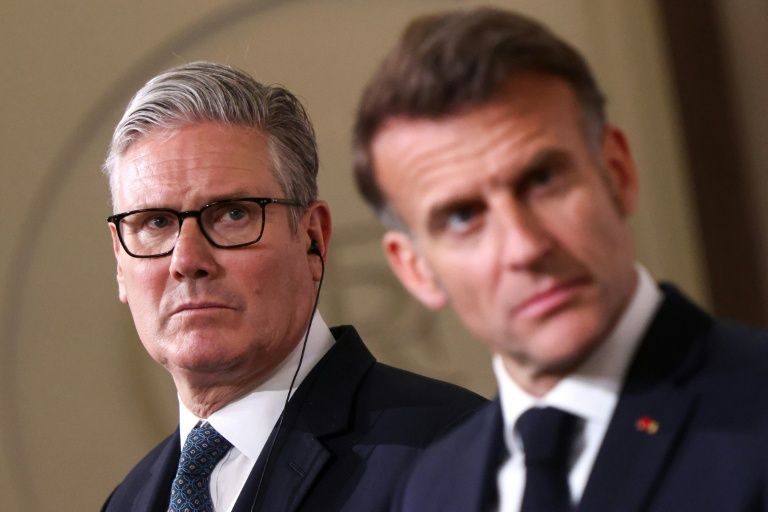
Image: from zeta panama X @zetacompa
Open Chronicle | Global Security
Military leaders from more than 30 countries gathered in London on Wednesday at the invitation of the United Kingdom and France to develop a coordinated plan aimed at reopening the strategically vital Strait of Hormuz.
The high-level meeting comes after over a month of disruption in the narrow maritime corridor, which has been effectively closed amid escalating tensions between Iran and the United States. The talks are intended to translate recent diplomatic momentum into a concrete military framework that would allow commercial shipping to safely resume once hostilities subside.
Building on diplomatic momentum
The London discussions follow a major summit in Paris last week, where representatives from 51 nations called for the immediate and unconditional reopening of the strait. Participants also agreed in principle to establish a naval mission tasked with escorting commercial vessels through the high-risk zone.
Officials say the current planning phase focuses on operational details, including coordination between navies, rules of engagement, and protection mechanisms against potential drone or missile threats.
A critical artery under strain
The Strait of Hormuz is one of the world’s most important energy corridors, with roughly 20 percent of global oil shipments passing through it annually. Its prolonged closure has rattled international markets and intensified concerns over energy security, particularly in Europe.
European countries, many of which have reduced dependence on Russian energy supplies in recent years, have been especially vulnerable to the disruption. The near halt in maritime traffic has compounded pressure on already volatile oil prices.
Escalation despite the ceasefire
Although a temporary ceasefire between Iran and the United States raised hopes for de-escalation, shipping activity in the strait has remained minimal. The situation has been further complicated by competing blockades imposed by both sides.
The U.S. Navy has enforced a blockade targeting Iranian ports along the Persian Gulf, while Iran has responded by re-closing the strait and asserting control over transit routes. Forces linked to Iran’s Revolutionary Guard have reportedly seized vessels attempting to pass without authorization and opened fire on at least one foreign-operated ship.
Meanwhile, U.S. forces have intercepted Iranian-linked vessels in separate incidents, underscoring the fragile and volatile nature of the standoff.
Uncertain path ahead
Despite renewed diplomatic engagement and multinational coordination efforts, the reopening of the strait remains uncertain. Any sustainable solution will likely depend on a broader political agreement between Washington and Tehran, alongside robust international guarantees for maritime security.
For now, the London talks signal a growing recognition among global powers that securing the Strait of Hormuz is not only a regional priority but a matter of global economic stability.