
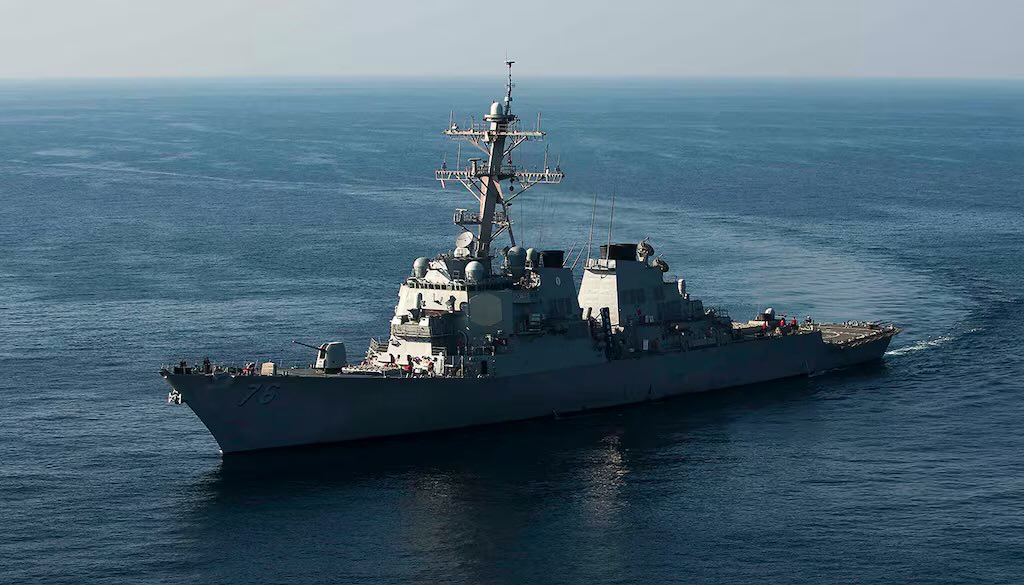
Image: From OSINTdefender X @sentdefender
By Open Chronicle with Agencies
A fire aboard the U.S. Navy destroyer USS Higgins has raised questions and speculation amid heightened global tensions, though officials have yet to confirm the cause of the incident.
According to U.S. officials cited in reports from Washington, the guided-missile destroyer suffered significant damage earlier this week while operating in the Indo-Pacific region. The vessel, part of the Indo-Pacific Command, was deployed in Asian waters at the time, though the exact location of the fire has not been publicly disclosed.
Initial details indicate that the blaze affected key onboard systems, including electrical infrastructure and propulsion. However, authorities have not provided further information on the extent of the damage or how long repairs might take.
The lack of official clarity has fueled widespread speculation, particularly given the broader geopolitical context. With tensions already high due to the ongoing conflict involving Iran, some observers have questioned whether the incident could be linked to external factors. Unverified claims circulating on social media have even suggested possible foreign involvement, including references to China, though no evidence has been presented to support such assertions.
The incident also follows reports of fires on other U.S. naval vessels earlier this month, including the USS Dwight D. Eisenhower and the USS Gerald R. Ford, further intensifying scrutiny.
When approached for comment, the Pentagon indicated that more information would likely come from Indo-Pacific Command, but no official statement has yet been released.
Commissioned in 1999 and built by Bath Iron Works, the USS Higgins is an Arleigh Burke-class destroyer designed for a wide range of missions, including air defense, missile operations, anti-submarine warfare, and escort duties. The ship is homeported in Yokosuka, Japan, and operates as part of the U.S. Seventh Fleet.
Named after Colonel William R. Higgins, a U.S. Marine killed during a United Nations mission in Lebanon, the vessel plays a key role in maintaining U.S. naval presence and operational readiness in the region.
As investigations continue, the incident underscores the sensitivity of military operations in a period marked by overlapping regional tensions and increased scrutiny of naval security.