
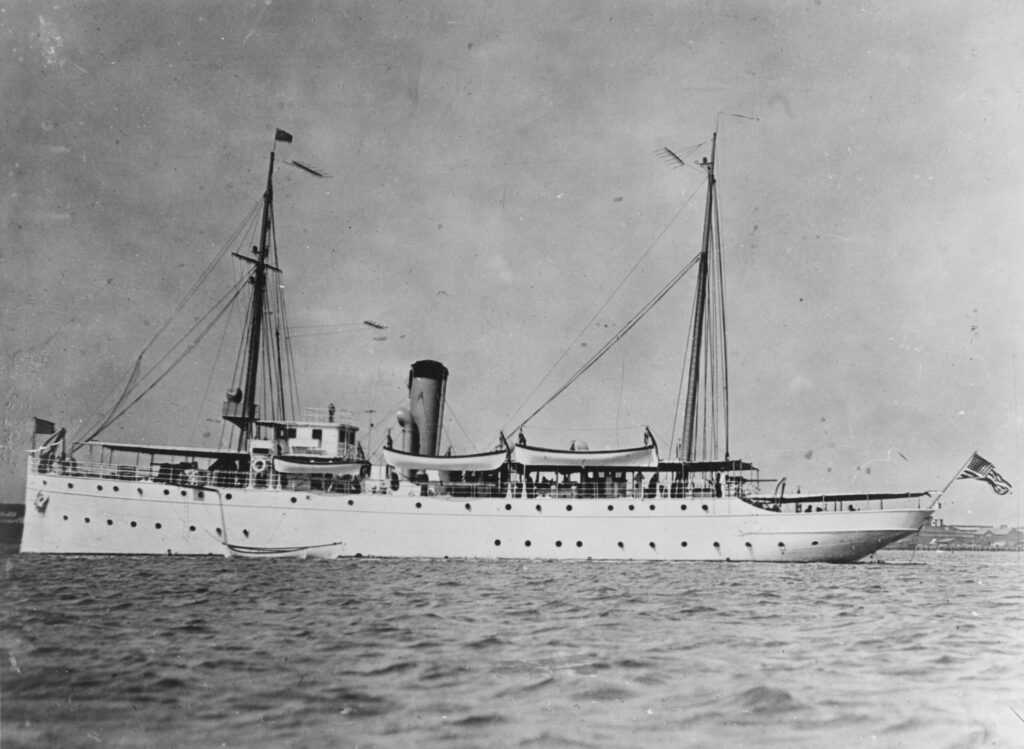
Image: Miami-class cutter USCGC Tampa photographed in harbour, before the First World War. Completed in 1912 as the U.S. Revenue Cutter Miami, this ship was renamed Tampa in February 1916. On 26 September 1918, while operating in the English Channel, she was torpedoed and sunk by the German Submarine UB-91. All 131 persons on board the Tampa were lost with her, the largest loss of life on any U.S. combat vessel during the First World War. By U.S. Navy – Official U.S. Navy photo NH 1226 from the U.S. Navy Naval History and Heritage Command, Public Domain, (Wikipedia)
By Open Chronicle with Agencies
More than a century after it was lost at sea, the wreck of the USS Tampa has been located off the coast of Cornwall, bringing long-awaited closure to one of the deadliest maritime disasters in U.S. naval history.
The discovery was made by the Gasperados Dive Team, a volunteer group of British technical divers who had been searching for the vessel since 2023. The wreck lies approximately 300 feet beneath the surface, around 50 miles from the coastline.
A Century-Old Mystery Solved
The find was confirmed with assistance from the United States Coast Guard, which provided historical records and archival imagery to verify the identity of the wreck.
Dive team leader Steve Mortimer described the discovery as the result of years of research and multiple expeditions, noting the significance of finally identifying the resting place of the ship and its crew.
The Final Voyage
The USS Tampa was lost on September 26, 1918, during World War I while returning to port after escorting a convoy in the Atlantic.
Running low on coal, the ship had left its convoy and was heading toward Wales when it was spotted by the German submarine UB-41. A single torpedo struck the vessel, triggering a massive explosion that sank the ship with all hands on board.
A Heavy Human Toll
A total of 131 people perished in the disaster, including Coast Guardsmen, U.S. Navy personnel, and British crew members. Among them were individuals from diverse backgrounds, including immigrants and some of the first minority Coast Guardsmen to be killed in combat.
The loss remains the largest single combat-related tragedy in the history of the U.S. Coast Guard.
Honoring the Fallen
Kevin Lunday said the discovery reconnects the present generation with the sacrifice of those who served aboard the Tampa.
The wreck is now considered a maritime grave, and its location provides a place of remembrance for descendants and historians alike.
Future Exploration
Authorities are planning further study of the site using advanced technologies, including autonomous underwater systems and robotics, to better understand the wreck and preserve its historical significance.
The discovery of the USS Tampa not only closes a long-standing chapter in naval history but also serves as a powerful reminder of the human cost of war and the enduring importance of remembrance.